Published on 5th June, 2015, in The Economic Times.
Kama is the god of desire, imagined as a parrot-riding god who wields a sugarcane bow, with flowers for arrows and has bees and butterflies making up his bowstring. He has an army of damsels called apsaras and musicians called gandharvas and his friend is spring. Few can withstand his assault, as he arouses our senses and ignites our passion. He is closely associated with Lakshmi, the goddess of wealth. He creates the craving for wealth and power and pleasure, and access to wealth and power and pleasure fuels even more desire. He is a dangerous force, for he is well aware of his power. In the Puranas, he is the champion of Indra, who is unleashed to distract ascetics. In Buddhism, however, Kama was visualised as a demon called Mara, whose defeat, transforms Siddhartha Gautama into the enlightened Buddha. Not surprising then that Buddhism was a monastic order that valorised renunciation and celibacy.
In Hinduism, Kama is burnt alive by the third eye of the supreme ascetic, Shiva, but is brought back to life when the Goddess compels Shiva to marry, transform from hermit to householder, and descend from the icy peaks of Kailasa to the bustling market city of Kashi. The Goddess is called Kamakshi, whose eyes restore Kama to life. The resurrected Kama is called Ananga, the bodiless one, and he embodies India’s ambiguous relationship with desire.
Is desire good or bad? Capitalism is all about ambition and ambition is just a corporate word for desire. Without ambition, there is no purpose, no meaning: at least that is what management lore states. Some go so far as to say that greed is good for it creates markets and hence opportunities, not just goods and services for consumers but also jobs. India needs jobs, and so markets, and so industries, and so entrepreneurs, and so desire. But Kama is dangerous. He can drive people crazy. Hence there is a need to control the principles of pleasure (kama) and power (artha) with governance (dharma) and spirituality (moksha). But achieving the right balance is not easy.
Hinduism, which once challenged the monastic ways of Buddhism, and built temples which celebrated art and commerce, has increasingly ended up being controlled by stern celibate Hindu monks (mahants) who have valorised the idea that the hermit is superior to the householder, the celibate man superior to the married man and men, in general, are superior to women. And so, even though Hindu deities are adorned with gold and silks and always seen with consorts, for most people today, a holy man is a man without wealth. Somewhere along the line, poverty has been equated with being good, and wealth with being bad. So, a businessman who craves to be rich is viewed with suspicion, a view that was most amplified in the pre-liberalisation era and persists even now. We want their dreams to fail. We want bubbles to burst.
Brahmanda, the Sanskrit word for cosmos, essentially refers to a bubble. It is made up of two words: Brahma (creator) and anda (egg). Brahma creates the egg and is trapped in the egg. Wisdom happens when he breaks free and realizes his egg is within a larger egg. An egg or a bubble has to burst, only to create a new bubble and discover it is part of bigger bubbles. Brahma, the creative force, is closely linked to Kama. Kama makes Brahma create the Brahmanda to find meaning. But it brings Brahma temporary happiness. Eventually, hopefully, Brahma will realise its impermanence (anitya), recognising it as an enchanting delusion (maya).
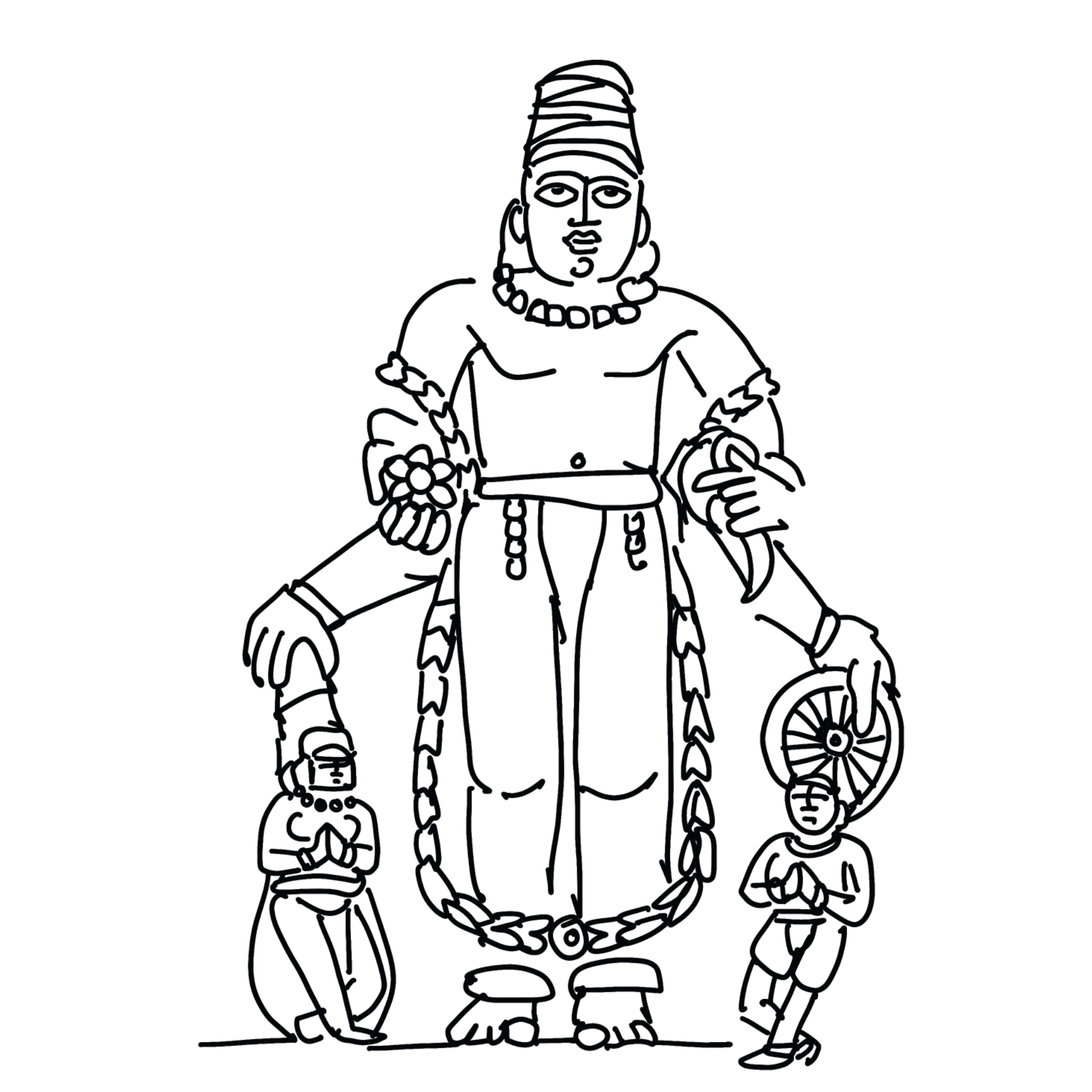
But the bubble is not meaningless. Brahmanda has value. That is why the Goddess is keen to marry Shiva and resurrect Kama. That is why Vishnu works hard to preserve the world and make himself attractive to Lakshmi. For desire is what makes the world go round. The bubble called e-retailing is rising. Ideas will come and go, like crops and seasons and tides. Markets will be established and destroyed. This is what the material world is all about.
A few may want to walk away from bubbles, like the Buddha, but not all. Seeing spiritual reality as a superior reality is modern marketing. Traditionally, in Hinduism, it was a complementary reality, meant for some, not all, which is why Shiva is always worshipped with the Goddess, who embodies material, worldly reality. A world without kama and artha is no world at all. Dharma creates stability and sustainability. Moksha puts it in perspective. As the Gita says, society is all about waves that rise and fall. To be divine is to celebrate its impermanence without attachment, while to be demonic is to believe we create and control the wave.