
Get Site Updates Via Feed | Via Email

Author, Speaker, Illustrator, Mythologist

Everybody loves Hanuman

Apr 05, 2008 | Filed under Articles, Leadership, Ramayana.

Published in Corporate Dossier, Economic Times supplement, 4 April 2008

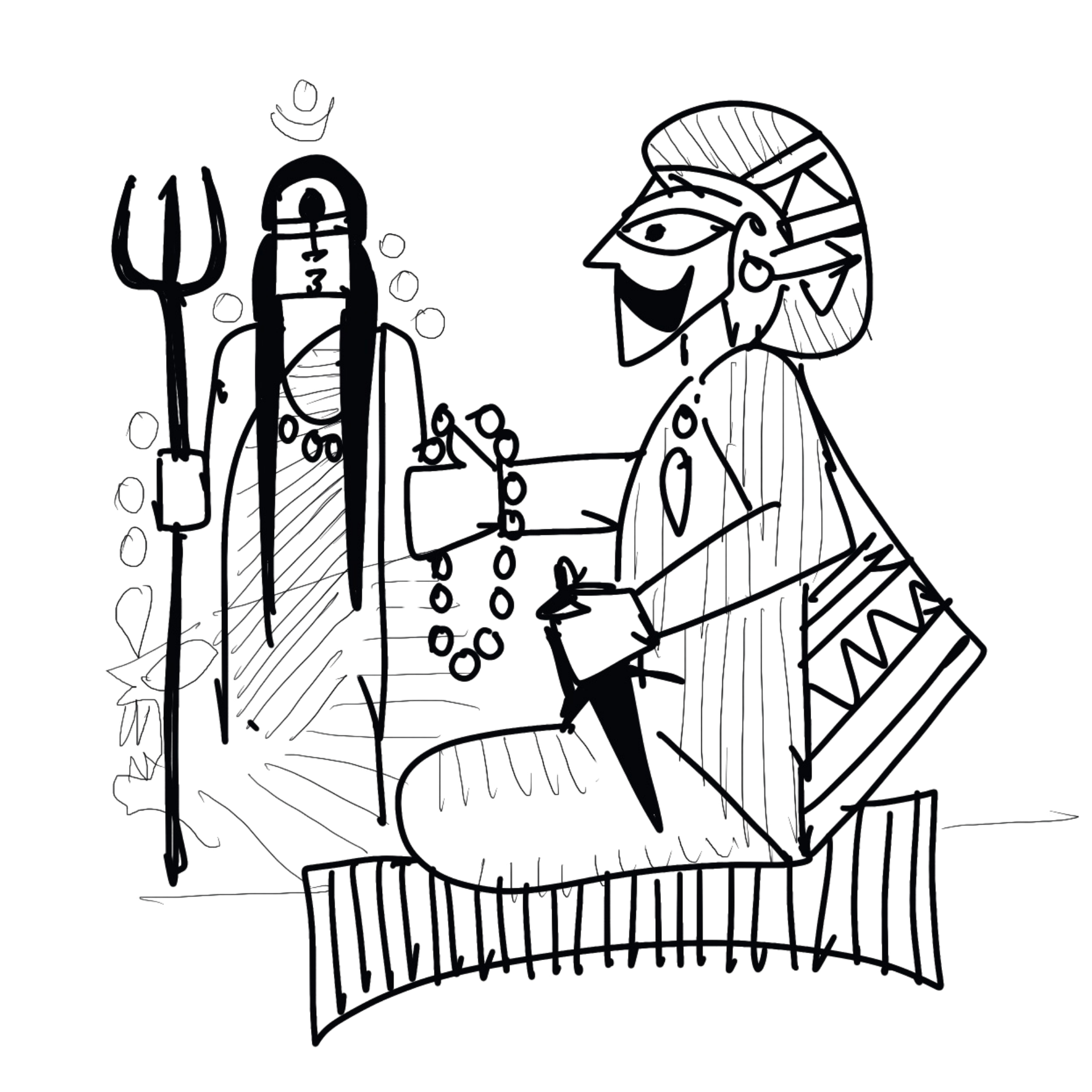
Hanuman plays an important role in the Ramayan, yet in the epic itself, he does not hold any great position. He is just one of the many monkeys Ram encounters in the forest. He is not Sugriva, leader of the monkey troop. He is not Angad, who is told to lead the band of monkeys searching for Sita. He is not Jambavan, the bear or Nila, the monkey, who are given the responsibility of building the bridge. He is projected as an obedient follower who, through his intelligence, strength and courage, wins the admiration of Ram and emerges as one of the most revered characters of the tale and a god in his own right. But at no point does Hanuman make any attempt to steal anyone’s glory; while in his own temple he stands powerful with mountain in hand and feet on a demon, in Ram’s temple he is most content sitting at the feet of his master, hands in supplication.

Who would not want a Hanuman in his team? One who is very good at his work, one who will do whatever he is told to do, one who will never seek either reward or recognition and one who finds validation in obeying his master.

If we go to Raju’s auto repair shop, we will find that all the work is done by his Hanuman: Amol, a young boy, who has been working with Raju for three years. Amol is a natural, able to fix the most complex of problems. Raju knows he can totally rely on Amol. No job is too big or too small for Amol. He is as happy changing a tyre, as he is fixing the brakes. He does not boss over the juniors and does not feel slighted if the seniors ask him to fetch tea. If there is a problem that eludes a standard solution, everyone knows that leave it to Amol – he will, like Hanuman crossing the sea, find a way.

Yes, it matters greatly to have a Hanuman in our team. One who will not question you. One who will do exactly what you tell him to do. One who delivers no matter what the odds. One who is loyal and devoted. But is that really good?

The following is a folk story of Hanuman: Hanuman once narrated the entire Ramayan to his mother, Anjani. After the narration, an impressed Anjani sought a clarification. “You are so strong that with a flick of a tail you could have destroyed the whole of Lanka, killed Ravan and rescued Sita. Why did you not do so? So much effort and time would have been saved – you would not have had to build a bridge to Lanka, you could have avoided the war. Why did you not do that?”

Hanuman replied, “Because Ram never asked me to.”

And suddenly we wonder if this was opportunity lost. Hanuman was asked to discover Sita’s location; he did that. Hanuman was asked to fetch the mountain of herbs that would save Lakshmana’s life; he did that. No one asked him to destroy the Rakshasas and rescue Sita. Do he did not do that. One common explanation given for why Ram never asked Hanuman to kill Ravan and rescue Sita is that it was Ram’s duty to rescue Sita, not Hanuman’s. Ramayan is about Ram, not Hanuman. But it is not so in the corporate world; the story is about the entire organization, not just about the leaders.

In the entire epic, Hanuman proves his capability time and time again. On his way to find Sita, he displays his extraordinary power (crosses the ocean), brain (outwits the snake-demon Surasa), brawn (kills Simhika) and integrity (not resting on Mandara mountain). And yet, while everyone admires this, no one seems eager to take full advantage of it. Was this refusal to take advantage of Hanuman’s abilities a divine decision or merely a oversight? Is the same being done in the corporate world?

Yes, Raju loves Amol’s work. Yes, Raju admires Amol’s work. But is Raju harnessing the full potential of Amol? Is his contentment with Amol’s obedience preventing him from seeing all that Amol can do, proactively, creatively, independently, if he is given the freedom to do so? Ask Raju and he will say, “But I don’t stop Amol from doing anything.” He does not stop Amol from doing anything, but he does not encourage Amol from doing something either.

The greatest danger of having Hanumans in our team is that his actions are limited by our directions. Maybe we fear that if Hanuman thinks for himself, there will be chaos – he is a monkey after all. Maybe we fear that he will overshadow us. Hence, ultimately, only we decide the goals, we define the vision, we declare the mission and state the objective. Our Hanuman will help you realize all this. But, maybe, the goals could have been greater and grander, if we had let Hanuman do more than merely obey.

Amol once had given Raju a suggestion. “Sir, if we park our cars perpendicular to the wall rather than parallel we can keep more cars in the garage?” Raju ignored this suggestion. “Do you work,” he snapped at Amol without giving his words much thought. But the message he implicitly gave Amol was that – ‘I only want your obedience, not your intelligence.’ Amol immediately complied. And that marked the end of Amol’s creativity that would have perhaps made Raju’s auto repair shop a much greater success.

This is the danger of over compliance and extreme obedience. We prevent followers from thinking and contributing. It makes business sense therefore to take a closer look at the Hanumans in our team; we just might find in their hearts a Ram waiting to be coaxed out.

Get site updates
Email, Share this Page
ShareThis

12 Responses Subscribe to comments

  1. Sudha Srikant

    Another anecdote on Hanuman that is oft heard in Corporate Corridoors is on
    how Ram after his life on Earth, is on his way to Vaikunta and asks Hanuman,
    his most ardent devotee to join him. To which Hanuman replies that his place
    is here on Earth and eventually settles down in the Himalayas as an ascetic.
    He could have easily joined Ram but he clearly knows his place.

    Hanuman had all the skill sets to match those of Ram, perhaps he was much
    stronger and more able than Ram, often seen closer to Ram than his own
    brothers, yet, at the end of Ramayan, he has a different path to take.

    Perhaps the same is the case in a Boss-deputy relationship. A deputy may
    share closeness with the boss, be more capable, but he cannot expect to have
    the same space as his boss. Or aspire the same seat.

    He has to have a different path to choose for himself.

    [Reply to this comment]

    Sep 19, 2008 @ 11:15 am


  2. Bhaskar Banerjee

    Dear Dev,
    I am very impressed by your articles and the way you compare these mythological stories to the corporate world. I also got to learn many incidents of these epics which i had never heard before. Your stories remind me of a story i read in NCERT hindi text book when i was in class 9th. It was titled “Mahabharat Ki Ek Sanjh.”
    Wish you all the best.
    Bhaskar Banerjee
    purab_bhaskar@yahoo.co.in

    [Reply to this comment]

    Oct 17, 2008 @ 7:43 am

  3. Dear sir,

    There is a description of the three types of employees, found in Valmiki Ramayana, Yuddha Kandam, Sarga 1, Sloka 7-9 as follows:-

    yo hi bhRityo niyuktaH san bhartraa karmaNi dushhkare
    kuryaattadunuraageNa tamahuH purushhottamam

    Translation: That employee to whom his employer entrusts a difficult task and who performs it with zeal is said to be a superior person

    yo niyuktaH param kaaryam na kuryaannaRipateH priyam
    bhRityo yuktaH samarthashcha tamaahurmadhyam naram

    Translation: The employee who is ready and capable but who yet does no more than his employer extracts from him is called a mediocre person

    niyukto nRipateH kaaryam na kuryaadyaH samaahitaH
    bhRityo yuktaH samarthashcha tamaahuH purushhdhamam

    Translation: The employee who is well and able and yet does not carry out the instructions of his employer as directed is said to be the least of men

    Sri Hanuman falls under the first category – yo hi bhRityo niyuktaH san bhartraa karmaNi dushhkare kuryaattadunuraageNa tamahuH purushhottamam (That employee to whom his employer entrusts a difficult task and who performs it with zeal is said to be a superior person)

    Regards

    Bala

    [Reply to this comment]

    Oct 20, 2008 @ 8:42 pm


  4. Aseem Hattangadi

    Eventhough the article is very thought-provoking and although I am a big fan of Hanuman, since I frequent the gym a lot, you cannot a classic example that this, of an individual obediently going about doing all the work that his master instructs him to do and an individual who along with doing the instructed work, thinks out of the box and takes his own initiative to do things without being instructed. This is the only way in which you can grow in any facet of life.

    [Reply to this comment]

    Oct 29, 2008 @ 11:12 pm


  5. santosh sadasivan

    Lovely compilation and naration. I just read your article titled “Wooving the Right Way” on Corporate Dossier of Economic times and jumped into your site to find the same article but couldn’t find it.

    Article “Everybody loves Hanuman” is thought provoking, especially the merger of mythological character with today situation is splendid. I salute..

    Can you please send it across.

    Santosh Sadasivan .

    [Reply to this comment]

    Nov 05, 2008 @ 9:34 pm

  6. Hanuman is expertise in communication enabled him to dawn various roles efficiently and effectively.

    Hanuman on how to speak!
    Clarity in content, No negative words should be used.
    There should not be any mistakes in the sentences. No grammatical errors in the sentences
    Body language must be perfect. There should not be any ill feelings expressed on face, eyes, forehead and eye brows. Proper Body language is the sign of effective communication.

    [Reply to this comment]

    Jul 31, 2009 @ 10:19 am


  7. Subhasis Pujapanda

    Words are not sufficient to describe your ability of connectivity. Most of us would have encountered with such a story but I don’t think anyone would have coupled the same with Hanuman. Your are simply superb. Looking for more articles of this sort.

    [Reply to this comment]

    Oct 16, 2009 @ 2:11 pm

  8. Respected Sir,

    I am really fascinated with your articles on management extracted from our own mythological stories. Being a new candidate in a corporate world, i have been looking for a path, which i believe, have found through your writings… infact, my boss is a big fan of yours and has been looking for all the books written by you. we could get myth-mithya; The book of Ram; The pregnant King.. would request if you can let me know about your other creations as well as how can we recieve your articles/ blogs etc..so as to get groomed daily.

    Look forward to your positive response.

    Best regards, Neha

    [Reply to this comment]

    Dr. Devdutt Pattanaik Reply:

    all my articles and creations are on the website ….thanks

    [Reply to this comment]

    Dec 29, 2009 @ 11:54 am

  9. Hanumanji is more relevant in today’s modern life.He symbolizes goodness,moral strength and total devotion.These traits are needed to run our life smoothly.

    [Reply to this comment]

    Jan 09, 2010 @ 7:16 pm

  10. Dear Sir,

    I like the message to leaders to encourage their sub-ordinates beyond compliance. But I wish to point out that Hanuman did exceed his brief.

    (1) When meeting Sita for the first time in Lanka. Hanuman does offer Sita to take Her back to Rama. Sita refuses this offer, ridiculing Hanuman’s valour wherein He shows His Viswarupa. Even after this Sita refuses to join citing several reasons 1) Hanuman will have to fight the Rakshasas and at the same time try to save Himself and Sita. 2) She cannot allow herself to be touched by another man and so on.

    (2) After the interactions with Ravana, He does set fire to Lanka and create a sense of panic and impending war. Was not part of the brief by either Rama or Sugriva.

    (3) After the war, Rama sends Hanuman again to Sita with the message of victory in the war. Now Hanuman offers to punish all the Rakshasa guards who were tormenting Her all along. Again, Sita refuses permission.

    Hanuman exceeded the brief, took a decision of His own to burn Lanka but did not impose His will when it was clearly not favoured by His leader be it Rama or Sita.

    Perhaps the Dharma of the leader and the Dharma of the follower are slightly different.. Hanuman’s dharma was to be a wise minister than to be a powerful king though he could have been either or both.

    Back to corporate world, in big corporations, the gap in abilities between leaders and sub-ordinates can be very thin often only the position differentiating their roles. Nevertheless, there has to be a single leader for any group to make progress.

    The story of Raman and Hanuman illustrates both leadership and follower-ship are essential for society, for both are venerated as Gods.

    PS:

    Sir, I sincerely admire your articles for their insights, clarity and connecting the modern with ancient. Wishing you all the very best.

    Regards
    Sankar

    [Reply to this comment]

    Jan 10, 2010 @ 10:53 pm


  11. Nikhil

    Like Devdutt Patnaik is a Hanuman for Kishore Biyani !

    [Reply to this comment]

    Aug 13, 2010 @ 9:41 pm

Reply