
Mythologist | Author | Speaker | Illustrator

-
Articles
Speech, Offence and Victimhood
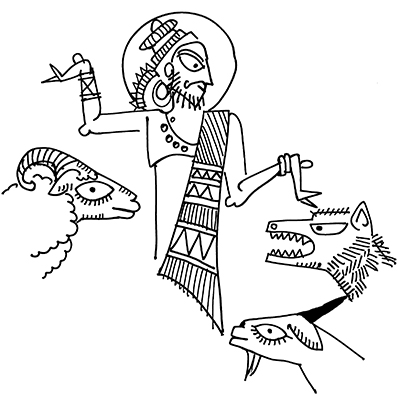
Published on 4th September, 2022, in Mid-Day. What is the opposite of freedom of speech? It is the right to get offended. Recently, Nupur Sharma commented about the Prophet Muhammad’s marriage on national television. She stated it in a debate and it was not meant to flatter. The Arab elite, otherwise mute spectators to global…
-
Articles

‘Dharma’ Always Comes With ‘Dharma-sankat’
Published on 4th December, 2021, in The Hindu. In a crime, the victim accuses the villain. But when the villain counter-accuses the victim, and insists the victim is villain too, we call it ‘whataboutery.’ This word is a neologism, first used in the 1970s in the context of violence in Northern Ireland. Whataboutery creates a…
-
Articles

The Geography of Gods
Who Is a Hindu? The Geography of Gods. Published on 8th November, 2020, in Mumbai Mirror. Hinduism is typically taught through a historical lens. We are told that there was a Harappan period 4,000 years ago, followed by Vedic Period 3,000 years ago, followed by the Puranic Age, which began 2,000 years ago, which was…
-
Articles

Ithasa As Propaganda
Published on 31st October, 2020, in Economic Times. If one travels to ancient Egypt, one sees gigantic monuments of Rameses II. These celebrate his victory against the Hittites, in Syria, in 1300 BCE, in the first real use of horse-driven war chariots in the world. However, if one checks with historical records and does a…
-
Articles

Spot the difference between sign and symbol
Published on 16th December, 2019, in The Hindu The symbol of India in Indian passports and Indian currency notes has been a lion and a spoked-wheel or chakra, both from the Ashoka pillar. Now the government has introduced the lotus on the passport, as part of security measures, we are told, to be replaced by…
-
Articles

Science and yoga
Published on 6th October, 2019, in Mid-day Is yoga scientific? This is a question I am often asked, in various forums. The problem that lies with this question is essentially with the understanding of what yoga is, what science is and the overarching sense of insecurity that is faced by many people relating to the…
-
Articles

Hindu gods like Rama & Shiva have six packs now to kill bad guys, like American superheroes
Even Amar Chitra Katha’s new comics have abandoned the gentle sensuality of Raja Ravi Varma and embraced the hyper-masculine, angry, violent American superhero style to portray Hindu gods and goddesses…
-
Articles
Who is a Hindu? Always and everywhere
The notion that religious texts have always been around may be rooted in the timelessness of philosophies…
-
Articles
Atheist and secular mythologies
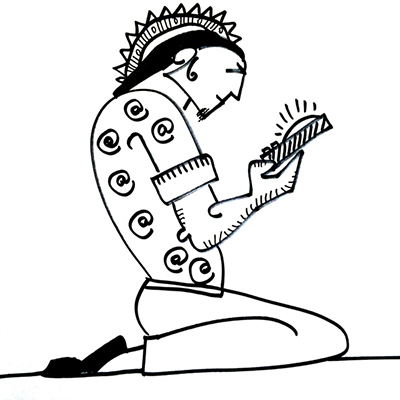
Many people believe that mythology ceased to be relevant after the arrival of science, and the resulting rise of atheism…
-
Articles
Questioning Traditional Hierarchies
Many women don’t like being identified as feminists as they see feminists as man-haters who despise all things feminine. I think the problem is with the nomenclature – feminism. I feel traditional gender roles and power equations have to change to the times. The traditional notion of men being superior than women needs to make…
-
Articles

To Empathise
Why do people think that by calling stupid people stupid they will make them less stupid ? It will only annoy the stupid person who will disagree. They will call the name-caller as the ‘intellectual fake media’ and dig their hills into more stupidity. And the intellectual, who wanted to feel superior in the first…
-
Articles

The Dog Dilemma
I thought I should get a dog. My dog-loving friends looked pleased at my conversion. But then, a friend refused to come to a dinner party. Because he could not leave XXX alone at home. Who is XXX? His lovely poodle of course. Suddenly, you realize the lovely dog who gives love is also a…
-
Articles

Question for the Alt-Fact world: Why can’t truth be plural?
When truth is singular, it becomes a territory and thus, a battlefield…
-
Articles

The Mind
The more I studied Hindu mythology, I saw how the ancients saw the mind. Very different from the Western mind, that sought God and gods. Here, the gods were within, as well as outside. Within for those who can take responsibility. Without for those who cannot. Many people don’t want gods anywhere – inside or…
-
Articles

The Excluded Ones
I heard that in the entire “Lord of the Rings” film trilogy, no two female characters ever speak to each other. You never notice these things and then you realise how many of these stories are of men, by men, for men. Women are excluded. Queer people too. We make so many people invisible. Karan…
-
Articles

From Macaulay to Frawley, from Doniger to Elst Why do many Indians need White saviours?
Would non-White Indologists evoke such passions as the likes of Sheldon Pollock and Wendy Doniger or David Frawley and Koenraad Elst do?…