For all talk of the 5,000-year-old submerged city of Krishna off the coast of Dwarka, the earliest clear undisputed image of Krishna playing the flute comes from the 8th century CE, from Mallikarjuna temple, Pattadakal in Karnataka.
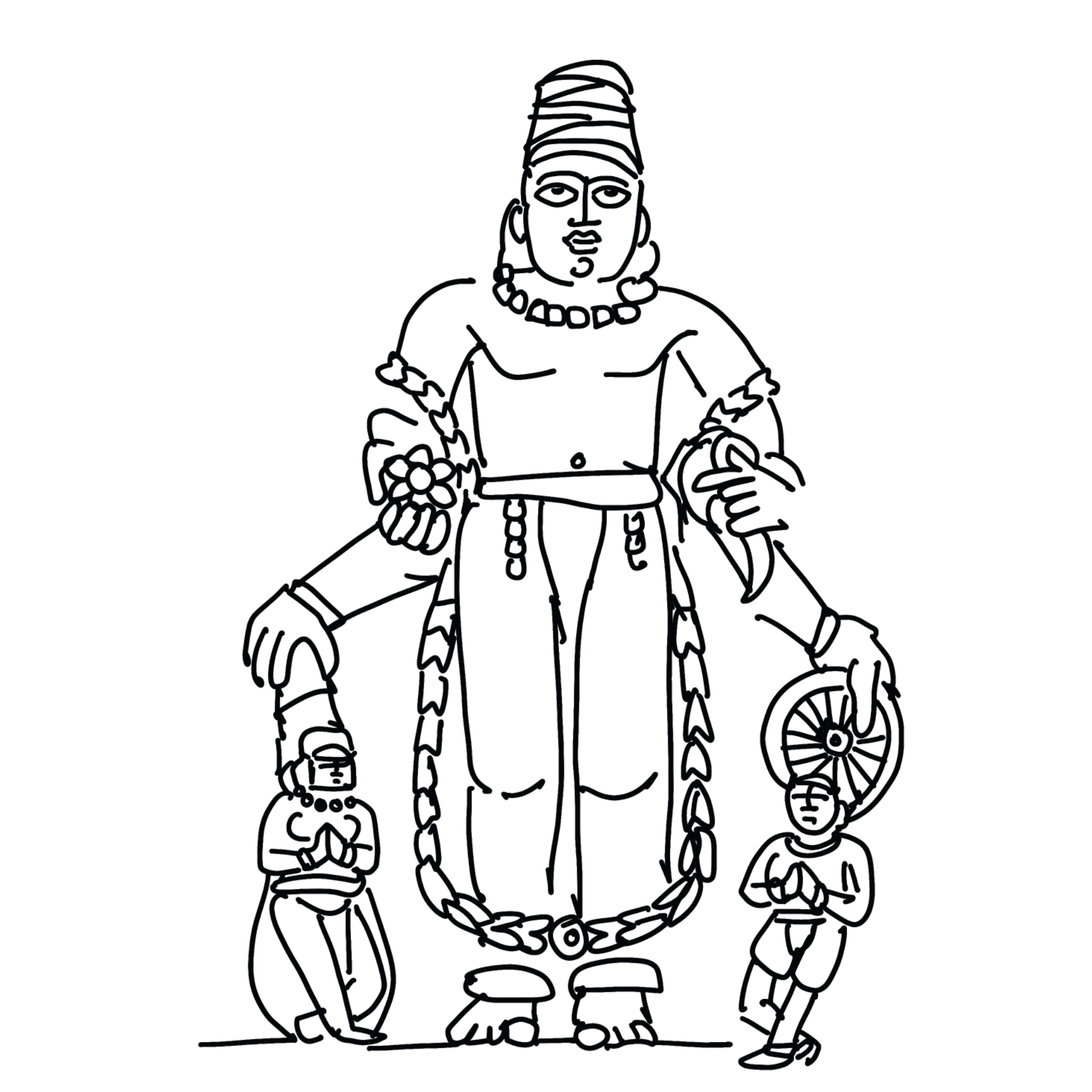
This is nearly a thousand years before the miniature paintings of Gita Govinda painted in courts of Rajput kings, which are now found everywhere. Before that, Krishna images show him as a warrior mostly – fighting horses, serpents, lifting mountains, uprooting trees.
Northern Krishna, the warrior.
There is reference to a Krishna-Devaki-Putra, in Vedic literature; but does this refer to the Krishna we worship today? That is open to all kinds of interpretations.
Krishna as we know him today appears first in the Mahabharata, that was put down in writing by 100 AD. He appears during Draupadi’s swayamvar and the subsequent Mahabharata war. This Krishna has no pastoral roots, he is not the cowherd that we are familiar with.
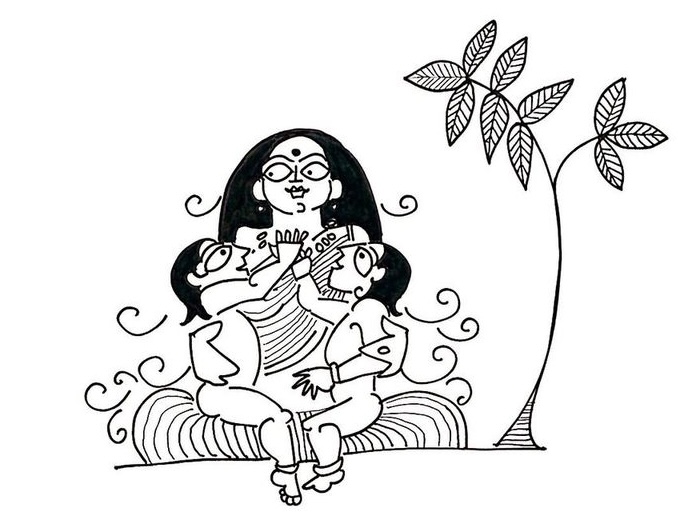
The story of Krishna, the cowherd, comes from Hari-vansh Purana. This Purana was put down in writing in 400 AD. This talks about Krishna as a Yadava boy, raised in secret in the cowherd community. He kills his uncle, Kansa, and confronts the tyrant, Jarasandh. In this work, Krishna is associated with the gopikas. The relationship is highly sensual and intimate. But there is no reference to Krishna dancing with them. There is no Radha either. Here, we are told, from Krishna’s pores, wolves emerge. They force the pastoral community to move from Gokul, which is close to Mathura, to a more distant place in Vrindavan. This is a story forgotten in later times.
In the Vishnu Purana, written around 500 AD, the story changes. We hear of the women dancing around Krishna. But Krishna does not play the flute here. He, along with his brother Balarama, sings for them and draws them to the forest at night.
The story of Krishna playing the flute comes to us from the Bhagavata Purana. It was written in the 10th century, 500 years after the Vishnu Purana, and a thousand years after the Mahabharata. It was composed in the southern part of India.
Here, we have details of Krishna’s life but no mention of Radha. She only appears in Sanskrit literature, in the Gita Govind of the 12th century, in the Puri temple of Odisha, and a few Prakrit poetries before that.
While Chaitanya Mahaprabhu (15th century),of East India, values the Bhagavata Purana, Sri Vaishnava Ramanuja (11th century) prefers the Vishnu Purana and keeps his distance from the Bhagavata Purana. He prefers the longing of the gopikas for the disappearing lord far more than the clandestine eroticism of later texts, which have a Tantrik flavour.
Chakradhar swami of Gujarat-Maharashtra (12th century) and Shankardev, who was a contemporary of Chaitanya, downplayed the role of Radha and gopikas, and preferred a more austere form of Krishna, linked to the Bhagavad Gita and the hermit traditions of Vedanta.
Southern Krishna, the musician
What is often forgotten is that some of the stories we find in the Bhagavata Purana emerge from southern traditions. The earliest references to these are found only in the Deccan Prakrit collection of love poetry, Gatha Saptasati (verse 225), that refers to the erotic love of Radha and Krishna.
Are they the same as Krishna of later sacred traditions or just secular names used by local folk? We can only speculate. There is another reference to Krishna dancing on seeing Radha in Harshacharita. These are stray references.
There are also references in old Tamil poetry, known as Sangam Poetry. In songs of the Alvar poets, dated to around 7-8th century, we hear of the dark one, Mayon, the cowherd of the cowherds, who loves to steal butter and the clothes of women. He plays pranks on them, flirts with them. He defeats seven bulls and marries a lady called Pinnai. Many people believe that Pinnai is the proto-Radha, although in Tamil tradition, she is his wife.
The Tamil Sangam poetry refers to a lot of cowherds and milkmaids. There are references to churning of milk, of Krishna wanting to steal butter, and throwing a buffalo demon on the trees to get berries. None of these stories are found in the North Indian traditions, but they make their way to the Bhagavata Purana.
The idea of Krishna holding the flute also comes to us from South India. If you look at the early Krishna artworks from Mathura in the Kushan period, they show him as a warrior boy killing the horse, the donkey, the elephant, the snake, uprooting trees, raising mountains, overturning carts, but they never show him playing a flute. There are images of Gandharvas playing flute, but never one of a cowherd.
The idea of Krishna, who as a child steals butter is seen in the Krishna panels created by kings of the Deccan such as Chalukyas. Thus, we find stories of Krishna’s cowherd life in Pattadakal, Karnataka, in the Kailasa temples of Ellora, in the 7th century and at Mahabalipuram, Tamil Nadu, all dated between 7th and 9th centuries.
The image of the flute-playing Krishna (venu-gopala) comes from this period in Pattadakal, Karnataka, in the 8th century, for the first time. We also have images of Venugopala (flute playing cowherd) from the Hoyasala temples of 12th century Karnataka.
These concepts made their way to the Bhagavata Purana and gradually became part of the Krishna world only after the 10th century AD, that is, a thousand years ago. The ideas then travelled northwards to the Vrindavan region in the 16th century, thanks to followers of Chaitanya and the support of Rajputs who served in Akbar’s court.
This is why we can call Hinduism a timeless religion and all its stories as ‘timeless’ or 5,000 years old, but historically we have a very different version.