Published in Corporate Dossier ET, May 31, 2013.
I hold a senior management position at a MNC bank. We are rolling out our services at a very aggressive speed. But as you know that banking is a very regulated business and we have to adhere to local as well as international rules. As we grow fast we see that people down the line who sit in branches often compromise or tinker around with rules to help them meet their targets. We have a very clear ethics and dos and donts policy but people always find ways to work around it. How do we ensure that executives at the front line get the message that rules are paramount and they also get the spirit of the message not just a compliance bit?
Before they listen to you, you must also listen to them.
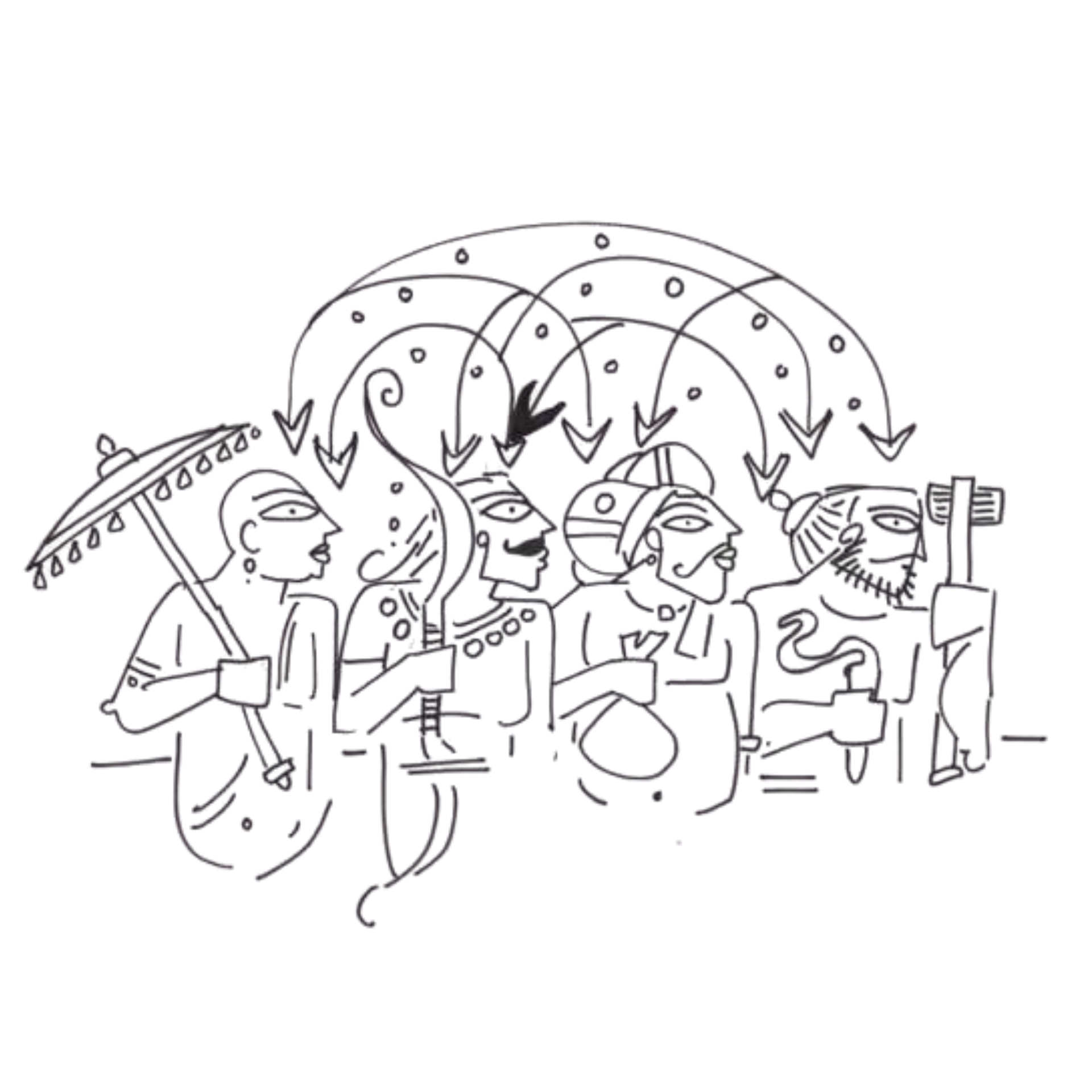
Shiva has two forms: one as Adinath who meditates in serene isolation atop Mount Kailas and the other is Vishwanath who mediates in the affairs of man in the marketplace called Kashi. For every enterprise, God takes two forms: one as the regulator watching over the management board, seated faraway in its air-conditioned offices of Delhi/Mumbai and another as the customer entering the bank making deposits and seeking loans. Who is more important? Adinath or Vishwanath? Who decides the fate of the bank, those in Kashi or those in Kailas? While the two forces are supposed to create a healthy churn — balancing profit with ethics, they are often a tug-of-war, with each side looking upon the other as the enemy, not the partner. And more often than not, a cat-and-mouse game starts between Kailas and Kashi.
Let us ask ourselves, if a person who follows all the rules gets his bonus because he follows the rules, or is the bonus contingent upon him getting business and meeting his target. The answer is the latter. We want to reach the target, preferably by following the rules. But given a choice between only achieving the target and only following the rules, very implicitly we prefer the former. We always celebrate the achiever of target, but never reward the person who sacrificed the target at the altar of rules. So the employee gets a feeling that the rules work against him (even though we know that is not true). Kailas rewards Kashi, when they cunningly get away bending the rules but turns away from Kashi when Kashi gets caught cheating.
We live in an increasingly violent world, where force and counterforce of an enterprise, regulator and customer, for example, are at loggerheads. The regulator has a macro-view of things and the customer has a micro-view of things. The regulator is trying to prevent collapse and customer is seeking support to grow. The two forces have to talk to each other, but often they simply thrive on opposing each other. They pull simultaneously, rather than alternating their energies — letting go when the other is pulling. That is where the churn fails.
To assume the problem is only there at a local level because they have ‘obey’ is itself a mistake. Giving directives is always easier than following directives. The management cannot be seen as imposing the targets as well as enforcing the rules. It needs to be seen as appreciating and accommodating the issues of the frontline, what they have to go through to manage profits with compliance. You have to think targets bottom-up and spend a lot of energy top-down helping people appreciate the reasons why regulations and rules are necessary.
When the shareholder only thinks targets and the regulator only thinks rules, the market suffers. People, pushed to a corner, end up bending and breaking the rule. Often the policeman and the judge, in creating too many rules, end up encouraging criminals, because good people are too scared to work.