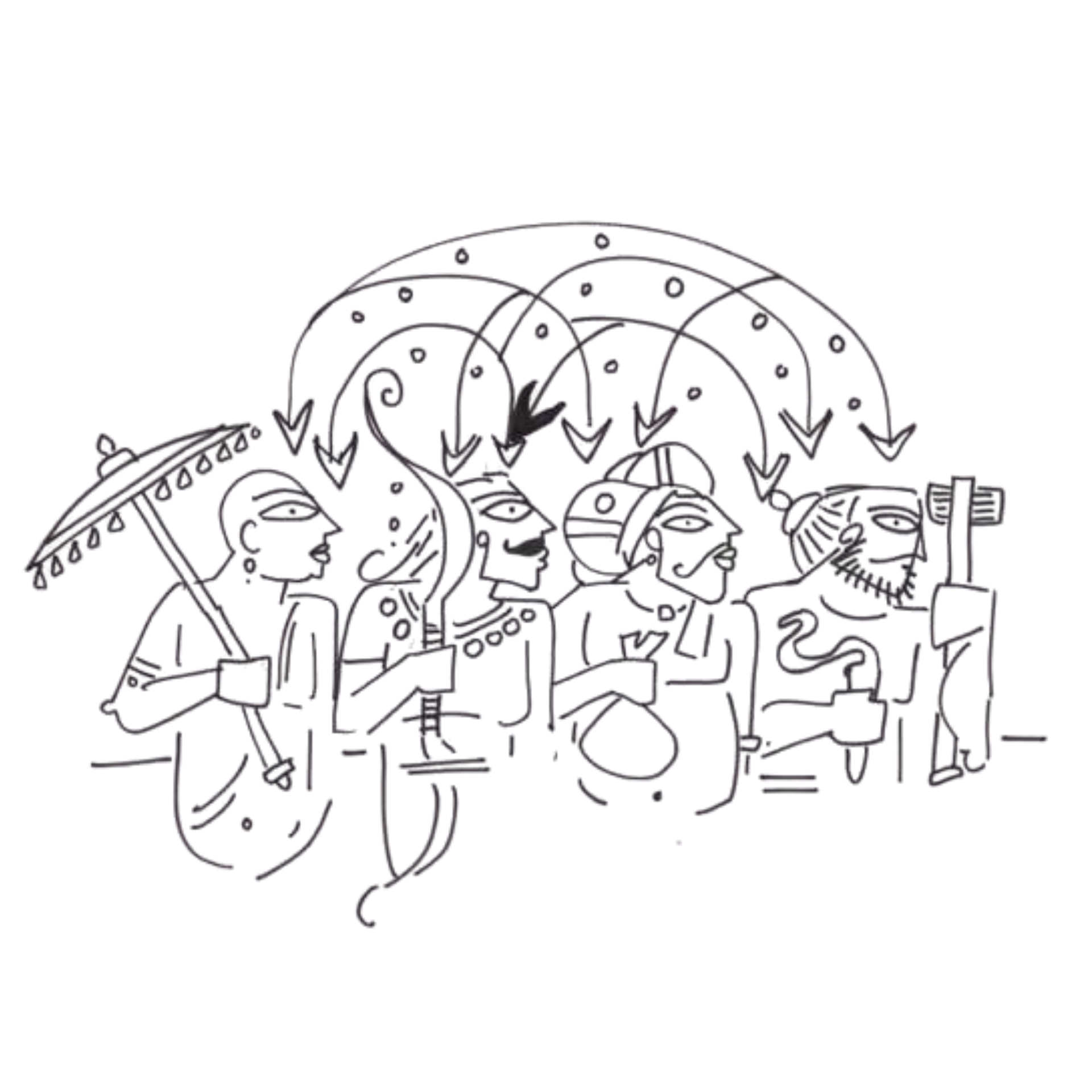
When the missionaries came to India, they argued that Hindus accept social hierarchy because they believe their birth is the result of past actions. Karma promoted fatalism. This interpretation led many anti-caste reformers to reject karma itself. The Jataka tales describe the many previous births of the Buddha, showing how good deeds over lifetimes led to Buddhahood. Karma is central there. But Navayana Buddhism rejects karma, as it does not align with the doctrine of free will and social justice.
The earliest Vedic texts (after 1000 BC) do not clearly present karma in the later moral sense. The Rig Veda contains the famous Purusha Sukta (a late interpolation), where society is imagined as emerging from a cosmic being. From his mouth came the Brahmin, from his arms the Kshatriya, from his thighs the Vaishya, and from his feet the Shudra. This hymn presents a fourfold varna system as part of cosmic order. There is hierarchy here, but no karma. The Dharmashastras (after 200 BC) describe varna as birth-based. One is born a Brahmin, Kshatriya, Vaishya, or Shudra. Duties and restrictions follow birth.
Upanishads argued that one’s status is determined by past deeds. Stories from the Ramayana and Mahabharata gave examples of present suffering emerging from past actions.
But when we move away from Sanskrit texts and listen to stories told in different communities, especially among those labelled lower caste, we hear very different explanations of origin. These are not about karma and rebirth, but about accident, trickery, or misunderstanding.
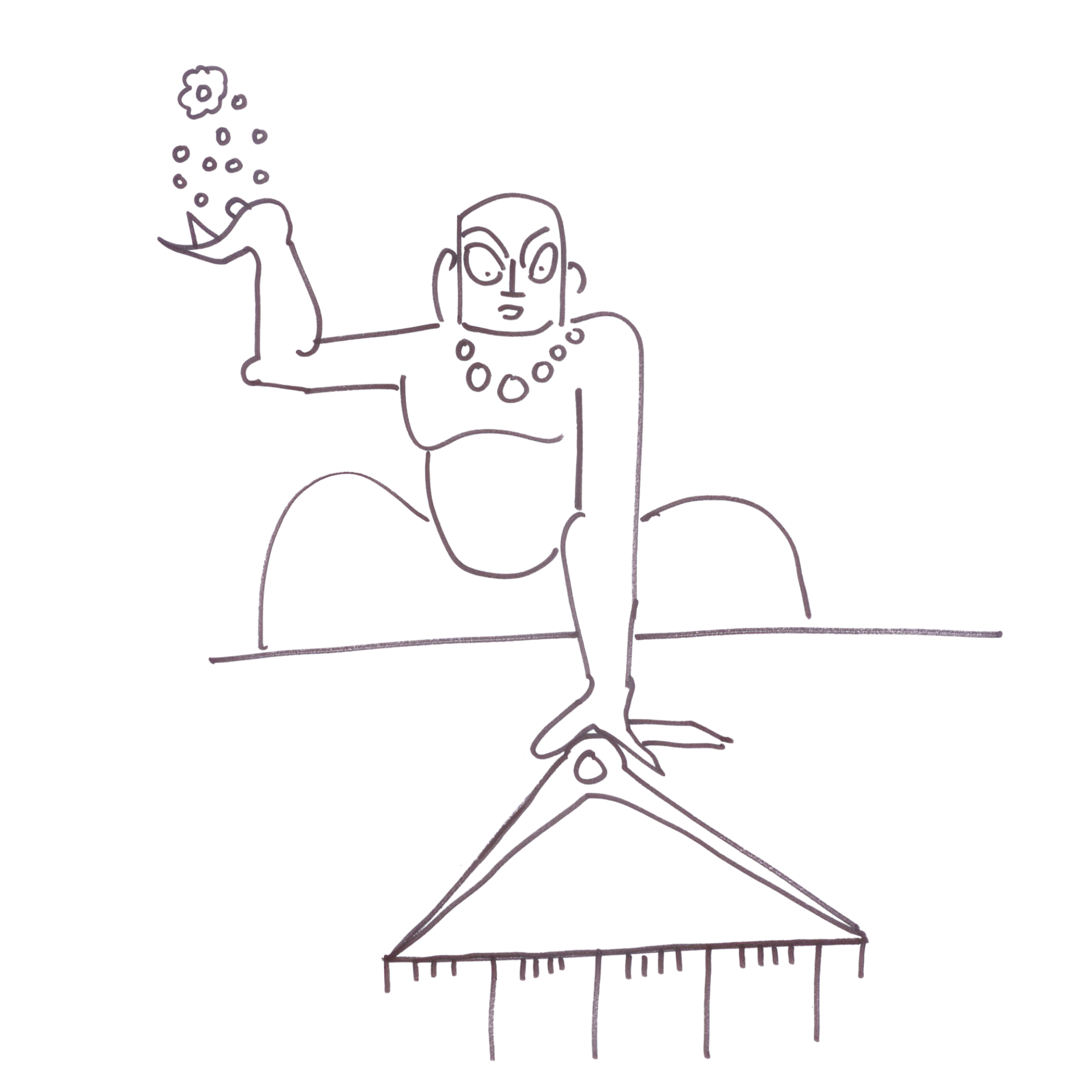
In one story, Shiva invites everyone to receive blessings in the form of sacred ash. People bring containers to collect it. Those with large pots gather much ash, and their descendants become powerful and wealthy. Fisherfolk bring nets. The ash slips through the holes. Their descendants remain poor. The story does not speak of sin or past life deeds. It speaks of foolishness and chance.
Another tale speaks of brothers cooking meat together. A piece falls on the ground. The elder brother, not wanting to give contaminated food to his siblings, eats it himself or hides it. The younger brothers accuse him of stealing the best portion. They curse him to always eat leftovers. He and his descendants become a community forced to eat what others discard. Here, caste begins with misunderstanding and accusation.
There is also a story of two brothers asked to perform temple rituals. The elder says he is unwell and asks the younger to go in his place. People misunderstand this as a sign that the younger is fitter to be a priest. The younger becomes a Brahmin. The elder becomes his servant. Social hierarchy is born from miscommunication.
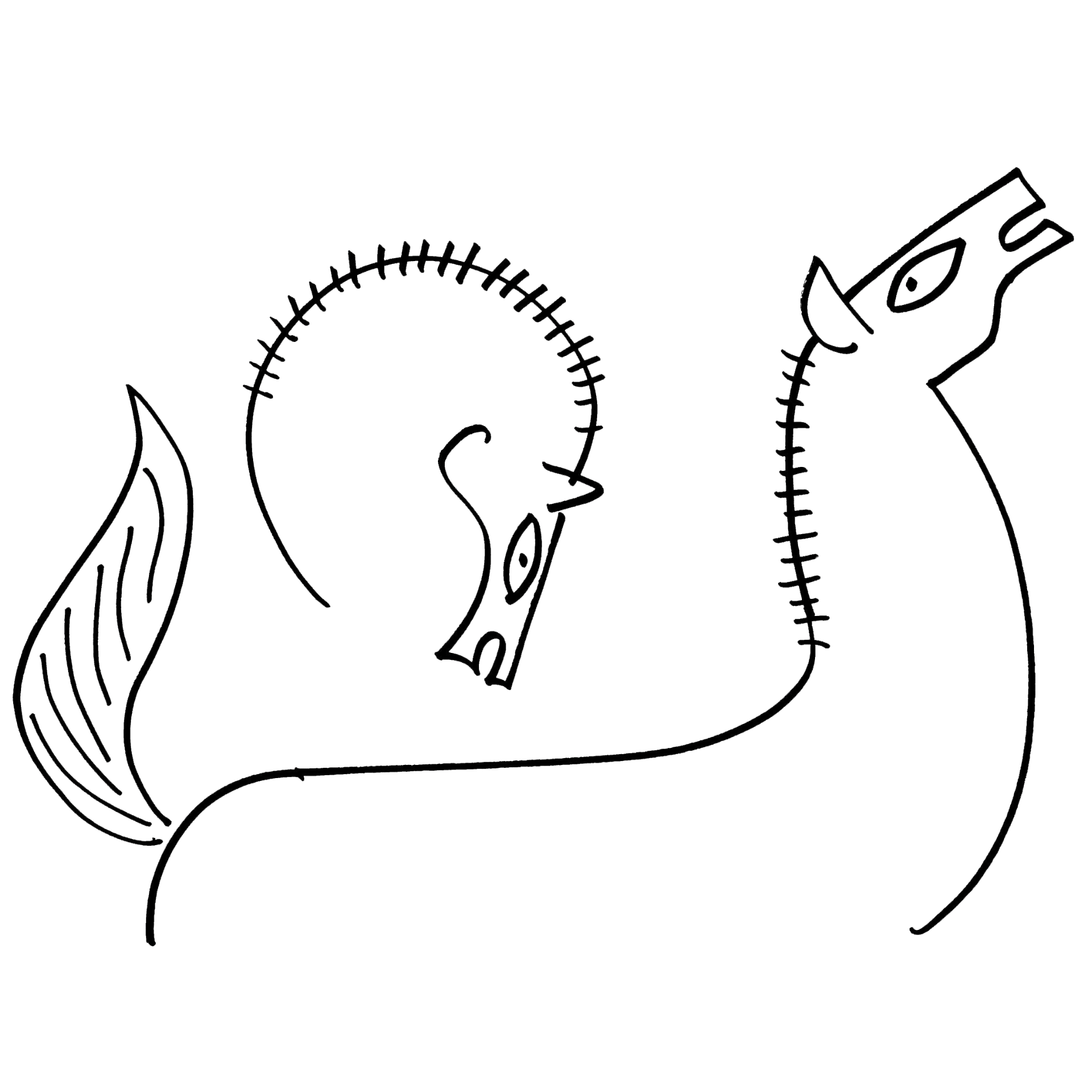
Another widely told story speaks of a drowning cow. Two brothers try to rescue it. The elder grabs the tail. The cow dies. Because he touched the dead body, he is considered polluted. From that day, his descendants must live on the edge of the village. Pollution begins not with evil but with an attempt to help.
In another version, a royal elephant dies. The younger prince asks the elder to carry the carcass out, saying he is strong. When the elder steps out with the dead body, the palace doors are shut. He is never allowed back in. He becomes the handler of carcasses. His fall is the result of betrayal.
Alongside these stories are Brahminical theories of mixture. The idea developed that there were originally four varnas. Intermarriage between them created many mixed groups. These became jatis. Scholars argue that jatis, local communities defined by occupation and kinship, existed first. The four varna categories were imposed later as a framework, with Brahmins placing themselves at the top. Within the fourth varna, service providers were divided into pure and impure. Those labelled impure were pushed outside the system and called avarna or chandala.
Some texts connect caste and rebirth. They say those who perform bad deeds are reborn in polluted wombs, as animals or as chandalas. This links social status with moral failure. It is a powerful theological justification.
Yet there are also stories of resistance. Some communities narrate how a king ordered them to perform degrading labour. They refused. They were punished, even killed. Their low status is remembered not as fate but as defiance. Their ancestors chose dignity over submission. Folk ballads on Madurai Veeran, Gangamma, and Palnadu contain memories of caste conflicts.
Across these narratives, we see that caste is explained in many ways: as cosmic design, as birth identity, as quality and action, as mixture, as accident, as betrayal, as pollution, and as resistance. The karmic explanation is only one among many. Myths of origin do not simply justify hierarchy. They also reveal memory, protest, and the struggle to make sense of unequal worlds.