
Published on 30th September, 2022, in Economic Times.
Imagine you go out for dinner with a person who has more wealth than you. He, or she, pays the bill. Then you experience their wealth. However, if you split the bill 50-50, or you pay the entire bill yourself, then you do not experience their wealth. How then does their wealth matter in your relationship?
We look at rich people through the lens of their money. We rarely see if their wealth impacts the quality of our relationship with them. Do they buy the goods and services that you offer in the market? Do they invest in your business and become a shareholder? Do they give you a loan and so, become your lender? Do they shower you with goods and services and donations, expecting nothing in return? These are direct ways in which wealth of the rich can impact our life.
If none of these four things are true, then what becomes the purpose of a rich person in our life? There could be indirect impacts. The rich person pays taxes to the government. Those taxes benefit us as they subsidise public infrastructure. We become indirect beneficiaries of the wealth of the wealthy. If the rich do not pay taxes or they do not repay their loans to the state, the state becomes unstable. This instability impacts our life. The rich people may also control the powerful people in our country. They can use their wealth to control the cultural discourse, which we will experience in our life. Or they may use charity to gain social capital and establish their hegemony and shape the nature of society.
We are not trained to see the rich independent of their wealth, as just people. Often even the rich do not want to be seen as people, independent of their wealth. Such is our social conditioning. But Hindu mythology distinguishes people from property: who we are and what we have (wealth, power, skills, information). The former is visualised as male, the latter as female. What we have is our “shakti” (strength) and having it makes us “shakti-maan” (strong). We use our strength to survive, and enhance the quality of our life. So, Indra’s shakti is Indrani, Vishnu’s shakti is Vaishnavi. With Indrani, Indra is vulnerable; without Vaishnavi, Vishnu is vulnerable. We often get so enamoured by the gender of these characters that we fail to notice the underlying ideas.
We are all a combination of what we have and who we are. What we have obscures who we are. In the Mahabharata, the Kauravas – like us – chose what Krishna has (his army, the Narayani sena) while Pandavas chose what he is (Narayana). The rich fear the Kauravas who seek their wealth, and do not believe there is a Pandava out there who will choose them, without their wealth. Even gurus give them value for the donations they give. Even temples grant them the best darshan, because they can pay the priests.
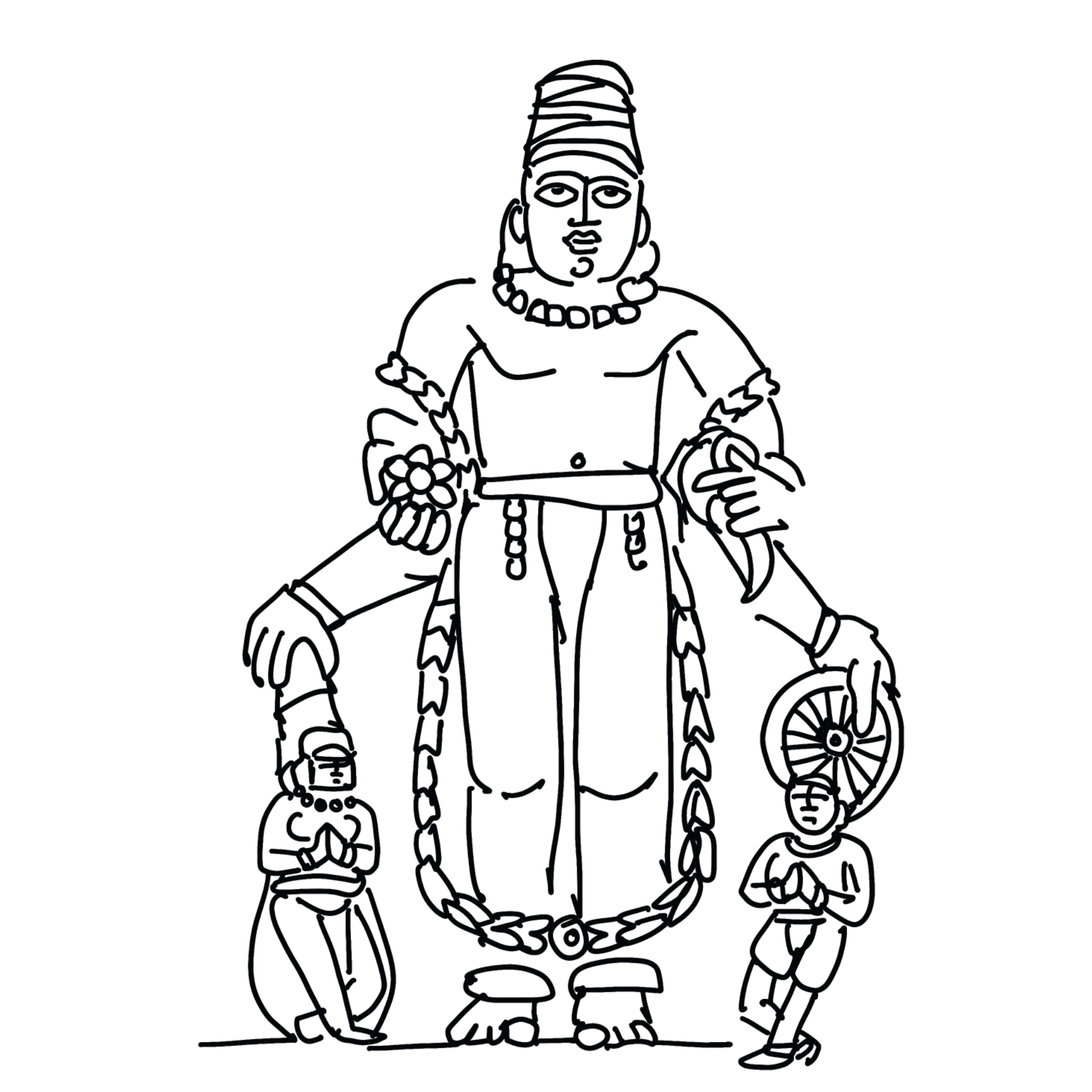
In Hindu mythology, rich people are embodied by the god Kubera. He is visualised as a pot-bellied, dwarfish, deformed being who controls a lot of wealth and sits on a pile of treasures (nidhi, in Sanskrit). He hoards. His favourite animal is a mongoose. This is important because a mongoose attacks snakes. It steals the snake’s jewel, Nagamani, which is the source of the Kubera’s wealth. Thus, Kubera is associated with violence, that allows him to gain wealth. The Nagamani is created by the Nagas. Nagas then are the food producers and Kubera becomes a food hoarder, the king of yakshas. The mongoose enables Kubera to steal the Naga’s food. Kubera’s wealth is, in turn, stolen by Ravana and the rakshasas, who became the raiders. Kubera is thus Ravana’s victim but villain to the Nagas.
Through the stories of the nagas, yakshas and rakshasas, ancient scriptures give us knowledge about the rich. For communists, Kubera is the capitalist who steals and hoards wealth. Capitalists see themselves as Nagas who generate wealth. The tax-collecting state and contribution-demanding politician becomes the mongoose who kills and the rakshasa who raids. We worship Lakshmi, who embodies wealth. We worship Nagas who generate wealth. Some venerate Kubera who hoards treasures. Those who admire Ravana see themselves as Robinhoods, justice warriors, liberating wealth from hoarders, reclaiming stolen wealth.