The word prehistory is typically used for pre-writing cultures and more specifically for cultures that existed before farming and the use of metal tools. The prehistoric cultures are cultures that used stone tools to forage and hunt for food.
Early stone tools belonging to the Old Stone Age or palaeolithic period were bulkier, while later stone tools belonging to the Middle Stone Age or Mesolithic period were sharp stone flakes fixed to sticks. During the Late Stone Age or Neolithic period, alongside the use of stone tools, the birth of agriculture was indicated.
In fact, agriculture began about 10,000 years ago (8000 BC) in a few sites in Balochistan’s Mehrgarh and some sites in the Ganga river valley. However, prehistoric cultures continued to thrive in much of India between 10,000 BC and 1000 BC – when the Iron Age began.
Interestingly, the Harappan civilisation (2500-1900 BC) and the Vedic period (1500-500 BC) are referred to by some as protohistory because they didn’t develop writing systems fully even though they were materially and linguistically advanced.
Protohistory is the period between prehistory and history and refers to the people who didn’t develop writing but were mentioned in the written records of a contemporary group.
Although the Harappans were literate people, their written materials could not be comprehended by historians. For the Vedic period, we don’t have written records but orally transmitted literature (the Vedas).
Ancestors of humans
Most prehistoric sites appear after the end of the Ice Age 12,000 years ago (10,000 BC). But even before that time, before the modern human species evolved, there seemed to have been some cultures in India by the ancestors of humans.
There are stone tools found in Attirampakkam site near Chennai, dating back to over 1 million years ago. It suggests that even before the First Indians came to India from Africa over 50,000 years ago, there would have been many earlier migrations that might not have been as successful.
Prehistoric sites
Besides this, there are several prehistoric sites in India that deserve attention. Here are nine of them:
- Earliest cave paintings from 10,000 BC to 1,000 BC, showing a shift from hunting to herding, foraging to farming, dancing and even war, domestic and sexual activity/human activities in caves of Bhimbetka (Madhya Pradesh) and Kethavaram (Andhra Pradesh).
- Earliest musical instruments may be lithophones or musical instruments made of stone, dating back to 4000 BC, which were found in Gudahandi (Kalahandi district, Odisha).
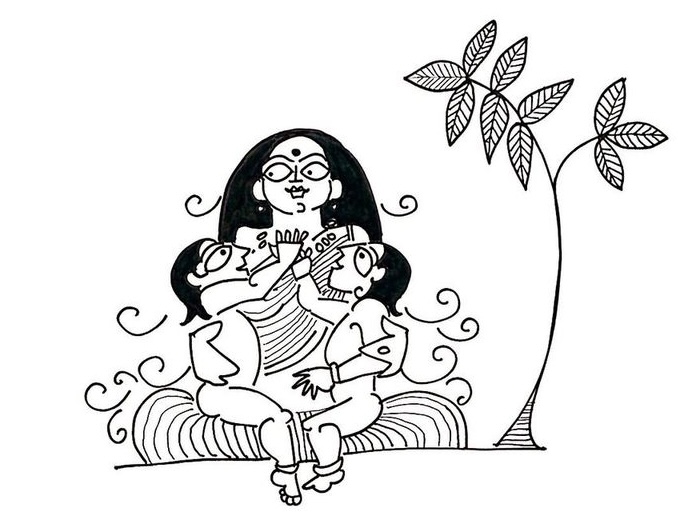
- Earliest sacred icon of a goddess – probably the triangular colourful stone with yellow pigment – was found in Baghor on the banks of the Son river, Madhya Pradesh.
- The/One of the earliest rock arts carved on flat stones was found in Ratnagiri (Maharashtra, Goa), dating back to 10,000 BC. They mostly contain images of humans and animals, including the image of ‘master of beasts’/master of animals where a human holds two tigers in his two hands.This image was later found in the Harappan civilisation and even the Sumerian civilisation.
- The earliest representation of two bright sun-like objects – probably an astronomical event, supernova, visible from the earth – dated back to 4600 BC and was carved on rocks in Burzahom, Kashmir.
- Pit-dwelling (holes covered with branches to provide shelter) sites dated back to 4000 BC were found in Burzahom, Kashmir.
- Ashmounds or piles of dung that were burnt periodically may have been ritual creations of cattle herders who lived in Deccan regions of Karnataka and Andhra Pradesh between 3000-1000 BC – roughly the same time as the Harappan cities of Indus.
- Menhirs (upraised stones), dolmens (a flat stone placed on two or more upright stones), and cists (stone coffins) have been created by India’s Stone Age cultures to mark places of burial. These have been found in several places in Karnataka, Kerala and Tamil Nadu.
- India’s stonehenge with hundreds of tall, free-standing stones (each 7 metre high, 1 metre wide) dated back to over 2000 BC and was found in Willong Khullen Megalithic site, Manipur
These sites reveal that many cultures emerged across the Indian subcontinent independently. These people traded with new migrants and even migrated to new locations, carrying their knowledge with them. Thus, every culture evolved and engaged with foreign cultures. This led to the birth of Indian civilisation. The process began over 10,000 years ago or maybe even earlier.