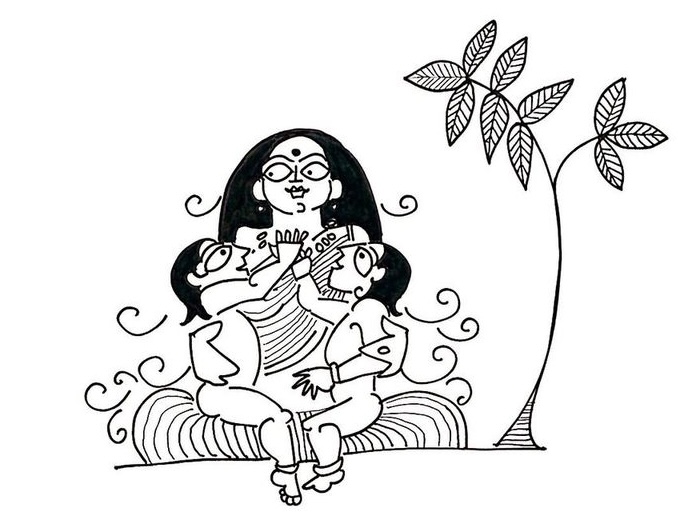
In Hindu mythology, the pigeon is more than just a bird. It is described as the vahana, or mount, of Rati-devi, the goddess of erotic arts and the consort of Kama-deva, the god of love and lust. Maybe that is the reason why many people in Mumbai feel feeding pigeons grants them good luck. These pious folks can be seen scattering grains around temples, housing societies, crossroads and street corners. But beneath this layer of piety lies a troubling contradiction.
The same people who feed pigeons in public cover their balconies and their temples with nets to keep the birds away. No one likes pigeon poop in their private and sacred spaces. Birds get trapped in these nets and die.
Also when pigeons breed in large numbers, they spread dangerous airborne diseases such as psittacosis, a lung infection that can be fatal. The more people feed them, the larger the flocks grow, and the higher the risk of disease. Who is responsible for the suffering thus caused? Is the good karma earned by feeding pigeons negated by the bad karma of killing humans?
If you ask monks, gurus and spiritual leaders, who promote pigeon feeding, about these deaths, they offer evasive answers. This is where so-called compassion turns into lazy spirituality. It’s easier to throw a few grains at a bird than to engage in genuine non-violence. True non-violence happens only when we fast to death, by voluntarily giving up all food and drink, an idea that was elaborated in ancient Jain scriptures.
Many pigeon feeders argue that animal rights trump all other concerns. They project their understanding of non-violence as granting them a moral and ethical high-ground. But it reveals ignorance. All consumption is violence. Vegetarianism denies its cost of consumption — wiping out forests, rodents, insects and pests. Industrialised farming is as bad as a slaughterhouse, as biodiversity is wiped out. Keeping pets and setting up private zoos is no alternative to natural forests.
The “non-violent” lobby uses all kinds of tricks to ban restaurants serving meat and seafood. Fisher folk are bribed not to sell fish during their festivals. Butchers are paid to shut their trade on “holy” days. Such acts are a subtle form of coercive conversion no different from missionary activity India witnessed in colonial times.
Who funds these monks who promote non-violence and vegetarian food? Those who make money from industries that pollute rivers, seas, and air. India’s biggest industrialists are vegetarians. Their wealth comes from infrastructure, chemical, real estate, and mining industries. The “bad karma” of polluting the earth is cleansed by funding pigeon-saving media-savvy monks and cult leaders.
This is the contradiction at the heart of urban piety: symbolic acts of goodness masking real harm. Right now, the last forest cover of the city may be wiped out by “development”. Mumbai’s mangroves are being systematically destroyed. There is huge money to be made here — to fund monasteries and temples, and elections, no doubt. As long as the developers are vegetarian, the monk who saves pigeons will probably not care about the environmental violence.