Published on 25th September, 2014, in www.dailyo.in .
While the West may want to see the global fight against terrorism as a fight between secular and fundamentalist forces, it is perhaps possible that many in the Islamic world see it as a new phase of the old crusades. This only makes sense if one retraces the history of monotheism.
It all began in ancient Mesopotamia, where every city had its own god. The idea of a city-god helped unite people from different tribes. When cities fought each other, victory was declared in the name of the city god, and the god of the subjugated city was either destroyed or simply made part of the victorious god’s council. Thus large cities had councils of many gods, each god representing a tribe or a district, with one all-powerful god belonging to the most powerful tribe or city presiding over all of them.
Then, one day, four thousand years ago, in the city of Ur, a young man called Ibrahim (aka Abraham) had a vision. His father Azar made idols of wood and stone and sold them in the city. Ibrahim found it hard to believe that these images could be gods. They who could not drink water could not possibly quench the thirst of humanity. He argued with his father who threatened to stone him to death or burn him alive for his radical ideas. Finally, disgusted by his father’s refusal to abandon idolatry, Ibrahim broke all images built by his father and ran away to seek God, the only true divine, Allah, who did not need a form, whose glory could not be contained in an image. Thus was born monotheism.
Ibrahim had a wife called Sarah, but no children. An angel visited them and said she would bear a son. She chuckled, as she was too old to be a mother, and advised Ibrahim to take her handmaiden, Hagar, as his wife. Hagar bore Ibrahim a son Ishmael and shortly after, despite her age, Sarah, became pregnant, and gave birth to Isaac. Thus, she who had little faith in Abraham’s God, realised his power, his grace, and his wrath. He made her mother, but ensured her son would be the younger one, obliged to bow to the handmaiden’s son. But Sarah chose pride over peace, and forced Ibraham to cast Hagar and her son away. Hagar moved to the desert and would have died of thirst but Allah pointed her to a well of water known as Zam Zam. Later, on Allah’s orders, Ibrahim visited Hagar and built with the help of Ismael, not far from the well of Zam Zam, the Kabah to honour Allah, around which would rise the city of Mecca.
From Ishmael descended the Arabs who spread across Arabia. From Isaac descended the Jews who went to Egypt, where the pharaoh eventually enslaved them. Three thousand years ago, a prophet of God called Moses rose amongst the Jews. He led them out of slavery and took them to the Promised Land in Levant. Here, after many years of wandering, the twelve Jewish tribes finally established a kingdom known as Israel with its capital in Jerusalem. After many kings like Saul and David and Solomon, the Jewish kingdom collapsed and the Jewish tribes were scattered across the world.
Two thousand years ago, from amongst the Jews rose a man called Jesus, in the lineage of King David. He rejected the Jewish view that God only cared for the Chosen People and that God was a stern father who demanded absolute obedience. He said God was a loving father who invited every human being to his house, even when they broke his laws. His radical views upset the Jewish clergy who had him arrested and crucified. His followers said that he resurrected himself three days after his death and promised to return at the time of rapture, when the world would come to an end, and lead all the faithful to the Kingdom of his Father, the one true God.
They also said that he, who had defied death, had also been immaculately conceived in the womb of a virgin called Mary, who was to marry a man called Joseph. They declared Jesus was Christ, the messiah of God, sent to suffer for the sins of humanity. Their word became the gospel, and they became known as the apostles. Their tales and interpretations of what Jesus said became very popular more in the West than in the East, first amongst Roman slaves, then Roman nobility and eventually Roman royalty. This is how the polytheistic Roman Empire transformed into the monotheistic Holy Roman Empire. Cynics say religious conversion was the only way the Emperor could bind the crumbling empire together. But Christendom was not united. The Christians who lived in Byzantium in the east consciously separated themselves from the Christians who lived in the west and owed greater allegiance to Rome.
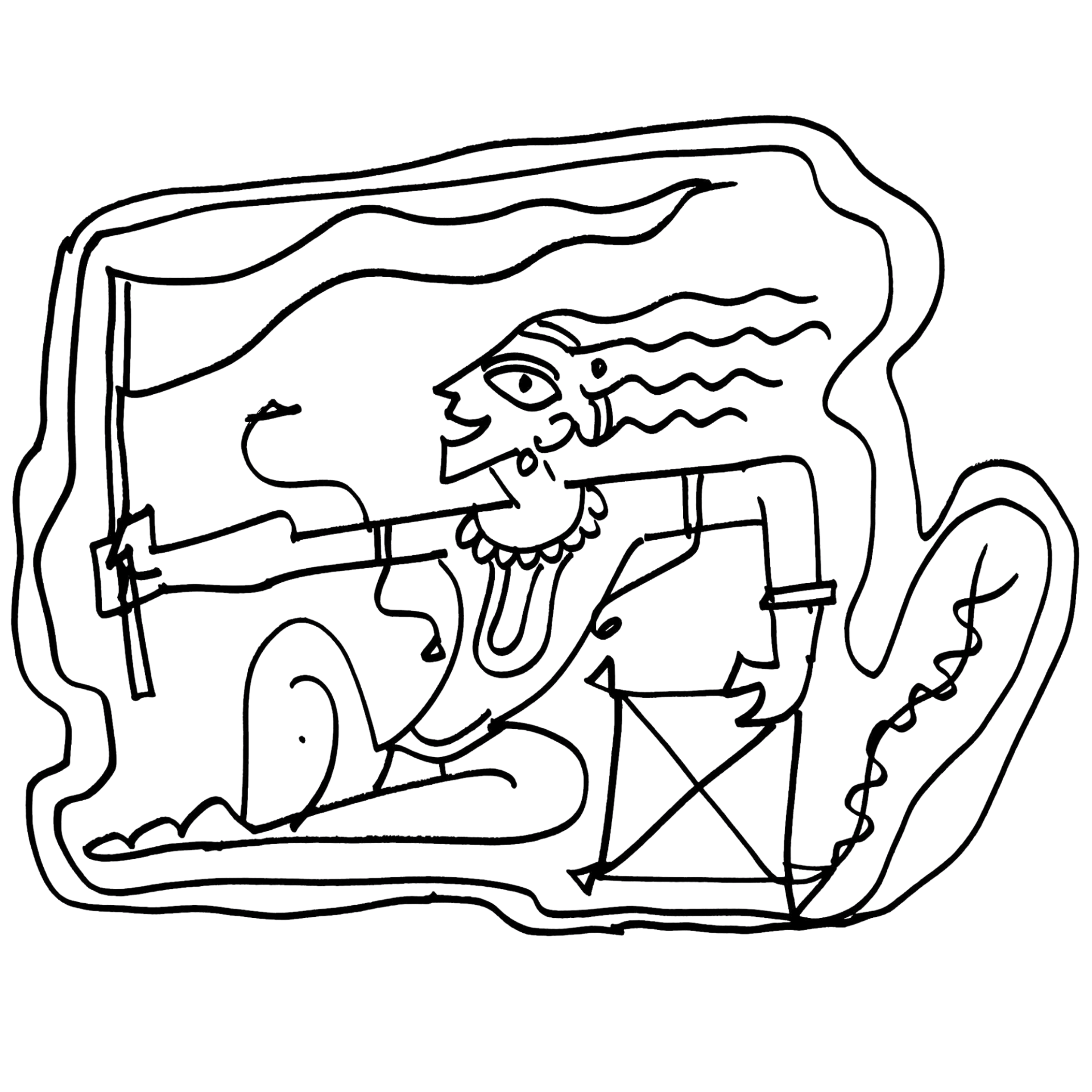
Then about 1,500 years ago, an Arab trader called Muhammad was approached by the angel Jibreel and asked to recite the words of God. In a series of such encounters, the Quran was revealed to him and he was declared as the final prophet who would bring humanity to the right path. He was even taken on a horse that could fly to Heaven where he was told the right way to be a Muslim. Prayers thereafter had to be offered facing, not Jerusalem, but Mecca. In the Prophet’s lifetime, Islam became a dominant force in Arabia. Soon after his death, the Muslims were divided as the Sunnis who followed the path forged by the Prophet Muhammad’s father-in-law and the Shias who follow the path forged by the Prophet Muhammad’s son-in-law. But this division did not stop the astonishingly rapid spread of Islam from Arabia through Persia to Africa and thence to Asia and Europe. It eventually met stiff resistance in Christian Europe.
A thousand years ago, resistance eventually gave rise to a series of war campaigns known as Crusades led by Christian Europe determined to regain control over the Holy Land of Levant, specifically the city of Jerusalem, from the Muslims. The Crusades nearly lasted for centuries and finally ended with the fall of Constantinople five hundred years ago. With that the Muslims, or rather Ottoman sultans, were declared the masters of the East and the Christians had to be satisfied with the West.
In the last 500 years, Christian pride resurrected itself with enlightenment, industrialisation, colonisation, and finally capitalism. It changed the course of the world forever. America came into being, and colonies finally gave way to secular nation states, but not before two devastating World Wars in the 20th century. One significant outcome of the World War II was the carving out of the erstwhile Ottoman Empire into a number of Muslim states, and one Jewish state – Israel.
Many Muslims see the establishment of Israel on lands, which for centuries belonged to the Muslim Ottoman Empire, as Christian revenge for their defeat in the crusades. For it made no sense why the Christians who for centuries persecuted Jewish people as descendants of Christ killers would want go out of their way to help them. Perhaps to allay the guilt of turning a blind eye to the Holocaust during which millions of Jews were systematically slaughtered by the Nazi regime of Germany. Or maybe, it was the result of Christian nation states being arm twisted by powerful Jewish bankers who realised it was important to have a nation state of their own, after centuries of being homeless and persecuted.
The rise of the Jewish state and the domination of Euro-American commercial powers in the affairs of the Middle East, especially to control the lucrative oil there, spurred the rise of radical Islam that rejects all things modern (read Western), first in Iran and now across almost every country with a Muslim population. Though never admitted, the Gulf War and the Afghan War and now the opposition to ISIS, is being seen by many as a new form of the medieval crusade. Much as the West wants to deny it, for the Muslim world secularism, rationality, liberalism and democracy are just new avatars of their old Christian foes.