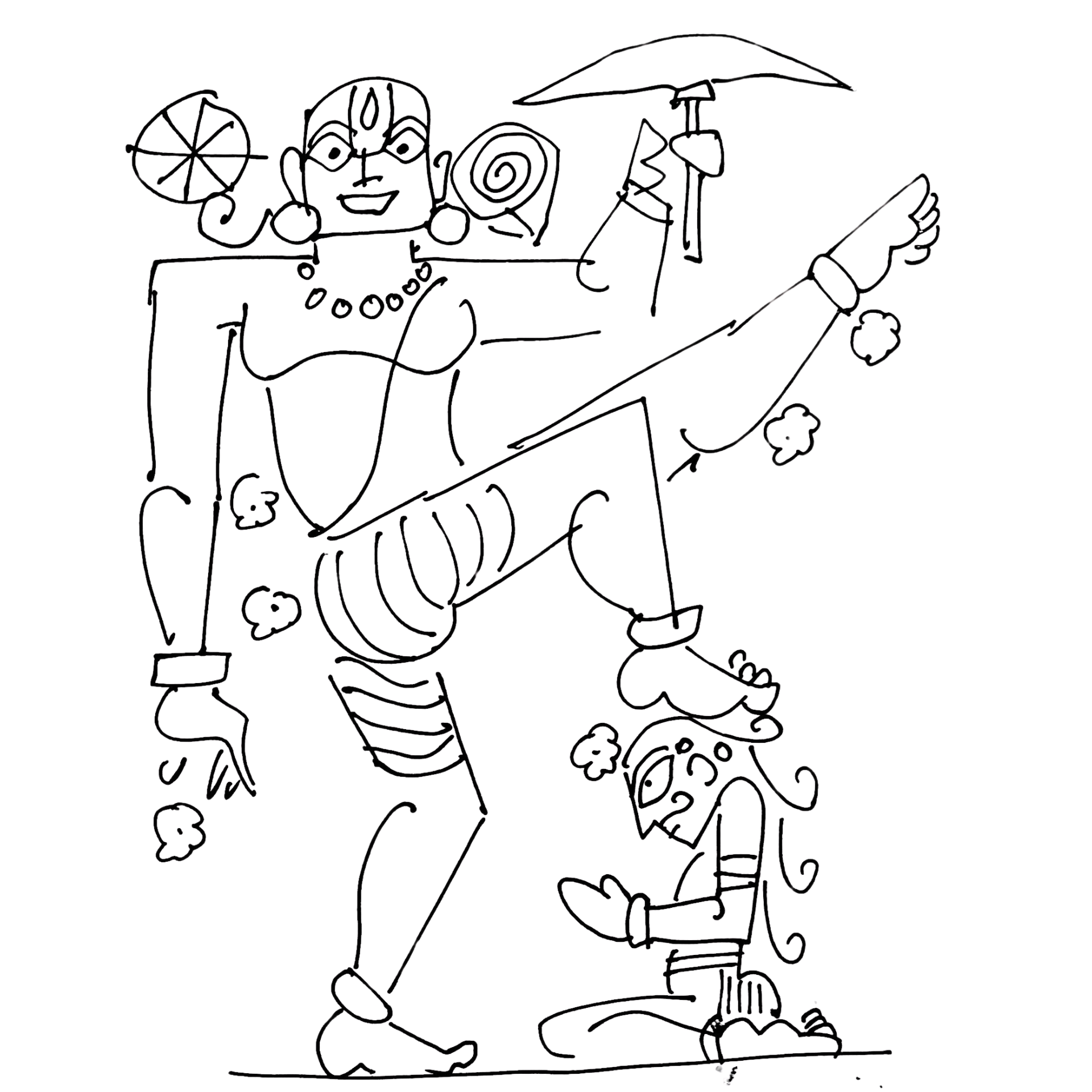
In the state of Punjab stands the temple of Achaleshwar Mahadev at Gurdaspur, while in nearby Haryana is the temple of Pehowa at Kurukshetra. What connects these two sites is their association with Kartikeya, the mighty son of Shiva and Parvati. Kartikeya is no longer a widely worshipped deity in North India, but he remains extremely popular in Tamil Nadu, where he is venerated as Murugan, Subramanyam, or the bright jewel.
The earliest depictions of Kartikeya in history appear on the coins of the Yaudheyas, a warrior clan that once controlled the Punjab region, which are over 2,200 years old. Kartikeya was also seen on the coins of Audumbara kings, who controlled the hilly parts of Punjab, near Pathankot, 2,100 years ago. This suggests that Kartikeya was among the earliest deities worshipped in the Punjab region, dating back to Mauryan times. He was called Mahasena, the great divine commander of divine armies, and much admired by soldiers of the region.
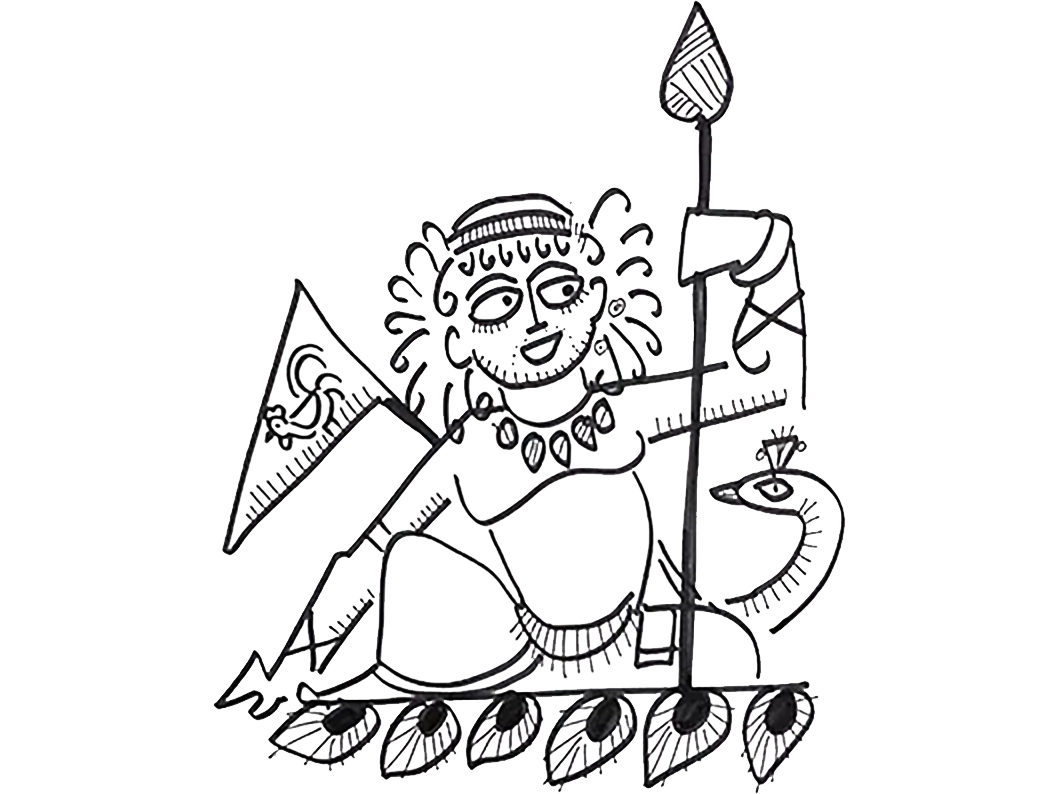
In Mahabharata, composed 2,000 years ago, Kartikeya was produced by the collaboration of many gods to kill the demon Taraka. He was called the son of the hermit-god Shiva and his consort, Shakti. Later, in Puranic times, 1,500 years ago, the elephant-headed Ganesha also came to be identified with Shiva and Shakti. In artworks, from 1,000 years ago, we find Shiva’s family depicted on temple walls: Shiva, Shakti and their two sons — Kartikeya, with his spear and peacock, and Ganesha with his stylus made of tusk and his ink pot, later linked to sweets (modak).
But there was strife in this family. The athletic Kartikeya was overshadowed by his corpulent and cerebral younger brother. In stories, in the race to go around the world three times, Ganesha won, as he smartly went around his parents, declaring they were spiritually his whole world. Kartikeya, who flew around the material realm of three worlds, was sidelined. Wives were given to Ganesha. Ganesha’s name began to be taken first in rituals, since he was seen as the embodiment of smart work, one who removes obstacles.
Kartikeya was angry with his father, and left Mount Kailash. Kartikeya was also angry with his mother. When he killed all the demons, and helped Indra regain control over paradise (Swarga), all women went to Shakti and expressed their fear of Kartikeya’s violent masculine energy. He was seen as the embodiment of fiery Mars. He was the creator of martyrs and widows. The women feared he would, like a marauding conqueror, disrespect them. So, to protect themselves, whenever Kartikeya approached, they would acquire his mother’s face. So all women appeared like Shakti to Kartikeya. He realised he could never see any woman erotically or romantically. So, he could never marry. Furious, he left Kailash, refusing to meet his mother.
Kartikeya tore away his skin and burnt it atop a mountain (Krunach, in Uttarakhand). Having burnt his skin, Kartikeya suffered. At the Achaleshwar lake, he bathed. At Pehowa, he stands in a temple where no woman is allowed; and oil is poured on his image.
Shiva tried to pacify him at Achaleshwar, but failed. Shakti tried to pacify him at Pehowa, but failed.
Kartikeya became the first woman-shunning Hindu ascetic, a Nath, who smears his body with ash to reduce the pain of burning skin. He stays eternally a boy (Kumara). This is why some people in Himachal and Punjab equate the peacock-riding boy-god Kartikeya with the peacock-riding boy-sage, Balak-nath. In Tamil Nadu, the mountains of Palni are said to have been brought from the North by Rishi Agastya, with the help of the Asura Hidimba, on the orders of Parvati, who wanted to ensure her son did not miss his mountain home. In Tamil temples, Kartikeya is called Murugan. He is a warrior god and a romantic god, with two wives: Devasena, daughter of the celestial Indra, and Valli, daughter of a local mountain tribe. In Tamil temples, Ganesha is not married. He is the scribe of sages, interested in intellectual matters. So the Northern Kartikeya, though related, is ritually and narratively very different from Southern Murugan.