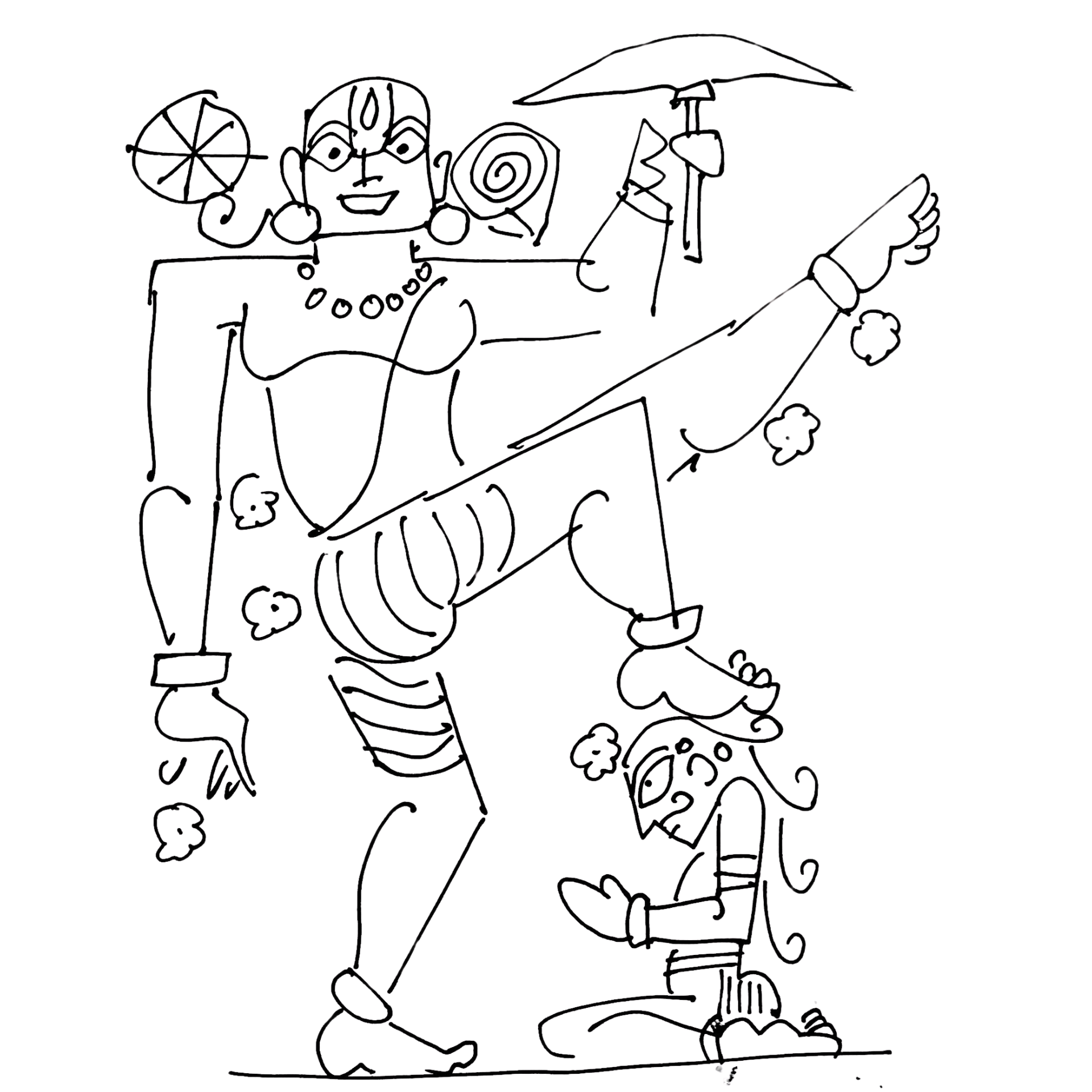
Metaphor is a word or phrase that is used in an imaginative way to show that one thing has the same qualities as another. We may refer to cold weather but mean loneliness, or to warm weather but mean love. One thing is used to say something else. Often nature is used to evoke something psychological. Nature is visible, but the mind is not. So nature becomes a symbol, a metaphor, to explain the mind.
Early Indian metaphors emerge from three very different cultural zones: the Vedic northwest, the Tamil south, and the Prakrit-speaking Deccan. Each region had its own climate, flora, fauna, settlement pattern, and historical rhythm. This shaped how poets imagined the world and how they used nature as a bridge between experience and meaning.
Metaphors of the Vedic world
The Vedic world took shape along the Sarasvati River and its tributaries, in the plains stretching from Afghanistan to Haryana, around 1500 to 800 BCE. This was a land of wide grasslands, fast-flowing rivers, harsh winters, blazing summers, and a sky that dominated the horizon.
Communities moved with cattle, performed fire rituals at night, and watched the rising and setting of stars to mark seasons. Nature was not gentle. It was immense, unpredictable, and divine. The metaphors in their poetry reflect this.
The river Sarasvati is praised as a mighty mother rushing with noise, much like a snow-fed torrent. The dawn is a young woman who lifts the darkness and opens the day, mirroring the dramatic glow of early morning over open plains.
The storm is a bull that bellows across the sky because thunder in this region echoes loudly between hills and clouds. Geography gave rise to awe. Humans saw themselves as small. Their metaphors therefore, scale upwards, turning nature into gods and cosmic forces.
How emotion stitches Tamil landscape into poetry
Far to the south, the Sangam poets lived between 300 BCE and 300 CE in the Tamil country, a region of short rivers, monsoon rains, long coastlines, rocky hills, dry interiors, and fertile paddy fields. This was a settled agrarian society with strong clan identities, cattle wealth, and maritime trade.
Here poets divided the land into five ecological zones: Kurinji (mountains), Mullai (forests), Marutham (farmland), Neythal (seashore), and Paalai (desert). Each zone produced its own emotional mood. This was possible because the Tamil landscape changed rapidly within short distances. A day’s travel could take one from rocky hills to black-soil fields to sandy shores.
These shifts shaped metaphors. When the heroine waits for her beloved in Mullai poems, she watches cattle return home at dusk. In pastoral Tamil villages, cattle movement marked the rhythm of the day.
When lovers meet secretly in the Kurinji hills, they hide among flowering shrubs because such shrub lands really cover the Western Ghats. When the heroine stands on the shore in Neythal poems, the restless waves mirror her longing because fishermen and merchants depended on unpredictable seas.
Elephants entering paddy fields symbolise emotional turmoil because this was a familiar sight during harvest months. Geography fragments emotion into zones, and emotion stitches the zones into poetry.
Metaphors reflect urban sensibility in the Deccan
Between these two lies the world of the Gatha Saptasati, composed roughly between 100 and 300 CE and associated with the Satavahana courts of the Deccan. This region was neither a pastoral frontier nor a monsoon-coded agrarian system. It was dotted with trade towns, Buddhist and Jain establishments, garden settlements, and caravan routes. Rivers like Godavari and Krishna shaped valleys of mango groves, lotus ponds, and shaded retreats. Nature here was cultivated and intimate. The metaphors reflect this urban sensibility.
The Ashoka tree flowers when touched by a woman’s foot, a playful belief nurtured in palace gardens. Mango blossoms scent the air, signalling the urgency of desire in enclosed courtyards. A parrot repeats the heroine’s words because parrots were kept as pets in elite homes. A moonlit pond hides lovers among lotus leaves, a common feature of Deccan pleasure gardens.
Even the monsoon becomes a messenger, not a frightening cosmic force, because settled towns welcomed the rain that replenished tanks and wells. Nature is neither threatening nor symbolic of vast emotion; it becomes a conspirator in private adventures.
Journey across India through three poetic visions
Placed together, these three traditions map a journey across India. In the northwest, the vast sky produces cosmic metaphors. In the far south, diverse ecological zones produce emotional metaphors. In the Deccan, cultivated groves produce erotic metaphors.
Each region observes the same natural world, yet history and geography make them speak differently. The Vedic poet looks upward. The Sangam poet looks outward. The Prakrit poet looks inward. And all three use nature as a language to explain life’s mysteries long before philosophy spelled them out in prose.