Published in Sunday Midday on 8 Feb, 2009.
Hayagriva means one with a head of a horse. It is said that such a creature once stole the Vedas and hid under the sea forcing Vishnu to take the form of a fish, seek him out and destroy him.
In another story it is said Vishnu was unable to defeat this horse-headed demon because the latter had a boon that he could be killed only by another horse-headed creature. Tired after many battles, Vishnu went to Vaikunth, his abode, and there he rested, wondering of a method of killing the demon, placing his chin on one end of his bow.
The gods went to him and appealed to him to open his eyes and resume the fight however Vishnu was so deep in meditation that he did not open his eyes. So the gods took the form of termites and ate the string of the bow. As soon as they severed the taut bowstring, the shaft of the bow snapped straight and the string swung with such force that it lashed and severed Vishnu’s neck.
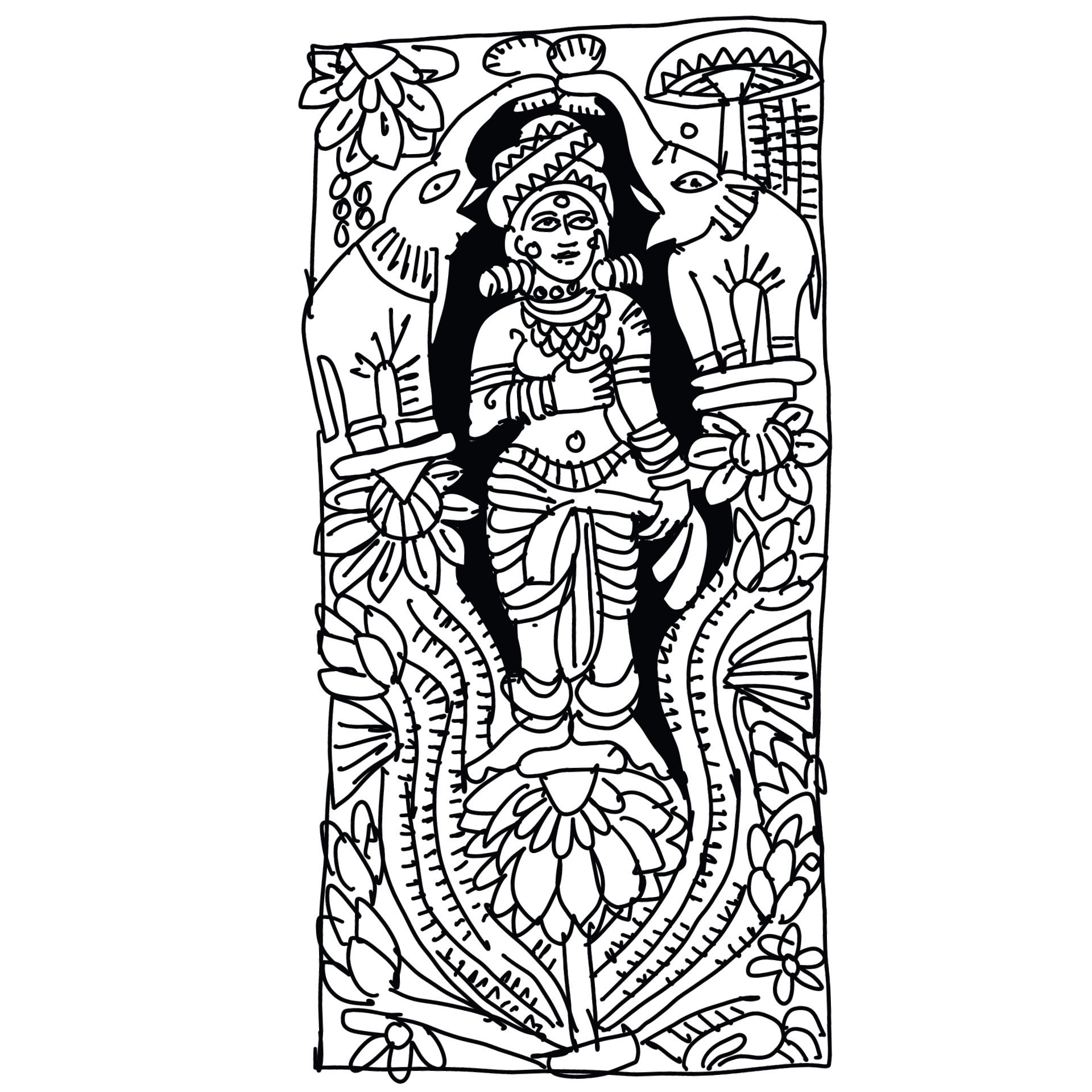
Terrified the gods went to the goddess Laxmi, consort of Vishnu and wondered what they could do. The goddess calmed them down and said nothing happens without a purpose. She advised the gods to behead a horse and place its head on the severed neck of Vishnu. This was done and, Vishnu rose as Hayagriva, the horse headed one. In this form he defeated the horse-headed demon and secured the Vedas.
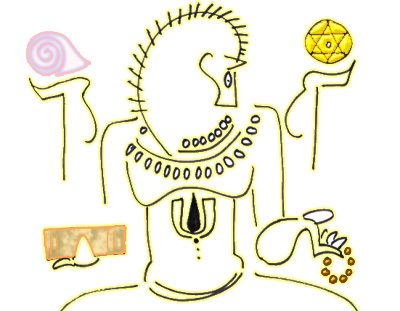
This form of Vishnu with a horse’s head is worshipped in many parts of South India. He is depicted holding a conch-shell, a discus, a rosary and a book. He is associated with knowledge and education and is said to be the form of Vishnu which revealed all knowledge to Saraswati, goddess of learning.
Hayagriva is worshipped as a source of wisdom. The horse headed form of Vishnu is also associated with the sun and it is said that the sun revealed the secret of the Vedas to Yagnavalkya in the form of a horse-headed being. The notion of a horse-headed being sharing his wisdom is a recurring theme in Hindu mythology.
Often the image is associated with Laxmi in which case the deity is know as Laxmi Hayagriva. In Shri Krishna Mat, in Udupi, Karnataka, it is said that the great devotee Vadirajatirtha used chant hymns in praise of Hayagriva and keep offerings of horse-oats on his head. Hayagriva would approach him from behind in the form of a beautiful white horse and eat the oats.
There is the story of Rishi Dadichi who shared the secret of Vedic lore with the Ashwini twins. Indra had forbidden him from sharing the secrets and had declared that if he ever shared the secret, his head would burst into a thousand pieces. When the twin gods first approached Dadichi, eager to learn the secret, Dadichi told them about the curse. The twins found a way out; they cut the head of Daidichi and replaced it with the horse’s head. Through the horse’s head Dadichi revealed the secret of Vedic lore. As soon as the revelation was complete, the horse head burst into a thousand pieces thus fulfilling Indra’s curse. The Ashwini twins then attached the sage’s original head and Dadichi came back to life. Thus the Vedic lore was transmitted, Indra’s curse was kept, no one was harmed — except for one horse.
In many sculptures, the Ashwini twins are depicted as a pair of horse-headed twins. The story goes that the sun-god took the form of a stallion to make love to his wife who had run away from him, unable to bear his glare, and had hidden in the form of a mare. Thus, there is a close association between the horse and the sun. The sun-god is said to have a son called Revanta who rides a white horse and is said to be the god of hunters.
There is another horse-headed being in mythology. His name is Tumburu and he is a Gandharva and a musician. He is often depicted standing near Vishnu and Narada. He often vied with Narada for the position of the world’s greatest musician.