
Mythologist | Author | Speaker | Illustrator

-
Articles

Brahmins As Kingmakers
Brahmins as Kingmakers: A glimpse into the political scenario in ancient India. Published on 11th July, 2020, in Economic Times If you read Indian history, you would often come across stories in which a king, wanting to coronate himself, or an ambitious warlord, wanting to transform himself into a king, would invite Brahmins from a…
-
Articles

Gods Who Remove Suffering
WHO IS A HINDU? Gods who remove suffering Published on 21st June, 2020, in Mumbai Mirror. Once upon a time, Vishnu came looking for his wife, Lakshmi, who left their house after a fight. During his search, he took residence in a termite hill under a tamarind tree. A cowherd came and gave him milk…
-
Articles

How ‘Breaking India’ Started
WHO IS A HINDU? How ‘breaking India’ started. Published on 7th June, 2020, in Mumbai Mirror. At the heart of Hindutva is the idea that Hinduism is under threat from external and internal forces and they must be countered at any cost. The proponents of Hindutva are wary of Muslims and Christians and Dalits, but…
-
Articles

The myth of giving
Published on 10th May, 2020, in Mumbai Mirror Once upon a time, there was an asura called Bali, also known as Mahabali, who conquered the three worlds, and was famous for his generosity. Nobody remembered Indra, king of the celestial regions, who had been driven out of his kingdom by Bali. So, Indra begged Vishnu…
-
Articles
How the migratory patterns of the Brahmins, the weavers shaped Indian culture.
Published on 2nd May, 2020, in The Economic Times Whenever we speak of migrations, we think of the Aryan migration into India 3,500 years ago. The British colonialists insisted, for their politic reasons, that this was an invasion. But, scientific investigation, based on linguistics, archaeology and genetics, has proven conclusively that it was a migration…
-
Articles

When the Vedas Reached South
Published on 19th April, 2020, in Mid-day The mention of southern states is conspicuously absent in vedic literature. Hymns of the Rig Veda date back to 1500 BCE. They refer to the Saptasindhu or Indus Valley region. Shatapatha Brahmana, dated to 800 BCE refers to a movement towards what is now Bihar. In the Aitreya…
-
Articles

Tea is for us what Soma was for Vedic Aryans
Who is a Hindu? Tea is for us what Soma was for Vedic Aryans Published on 12th April, 2020, in Mumbai Mirror The Rig Veda has about 1,000 hymns composed as groups of Indo-Aryans migrated in waves from the Indus river valley to the Gangetic river valley over 500 years between 1,500 BCE to 1,000…
-
Articles

The Love-God’s Mother
Published on 5th April, 2020, in Mid-day Between the 5th and 10th century C.E., we find the development of Puranic literature. Many stories explained the relationships of Vishnu’s many avatars. One story that merits attention is the story of Pradyumna, the son of Krishna and Rukmini. The story is told very differently in the Hindu…
-
Articles

The Village Temple Co-operative
Published on 29th March, 2020, in Mid-day In ancient India, the village fields did not belong to any single person. There was no concept of individual land holdings. The entire land of the village belonged to the village community. Therefore, the village was dedicated to a goddess. She was said to be the owner of…
-
Articles
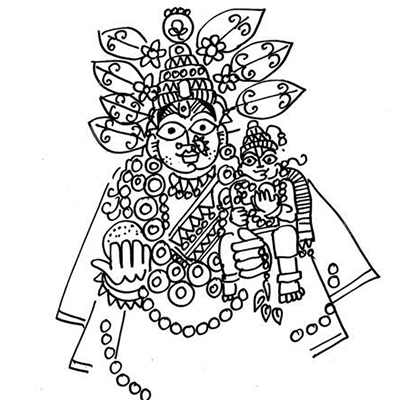
A Brief History of Goddess Worship
Published on 8th March, 2020, in Mid-day Harappan civilisation, which thrived over 4,000 years ago, had seals of as-yet-unidentified goddesses emerging from trees, and goddesses riding tigers. Vedic religion that thrived 3,000 years ago however, was primarily a masculine religion dominated by worship of Indra, Varuna, Agni and Soma, even Prajapati. Goddesses play a generally…
-
Articles
A Different Hinduism
Published on 19th January, 2020, in Mumbai Mirror Hinduism, as expressed by Adi Shankaracharya 1,200 years ago, was very different from the Hinduism expressed by Swami Vivekananda and Swami Dayananda Saraswati around 150 years ago, because each one faced different challenges, though they did have many things in common. All three chose to live monastic,…
-
Articles
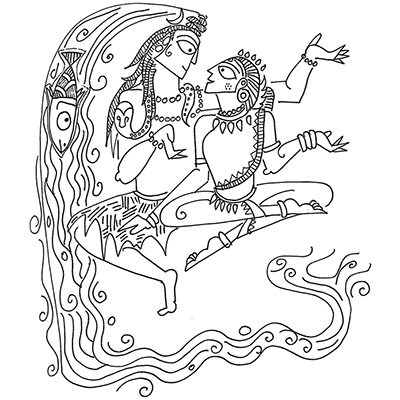
Messaging Modes – Hearing, Overhearing
Published on 29th December, 2019, in the Economic Times In Abrahamic mythology, God communicates with humanity through messengers. Judaism informs us how God spoke to Moses, Christianity informs us how God spoke to Jesus, and Islam informs us how God speaks to many prophets from Adam onwards to the final Prophet Muhammad. Messengers hear God’s…
-
Articles
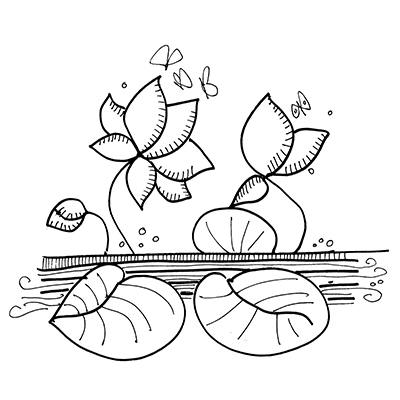
Spot the difference between sign and symbol
Published on 16th December, 2019, in The Hindu The symbol of India in Indian passports and Indian currency notes has been a lion and a spoked-wheel or chakra, both from the Ashoka pillar. Now the government has introduced the lotus on the passport, as part of security measures, we are told, to be replaced by…
-
Articles

King of the Blink
Published on 1st December, 2019, in Mid-day If you travel to Lucknow, it is possible that you will pass a forest known by the name of Naimish-aranya, the forest of king Nimi, on the banks of the river Gomti. This forest is where the stories of the eighteen Mahapuranas, and the epics Mahabharata and Ramayana…
-
Articles

Why Shiva marries
Published on 27th October, 2019, in Mumbai Mirror When we read stories of Shiva, there is a constant reference to how he is forced to marry and produce his children, Kartikeya and Ganesha. When Shiva gets married, he comes down from the mountain Kailasa, which is cold, where no vegetation grows. He descends with his…
-
Articles

A cannibal of the Puranas
Published on 27th October, 2019, in Mid-day The Rigveda refers to the battle of 10 kings that was won by Sudas of the Bharata clan. In Puranas, we are told that he had a son called Kalmashpada. That is why Kalmashpada is also called Saudas, which means ‘son of Sudas’. Saudas Kalmashpada is infamous for…