
Mythologist | Author | Speaker | Illustrator

-
Articles

History of Bharat in Seven Days
Published on 10th July, 2022, in Mid-day. When you compress India’s history to one week, we gain a rather delightful perspective of our past. Indian history from Harappan times till today is approximately 5,000 years, so each day of the week is approximately a period of 700 years. On Sunday, in Northwest India, farming appears.…
-
Articles
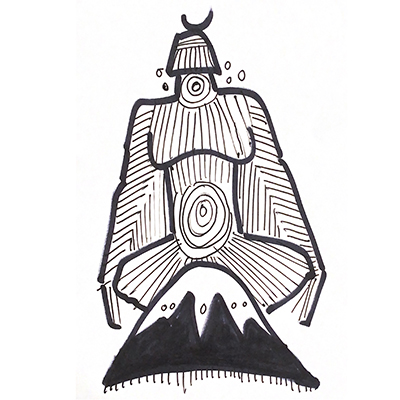
Shiva from Tibet?
Published on 19th June, 2022, in Mid-day. The idea that Tibet was the homeland of Aryas came from Swami Dayananda Saraswati, who in the late 19th century, founded the famous Arya Samaj. He valued the Vedas as the original source of Hinduism, but saw Puranas including worship of Shiva-linga as a degeneration of Arya-dharma, a…
-
Articles

Flying Mountains Do Not Lie
Published on 29th May, 2022, in Mid-day. Nationalists want to believe that Hinduism existed homogeneously across the Indian subcontinent (Akhand Bharat) since time immemorial. However, everyone who studies history knows this is not true. Harappan civilisation thrived 4,000 years ago only in Northwest India. Vedic civilisation emerged 3,000 years ago only in Gangetic plains after…
-
Articles
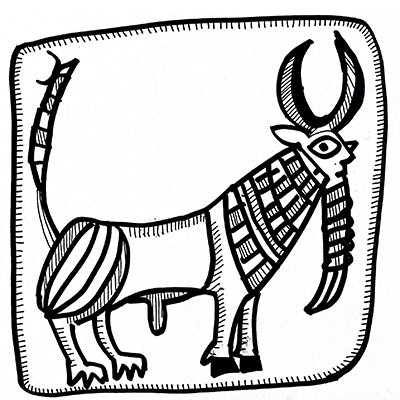
Dogs, Rats, Unicorns and Other Animal Guilds
Published on 30th April, 2022, in Economic Times. Animals have a close relationship with human corporations and guilds. Nearly 4500 years ago, in the Harappan cities of Northwestern India, archeologists have found hundreds of soft stone seals, barely an inch or two long in width that have animal motifs. They are full of marks that…
-
Articles
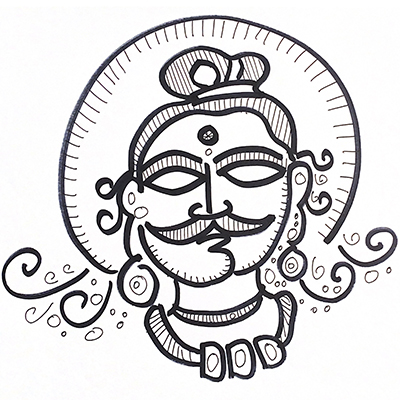
An Eclipsing of History That Frightens Many Hindus
Published on 26th March, 2022, in Times of India. People forget. If you go to Northwest Pakistan today, the region on either side of the Khyber pass, few will remember that in the Bronze Age, 4000 years ago, it connected Harappan cities to settlements in North Afghanistan, which was the source of the much traded…
-
Articles

Tigress Goddess of Harappa
Published on 27th February, 2022, in Mid-day. The first goddess of India is depicted on Harappan seals dated to 2,500 BCE. She is shown as half tiger, like a sphinx, upper half female with headdress and bangles, and the lower half of the cat. It’s the oldest sphinx image in the world, showing a woman…
-
Articles

How Trade Blossomed an Exchange of Ideas Between India and Arabia.
Published on 26th February, 2022, in Times of India. Indians had been trading with Arabs for a long time. About 4000 years ago, trade happened with Harappans by ships that travelled along the sea-coast. Birds were used to identify the direction of the shore if the ship went too far into the sea and lost…
-
Articles
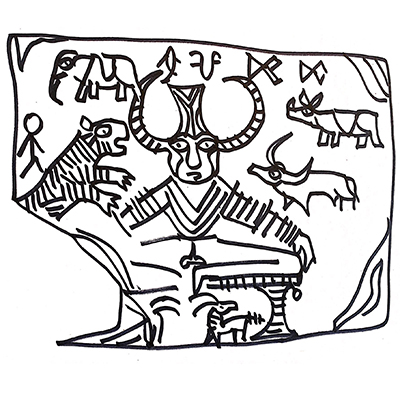
Pashupati and the Harappan Seal.
Published on 25th February, 2022, in The Hindu. We have all heard of the Pashupati seal in Harappa. Scholars are clear that it has nothing to do with Shiva, even though it is still labelled as proto-Shiva in popular books. The Pashupati described in the Veda is the guardian of cattle, animals that have been…
-
Articles
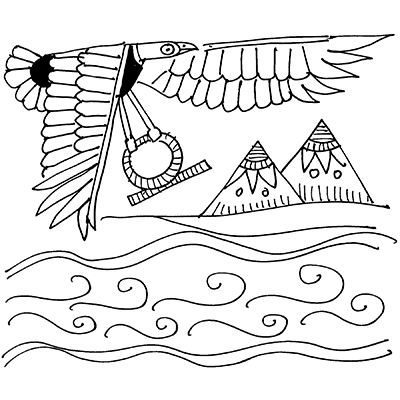
What Lapis Lazuli Tells About the Power Establishment in Ancient India?
Published on 19th February, 2022, in Economic Times. If one travels to a period nearly 5000 years ago, and goes to ancient Egypt, or ancient Mesopotamia (which is modern-day Iraq), we will find images of their gods and goddesses. These deities had blue hair, blue eyebrows and blue eyes. The distinct blue color is placed…
-
Articles

When Horses First Came to India
Published on 19th December, 2021, in Mid-day. The horse is not native to the Indian subcontinent. It has been the most prized import from the northwestern regions, from Arabia, Central Asia and from Eurasia. This is why the kings who live in the Northwest part of India, in Gandhara and Madra were referred to as…
-
Articles

Was the Harappan Civilisation Hindu?
Published on 28th November, 2021, in Mid-day. We often trace the origin of Hinduism to Rig Veda, dated to 1,500 BCE. But the Rig Veda contains ideas that we can trace to Harappan civilisation. For example, Rig Veda mantra 8.47.17 refers to a measurement system based on increase by a factor of two (1, 2,…
-
Articles

How Many Types Of Sanyasis Are There?
Published on 6th November, 2021. in Times of India. The idea of hermits, or the wandering ascetic, unwed, and nomadic, was an idea elaborated in post-Vedic literature, dated to 2,500 years ago, when we started hearing about shramanas India is the land of sanyasis (or hermits) but the hermits are of different types. Harappan seals…
-
Articles
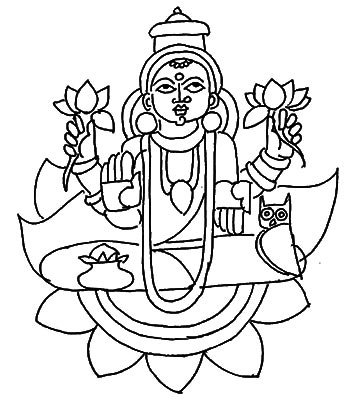
Should a Deity Have Two Arms or More?
Published on 9th October, 2021, in The Hindu. In Kushan coins, minted over 1,800 years ago, we come across images of a woman holding the horn of plenty. She is identified with the Roman Goddess Fortuna, the Greek goddess Tyche, the Central Asian Ardochsho, the Buddhist Hariti, and the Hindu goddess Lakshmi. Images of Lakshmi…
-
Articles

Were All Hindu Saints Allowed Into Temples?
Published on 31st July, 2021, in Times of India. In Maharashtra, at Pandharpur, outside the temple of Vithala, is a shrine to the poet-saint, Chokhamela, who lived in the 14th Century. The saint was not allowed to enter the temple by Brahmin orthodoxy. He spent all his life outside the temple walls and is said…
-
Articles

What Was Hinduism Like Before Temples?
Published on 16th July, 2021, in Times of India. Harappan seals indicate that its residents worshipped trees, and holy men who lived in forests. There are were no temples in Harappan cities. The oldest of the Vedic scriptures, the Rig Veda, was composed 500 years after the collapse of the Harappan cities. It also does…
-
Articles

‘Thali’, ‘handi’, ‘paniki’
‘Thali’, ‘handi’, ‘paniki’: Unique Inventions of the Indian Kitchen by Women Who Remain Nameless Published on 26th June, 2021, in Economic Times. An Indian kitchen is a sacred place. Many people do not take footwear into the kitchen. They insist on taking a bath before commencing the activity of cooking. This reminds us that a…