
Mythologist | Author | Speaker | Illustrator

-
Articles

Can the Ramayana Be Feminist?
Published on 5th June, 2021, in Mumbai Mirror. The Ramayana has been seen differently by different people. It’s a story rooted in Vedic culture that thrived in 1,000 BCE, in the Gangetic plains. But it was put down in writing only 2,000 years ago, in classical Sanskrit. There are many Sanskrit texts claiming to be…
-
Articles

Does the Mahabharata Respect Women’s Desire?
Published on 14th March, 2021, in Mumbai Mirror. The Bhil Bharata is a tribal version of the Mahabharata. There is much it shares with the classical Sanskrit Mahabharata. However, when it comes to women, it has an altogether different take. In this retelling, Goddess Shakti takes the form of an eagle and impales herself on…
-
Articles

Krishna and the Eloping Women
Published on 31st January, 2021, in Mid-day. We live in times where many people cannot handle the idea of adult women choosing their own husbands. Perhaps it is time to revisit the eloping women in sacred Krishna lore. Krishna is famous for playing the flute at night. On hearing this, the milkmaids of Vrindavan would…
-
Articles
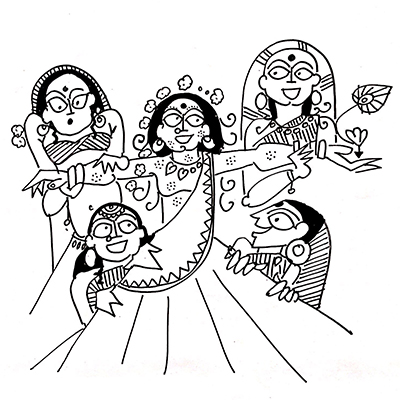
View: Is the Corporate Pantheon Truly Diverse?
Published on 2nd October, 2020, in Economic Times. The corporate world is assumed to be masculine, one that needs to be forced to acknowledge the feminine and the queer through policies. But while the corporate world struggles to be inclusive, we see the opposite trend in the Hindu pantheon, as Hindutva becomes the governing political…
-
Articles
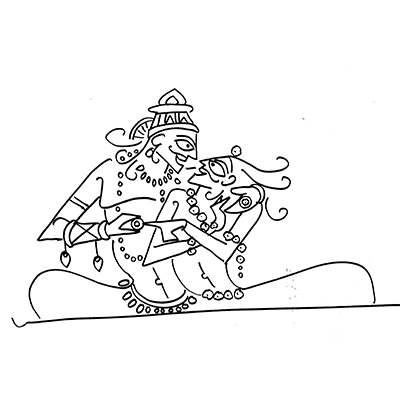
Can Gay Marriage Be Part of Hindu Culture?
Published on 27th September, 2020, in Mumbai Mirror. Hindu culture forbids divorce. Yet Hindu personal laws permit divorce. Hindu culture allows gods, and men, to have many wives. Yet Hindu personal laws forbid polygamy. Does it mean Hindu personal laws are opposing Hindu culture? Or, does it mean they are being true dharmashastras, updating responsible…
-
Articles

Menstrual Taboos Are Not Unique to Hinduism
Who is a Hindu? Menstrual taboos are not unique to Hinduism Published on 16th August, 2020, in Mumbai Mirror. In Kerala, there is the story of a group of boys who found a rock bleeding. Those who touched it died instantly. The rest were told to wear women’s clothes and take it to the village,…
-
Articles

Mythology of Harappa
Published on 8th September, 2019, in Mid-day The Harappan civilization thrived between 2500 BCE and 1900 BCE, lasting six centuries, existing 4,000 years ago. In these cities, we find seals with images that give a tantalising glimpse of a mythology that may thrived in those cities before the arrival of Indo-European myths 500 years later,…
-
Articles
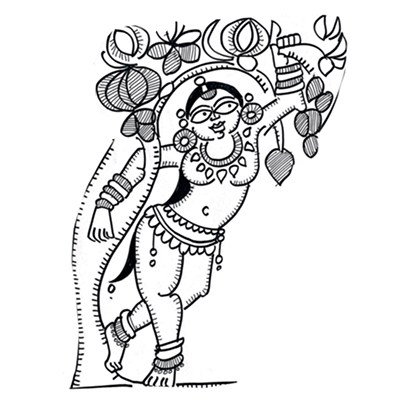
Remembering the contribution of Courtesans
Published on 6th April, 2019, in Economic Times. In ancient Indian scriptures, we find a description of three kinds of women. Women who were chaste and devoted to a single man (even if the man had many wives). The second were women who kept away from men and lived as nuns. The third kind were…
-
Articles

The gallery of female rogues
Women can be dangerous forces of nature, or hypersexual beings, who take away the power of men, chain them to the material world and prevent them from walking the spiritual path…
-
Articles

Who is a Hindu? Hindu ship of Theseus
Traditions may change every few years, but one school of thought says the essence of Hinduism will remain the same…
-
Articles

The nymph and the hermit
The most visible form of connecting with the material world is the sexual act…
-
Interviews

Exclusive | Verdict rejected value of diversity: Devdutt Pattanaik on Sabarimala
In an exclusive interview to Thestatesman.com, Devdutt Pattanaik speaks on mythology, Sabarimala, Ram temple, Section 377 and many other subjects…
-
Articles

How sex became unholy
Today, we equate celibacy with social work. The popular belief is that a person who does not have sex has transcended desire. That such a man is more concerned with the welfare of the larger public world than his personal, private, selfish welfare…
-
Articles

Who is a Hindu? The politics of bodily fluids
By using body physiology to create a spiritual hierarchy, some Hindu orders have placed men above women…
-
Articles

Who is a Hindu? Why do intellectuals scorn Hindu deities?
Hindus as it doesn’t comply with their preconceived notions of what god and religion should be…
-
Articles

Krishna As a Girl
Strivesha is a depiction of Krishna as a woman, writes DEVDUTT PATTANAIK, and narrates stories related to the form of Krishna that displays joy and showers affection…