Vidur-niti is a set of about 600 verses, split into eight chapters, found in the Udyoga Parva of the Hindu epic, Mahabharata. It is counsel of Vidur to King Dhritarashtra, whose sons, the Kauravas are in the midst of negotiations with their cousins the Pandavas to avert a war that will destroy the illustrious Kuru clan. It is quite clear that the Pandavas will defeat the Kauravas and Dhritarashtra will see extreme suffering in the end. But Dhritarashtra is unable to bring himself to stop his son so asks for Vidur’s counsel.
In common parlance, Vidur-niti is a phrase applied to wise spiritual counsel given to a tyrant by one who manages to maintain friendship and good relationship despite a very hostile situation. The text is popular amongst the Swaminarayan Sampradaya of Gujarat, and it perhaps explains how this sect has successfully promoted its version of Hindu values since colonial times, and in hostile regimes, building grand temples with tall pyramidal (shikhar) roofs across the world.
Riding a sea of platitudes
While Vidur-niti seems like a confused collection of platitudes on polity, governance, conduct and spirituality, it does seem to have a logical flow over eight chapters. First, it lists the qualities of intelligence and stupidity. Then it speaks of the value of controlling the senses and the tongue. Then it speaks of the value of rising above jealousy. Then it speaks of how great families lose their greatness by quarrelling with kinsmen. Then it explains why we live shorter lives as we do not value the harsh words of well-meaning counsellors and staff. Then it explains how the purpose of kingship is to protect and grow its kingdom’s fortune (artha). Then it speaks of the value of compromise. Finally, it speaks of the importance of being responsible towards others (dharma) rather than indulging the self (kama). None of this convinces the king of course, who is obsessed with his son, and so Vidur advises the king to speak of Sanatsujata who will explain to him the importance of outgro wing such relationship addiction and being free (moksha).
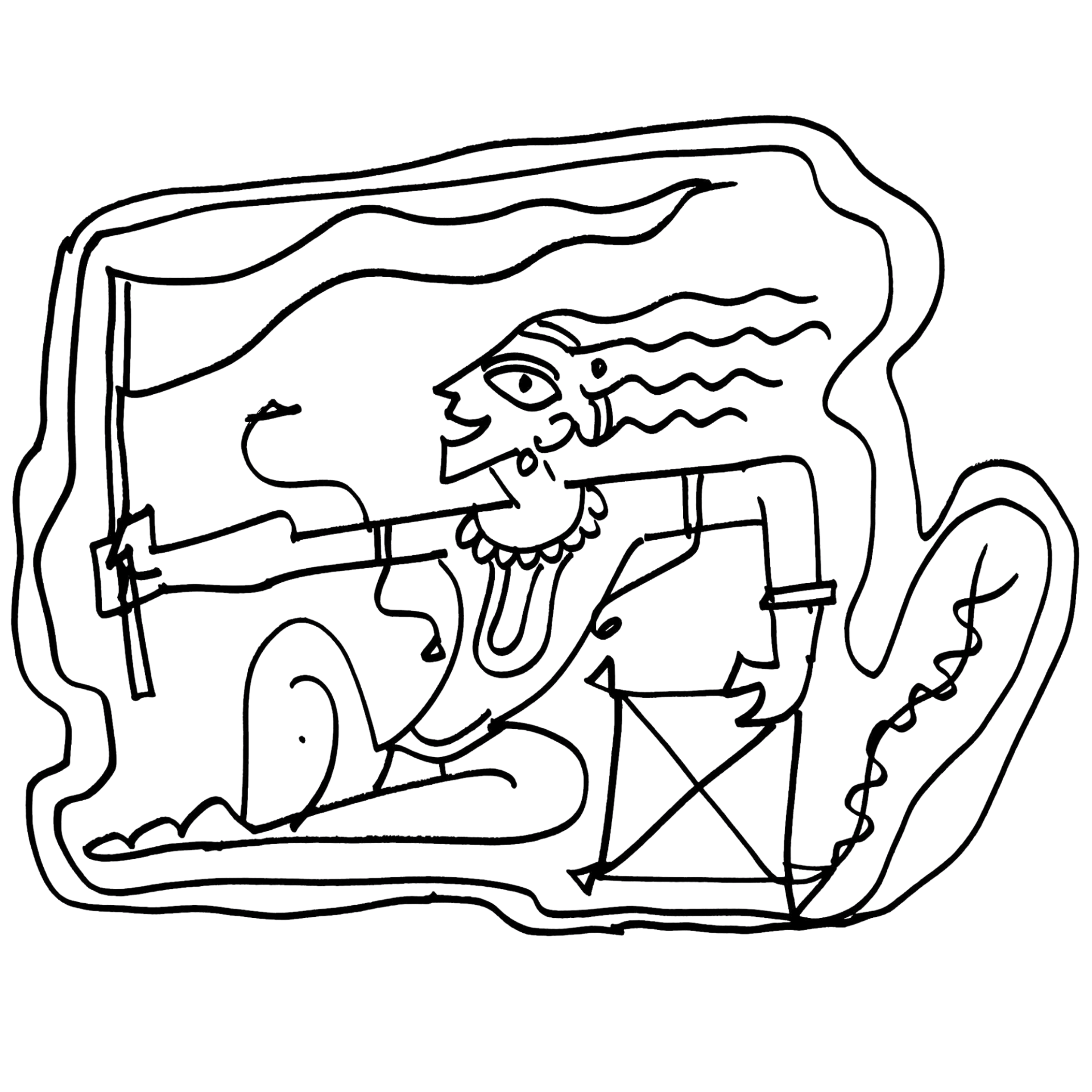
In the course of listing many platitudes, Vidur slips in unpalatable good advice. He says Kauravas are like the forest, and Pandavas are like the tiger and just as the forest cannot exist without the tiger and the tiger cannot exist without the forest. The two have to work together for the betterment of the kingdom. He compares the Kauravas to jackals, and Pandavas to lions. He compares Kauravas to crows and Pandavas to peacocks. These are ways of saying that Pandavas have better qualities and so will make better rulers.
Vidur tells Dhritarashtra the story of the good father Prahalad, who admonishes his son Virochan and tries to make him see the error of his ways when he tries to compete with the educated and refined Sudhanva. That Sudhanva is a Brahmin and this story can be seen as yet another Brahmin attempt to position Brahmins over kings, by writers of the Mahabharata, is another matter. The point here is that Vidur tells the Kaurava king that one must not side with one’s son all the time, and choose justice over parental obsession.
Unprivileged half-brother
Vidur is able to say all this, without facing any reprisals, because he is in an intimate relationship with the king. He is technically the king’s half-brother. They share a common father – the sage Vyas, who happens to be the author of the epic Mahabharat. While Dhritarashtra’s mother was a widowed childless queen, Vidur’s mother was the royal maid. And so, they share different fates. Dhritarashtra has privileges that are denied to Vidur. Hindus who praise Vidur-niti are also slyly endorsing the caste system and traditional notions of hierarchy, boundaries and privilege. Vidur clearly says he cannot explain moksha because he is Shudra, not Brahmin.
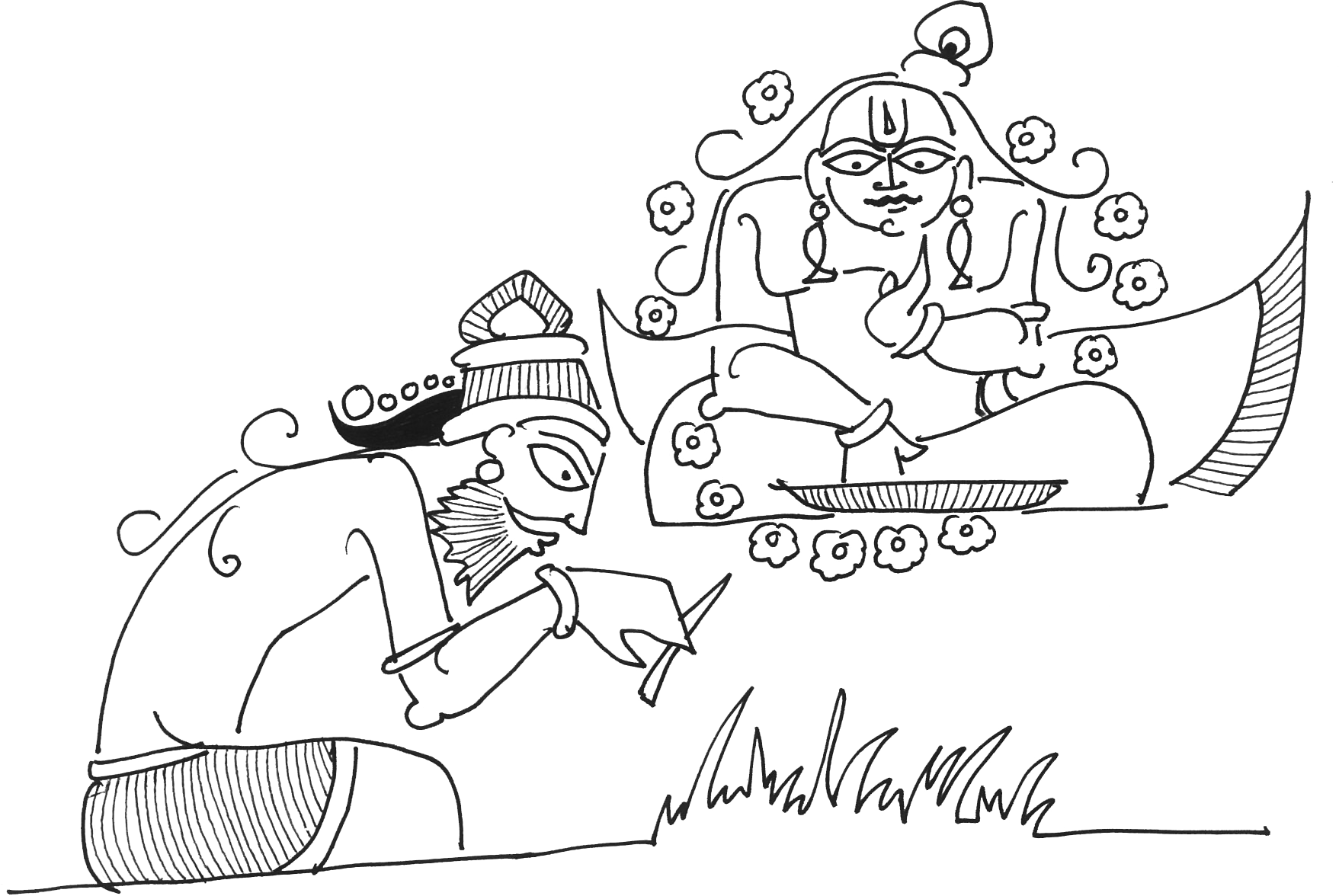
As per folklore, Vidur maintains his independence by eating only green leafy vegetables (Vidur-saag) that grows in his private garden, and not that is cooked in the royal kitchen. Even Krishna insists on eating these green leafy vegetables in Vidur’s house rather than royal food served by the Kauravas when he comes to the palace to negotiate peace. In devotional lore, Vidur’s wife is so much in awe of Krishna that she ends up feeding him the peel of the banana rather than the flesh. Krishna eats what is offered, reminding all that the divine does not discriminate against that which humans choose to discard as dirt.
No Justice without Spirituality
Vidur is said to be Yama reborn. Yama is the god of death who never discriminates, hence called the embodiment of dharma, hence a model for kings. In Mahabharat, Yudhishtira is considered the biological son of Yama. Cynical scholars speculate that perhaps this was code to suggest Yudhishtira is Vidur’s biological son, born to Kunti, through the practice of levirate (niyoga), which is why Vidur sides with Pandavas. That Vidur-niti has nothing to do with dharma.
The epic also states that Yama was cursed by Rishi Mandavya to be born as Vidur to experience the horrors of karma. For Madavya was impaled by a king, punished despite being innocent, as karmic repercussion for tormenting insects when he was but a child. Likewise, Vidur needs to know what it feels like to suffer privileged fools when one is wise but denied any power or status on account of being lowborn. Such is the fate of many in the world today.