Social media is awash with debates between the “sattvic food” lobby and the “protein food” lobby, with influencers casually invoking ancient terminology to justify dietary choices. Yet most participants in these arguments remain unaware of a fundamental truth: the concept of sattva did not originate in the Vedas or Ayurvedic texts, but in the Bhagavad Gita. Apparently, Krishna gave dietary advice just before the war.
Indian philosophical vocabulary did not arrive fully formed in a single moment. Roughly 3,000 years ago, the Vedic hymns consolidated themselves, with no Ramayana, no Mahabharata, no Buddha, and no Jain tradition yet in existence. Forty generations later, 2,000 years ago, the landscape had transformed dramatically: the epics emerged, the Buddha and Mahavira had taught, Yoga had appeared, and the concept of Dharma had crystallised.
Crucially, the Vedas focus exclusively on Purusha, the formless, invisible, abstract reality. The Upanishads expanded this with terms like Atma, Brahman, Jeeva, and Prana, all attempting to describe what makes us alive, what generates emotions and consciousness. These are nirguna and nirakara, qualities that cannot be seen but only felt. The Vedas contain no mention of sattvic food. Even Ayurveda, often conflated with these concepts, classifies the body through Vata (wind), Pitta (fire), and Kapha (water), never through sattva, rajas, or tamas.
Around 2,000 years ago, a profound shift occurred. The Buddhists and Jains, the Shramana traditions, redirected attention to the body, to suffering, to consumption and violence. In response, a new vocabulary emerged centred on Prakriti: matter, nature, the body, the measurable world shaped by time and space
This is where tantra enters. Though the word tantra appears in the Rig Veda, meaning “weave” or “loom”, its philosophical meaning crystallised later. Just as cloth requires both warp and weft, life requires both Satttva and Prakriti. Spirituality cannot exist without material reality. The Sankhya philosophy enumerated this dual structure, and the Maitreya Upanishad introduced something revolutionary: Prakriti possesses three gunas, namely rajas (agitation, high energy), tamas (inertia, stillness), and sattva (the balanced median between them). These were states of matter, phases they go through.
The Yoga Sutras of Patanjali later refined these ideas: rajas as activity, tamas as inertia, sattva as clarity. Importantly, no hierarchy existed among the three. They were interdependent states of nature itself, like the cycle of waking clear-minded, becoming active through the day, and resting at night. There was still no mention of food, caste, or varna.
A dramatic synthesis occurred in the Bhagavad Gita, composed roughly 1,700 years ago within the Mahabharata. Krishna performs a remarkable conceptual fusion, declaring he has two wombs: Purusha and Prakriti. He bridges the Vedic and the Tantric, the formless and the material.
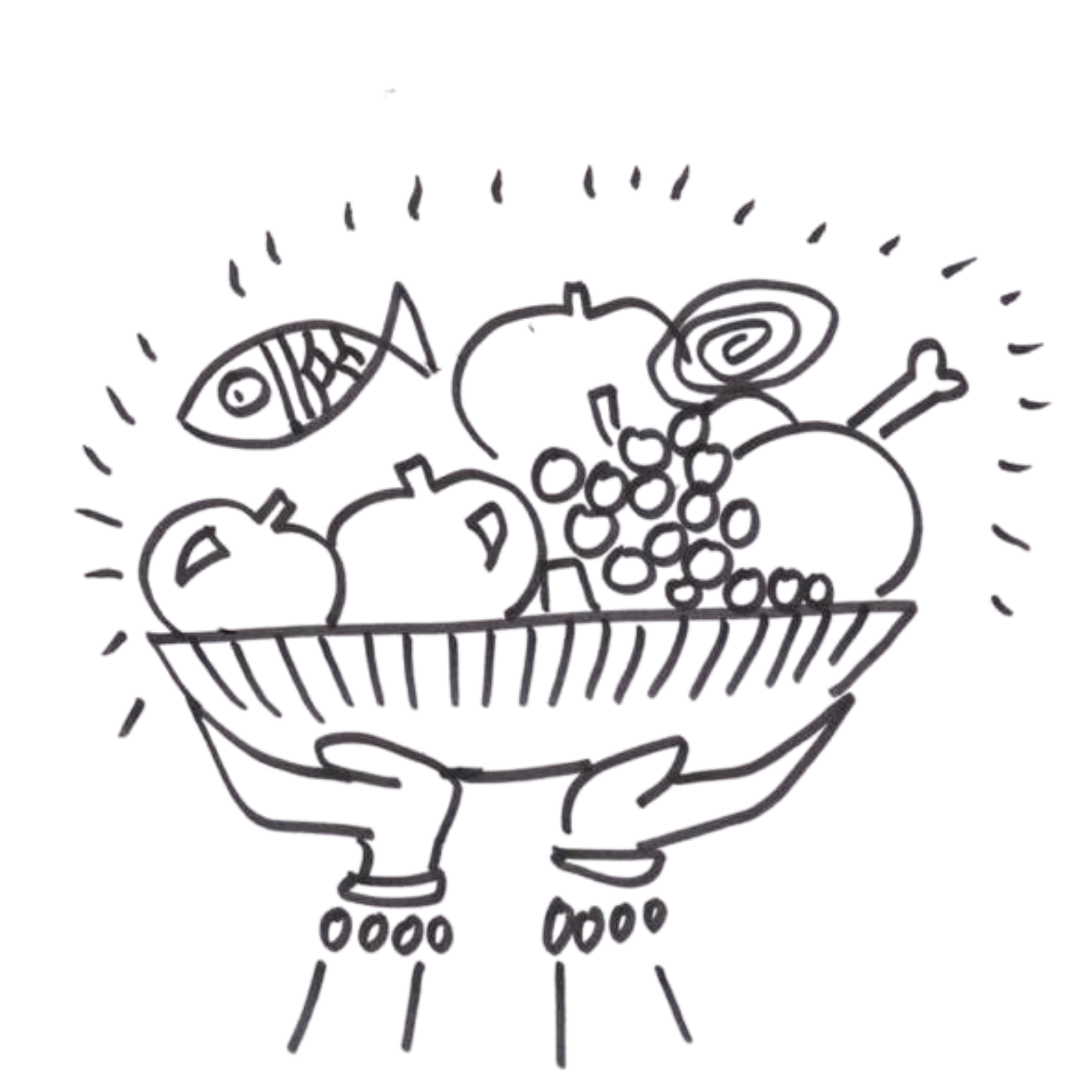
Then comes the genuine innovation. The Gita extends the gunas to ahara, food, classifying meals as sattvic, rajasic, or tamasic. It then links the gunas to the chaturvarna system: Brahmin, Kshatriya, Vaishya, Shudra. Sattva was linked to Brahmins (priests-philosophers), rajas to Kshatriyas (land-owners) and tamas to Shudras (servants). Vaishyas were accommodated as a mix of rajas and tamas. To be fair, this exact one-to-one correlation between guna and varna is not found in the Gita. These appear in later commentaries on the Vedas.
Genetic studies confirm that caste endogamy entrenched itself in India approximately 70 generations ago, precisely when the Dharmashastras, Manusmriti, and the Bhagavad Gita were being composed, when Brahmins were reasserting authority against Buddhist influence under Gupta patronage. So this idea of food related to caste and purity is a post-Vedic idea propagated by a Brahmin lobby pushing back against Buddhist popularity.
True sattvic living, as understood by the Jains and Ajivikas, meant complete renunciation: no possessions, no lies, no theft, no sex, no harm. It was not ahimsa (non-violence) without aparigraha (non-possession). The Digambara Jain ascetics wore no clothes and would allow tigers to consume their bodies rather than resist. Modern claims that vegetarianism alone constitutes a sattvic lifestyle while accumulating wealth and property bear little resemblance to this rigorous original meaning. It amplifies the easy path of what to eat and ignores the tough part of walking away from material domination.
The takeaway is simple. The Vedas gave us Purusha. Tantra and Yoga gave us Prakriti and the gunas. Only the Bhagavad Gita welded these to food and caste, creating the “sattvic” framework popularly invoked today. Believe what you wish, but know the history.