Published on 14th May, 2014, in The Economic Times.
Why do we buy things we really don’t need? Why do we seek control over things and people? Why do we seek predictability in business? Why do we love brands? If wish to answer this ‘why’ we have to move into the realm of psychology and understand the origins of fear. The more acceptable for fear in the corporate world is ‘stress’.
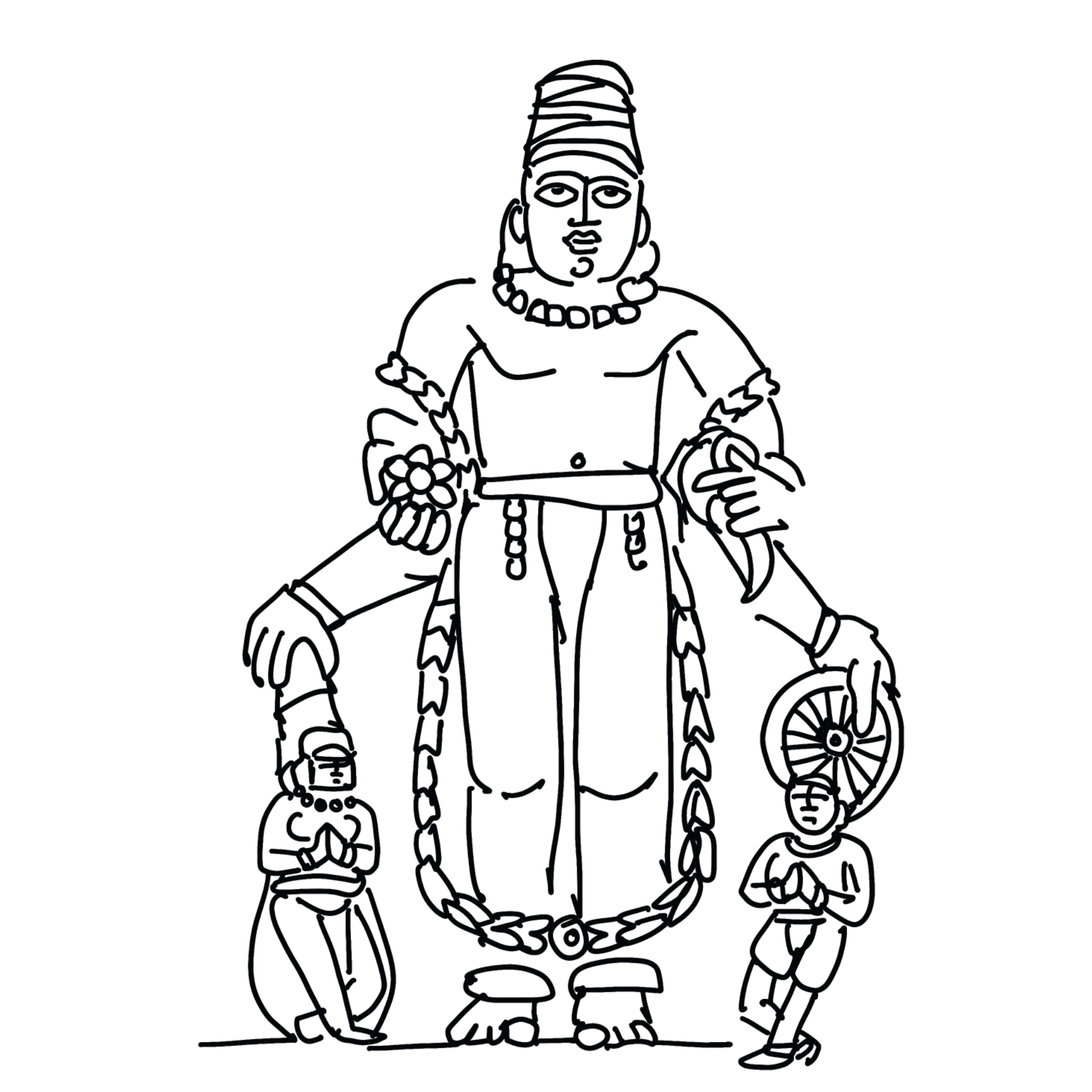
Every Hindu god and goddess raises his or her palm in a gesture which means ‘do not be afraid’ (a-bhaya), indicating that ancients knew the role of fear in day-to-day life. If there was no fear (bhaya), there would be no hunger or desire (bhook), hence no desire to consume (bhoga). Our desire to consume results in a heavy toll on resources (bali) for which we have to pay a price (karma). Thus fear is the seed of all issues we face in the business world from demand to supply, from transparency to governance. It is fear that shapes our relationship with consumers, auditors, authorities, bosses, processes. Yet, this is not part of business school curriculum. Perhaps because we are over reliant on human reason and forget that humans are essentially not reasonable but rather insecure and frightened. The word fear does not go well with the corporate image of a valorous confident warrior, dressed in a smart black suit, tablet in hand.
Stress or fear can be traced to the first life form (sajiva). Unlike inanimate objects (ajiva) it was determined to survive, fight for its life, avoid death, by seeking nutrition from the earth around. As more life forms emerged, everyone competed for food. Mutation took place and diversity emerged to improve chances of survival. The greatest mutation was the split between life-forms that move (chara) and life-forms that do not move (achara), meaning animals and plants. A plant grows towards food, but it cannot run from predators that feed on it. An animal can run towards food and away from predators. In animals we see the fear inherent in the food chain: the fear of the prey of being hunted and the fear of the predator of starvation. The other fear that is superimposed is that of the pecking order: who will be alpha and hence get access to most food and most mates. The one at the bottom of the pyramid is at a disadvantage, especially the male, who gets least food and probably no mate. Can this be the reason for the aggression seen in men? But humans are the most unique life-form. We have a mind that can imagine (manas) and so we imagine who we are and wonder if others imagine ourselves the same way. This creates anxiety, fear of invalidation. We seek status and justification and most importantly meaning (artha). We seek nourishment for our self-image, and constantly protecting this self-image from rivals and predators. This constitutes our architecture of fear.
It is significant that the word artha-shastra simultaneously means economics (do we generate and distribute enough wealth, income, revenue?), politics (do we get enough power to compete, catch prey, shun predators?), and philosophy (do we know who we really are? do we live meaningful lives?). This was a holistic approach to business and management, restricted not just to making ourselves efficient money-making businesses but locating business in society, and even the cosmos. This is missing in students one finds emerging from the best universities in the world. They are skilled warriors but clueless what are they fighting for. And this cluelessness results in strange, even dangerous behaviour.
Let us take three examples of behaviour found in the corporate world to demonstrate the key role of the fear-seed in business activities:
– Consumers and vendors constantly seek deals and discounts. It makes them feel powerful. Shopping becomes retail therapy, a chance to feel significant in a world that does not care for you. Service providers realise the value of making a customer feeling valuable. Fear is intensified by creating hierarchies amongst customers: you are level 1 customer, level 2 customer or level 3 customer. Depending on the hierarchy you get a different level of service. Your waiting time is less, if you are more loyal.
– A senior manager finds himself, or herself, being continuously judged. The auditors judge the processes he follows. The bosses judge his performance. He is constantly told what he has not achieved and how he is not adequately aligned. He discovers his compensation is never good enough, always lesser than his rivals, and this poor compensation is always rationalised and justified during appraisal time. He is repeatedly told, in quarter after quarter, he has to be better, run faster. He has to stay the ever-hungry predator who is never allowed to rest and play to satisfy the insatiable hunger of the anonymous institutional shareholder.
– A very successful investment banker wonders if people he meets knows how smart. So he buys the best car, the best house, throws the best parties, goes on the finest holidays, brags how he just works for an hour a day, or maybe an hour a week, constantly positioning his brilliance, and even doing charity, because he wants to succeed even in social responsibility. Finally, he starts seeing value in possessing a bathtub made of gold. Or gets a kick in getting freebees like celebrities.
A knowledge of fear is critical in management if one accepts that humans are animals with imagination, who cannot be domesticated using reason. Desire, greed, ambition, control, success, compliance all impact the everyone’s architecture of fear. We look at institutions to raise their palm and display the symbol of a-bhaya. Instead their massive size, steel and glass coldness, impersonal business processes, swipe cards and closed circuit TVs only amplify the bhaya.