Published on 29th April, 2023, in Economic Times.
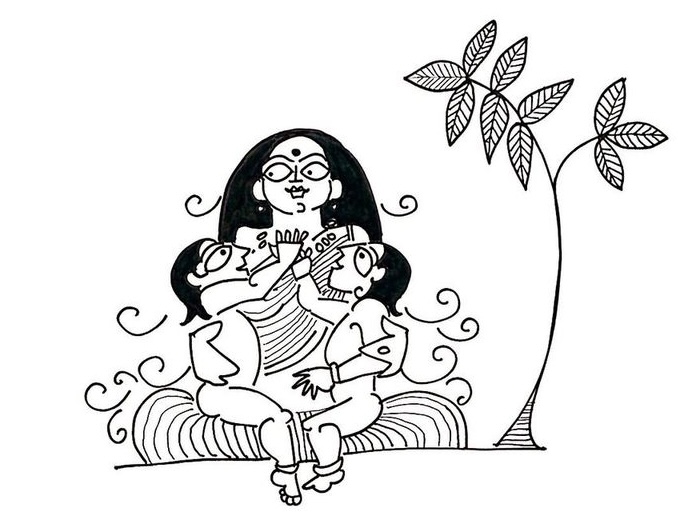
The oldest seals depicting ahimsa (non-violence) are found in the Harappan cities of the Indus Valley (2500 BCE to 1900 BCE). These are the M-478B seal from Mohenjo Daro and the K-65 cylinder seal of Kalibangan. Both show women separating two men from fighting. In the Mohenjodaro seal, the two men are fighting with trees, while they use spears in the Kalibangan seal.
This imagery depicting opposition to violence is unique as well as significant. Relative to Egypt and Mesopotamia, which are contemporary civilisations and trading partners, Harappan cities show remarkable lack of violence – no indicators of armies, weapons, wars, violence, not even artwork celebrating military success, over a period of seven centuries. What we do have are two tiny seals showing women separating two fighting men. It suggests this ancient civilisation – preference for trade over raid.
Long before horses existed in the world of commerce, at the time pyramids were being built in Egypt, and ziggurats in Mesopotamia, there existed a trading network connecting the Middle East to South Asia. This was Bronze Age Trading network that peaked. On Eastern side of this network was the Harappan civilisation. On Western side were the Mesopotamian and Egyptian civilisations.
Writing was invented in Mesopotamia (modern Iraq) by accountants who maintained a strict record of what was due to the temple, located atop the ziggurat, made of sun-baked bricks. The temple was the centre of Mesopotamian cities, home of the gods. Everyone in the city existed to serve the gods: provide them food and luxury goods, if they wished to avoid floods and disease. So said their myths. Clay tablets maintained records of what was owed to the gods, and laws that everyone was expected to submit to. Kings were temple priests, closest to gods. Through them spoke the gods.
In Egypt, the gods connected with humans not through a temple, but through the body of a king, the pharaoh, which was so sacred that when he died, his body was embalmed and entombed and continuously fed with rituals till he joined the gods and the connection between humans and the divine world remained unbroken. Egyptian art and hieroglyphics all existed in the service of this ritual that connected the pharaoh to the land of the gods, through consumption of bread, beer and all material luxuries.
Both Mesopotamia and Egypt were violent cultures. In both places we see images of kings standing on top of piles of corpses, relishing the chopping of heads, arms, and legs. For 2000 years, Egyptian art shows very little change. All art was all controlled by the state. Even in Mesopotamia, art was state-controlled propaganda, meant to intimidate people, tell them they owed their life and pleasures to the gods, who manifested as kings and his court of priests. Here, the temple was the court. The king was the mouth and the hand of the gods.
The polytheism in Egypt did not mean multiple power centres. Everything eventually came from the pharaoh. Just as all gods bowed to the most powerful gods, all generals and governors and priests bowed and served the pharaoh. In Mesopotamia, every neighbourhood and every city had its god, but these gods bowed to god of the city and god of the conqueror. Law and submission and authority was ruthlessly enforced by violence. This is almost totally absent in Harappan cities. Although Harappa traded with regions where writing was prevalent, Harappans avoided importing that writing system. They isolated themselves. Like their cities, their mind was insular, with many gates. Harappa had its own system of communication, based on emoji-like symbols, used primarily for accounting, logistics and trade, and not to express poetry. Harappan civilization was not an artistic one – it was a drab industrial complex, with regulated bricks, regulated streets, regulated architecture, regulated measuring systems, regulated seals. A tightly controlled system that ensured efficiency in the movement of raw materials and finished goods. It made jewellery, and dyed cotton cloth, for business, not enjoyment. There is nothing vibrant in Harappan art – quite unlike the vibrancy that is so ubiquitous in India today. It is the world of accountants – where all things are measured, and nothing wasted.
How were people controlled if there was no violence? The answer lies in belief systems incepted into people through stories. Religion gets people to do things without force. People believe they’re supposed to do it and so they do it. In Mesopotamia and Egypt, power of divine was asserted through violence. In Harappa, perhaps, this power manifested through stories and ritual practices. One thing that connects Harappan cities is the seal. Different animals for different guilds. Animals with multiple heads suggesting collaborative guilds. Most predominant seal is of the unicorn. This animal does not exist in nature. Its supernatural nature makes it transcendent – and so the seal of those who managed affairs within and between cities. The bureaucrat-priest. As soon as this seal disappears, the cities start to decline. And the Harappan period draws to a close.
The ‘citadel’ seems to be stark, almost monastic, with water tanks and fire altars, meant for purifying. Was power expressed through renunciation? Was power obtained through austerity like Jain and Buddhist monastic orders that emerged 1500 years later? Was this a world of debit and credit, where power came by repaying debts, writing off loans? A world where those who did not clear balance sheets before death were doomed to be trapped in a wheel of rebirths? These are ideas that need consideration.