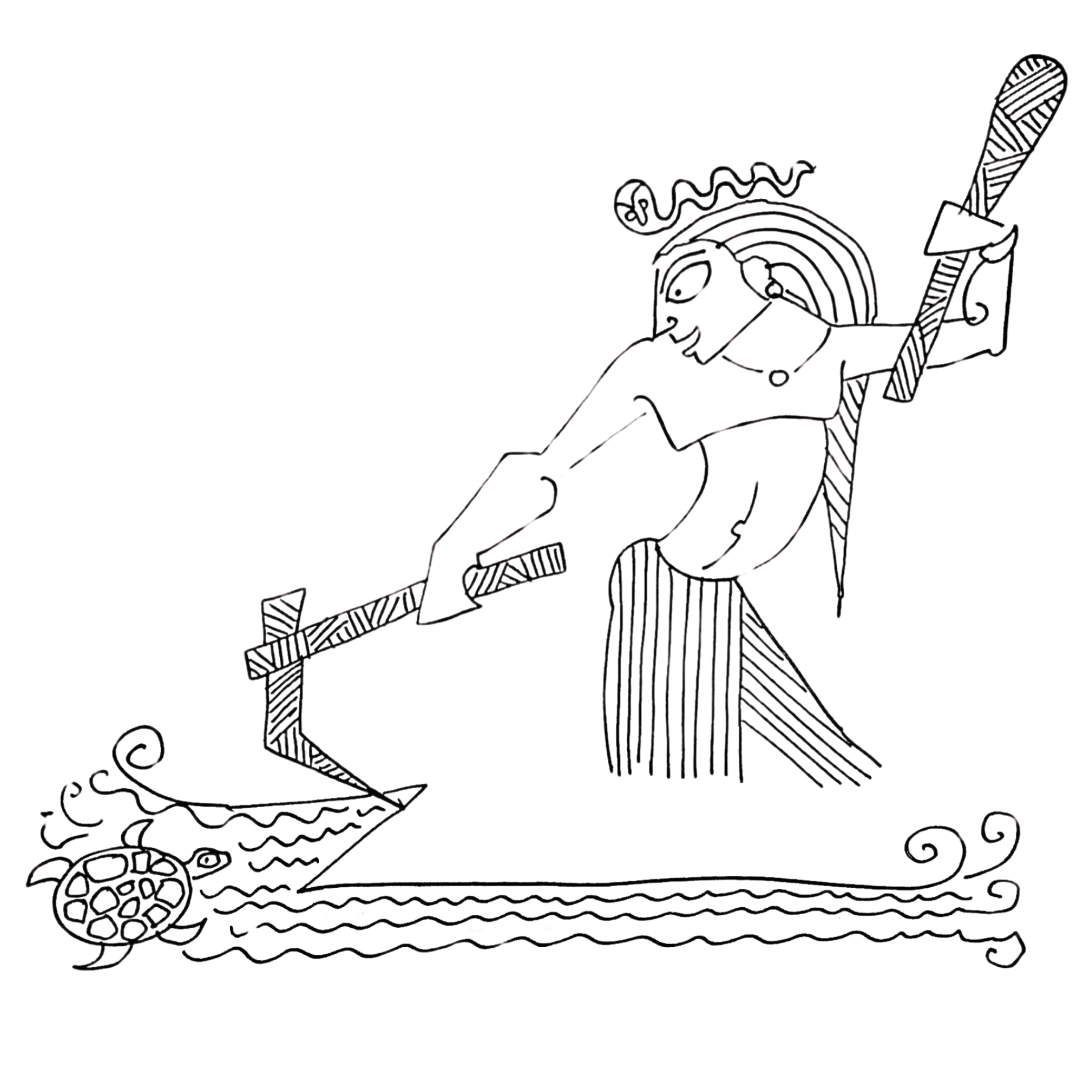
Published on 17th April, 2016, in Mid-Day.
So Gurgaon has been re-named Gurugram, guru here being Dron-acharya, tutor to the Pandava princes in the epic Mahabharata. This is not quite a renaming as it is Sanskritisation or Indian gentrification. The local Haryanvi way of saying the ‘village of the tutor’ has been now polished to suit the taste of polished city dwellers. India triumphs over Bharat! The ‘bhodrolok’ (gentry) rejects the lingo of the ‘chotlok’ (lowly), as they say in Bengali.
A much respected art scholar, anxious to prove his secular credentials, tweeted how this ‘guru’ (his quotes, not mine) was responsible for taking away the right thumb of Ekalavya, a tribal youth, to ensure the caste privileges of his royal students. Suddenly, the renaming was being given a caste turn. The move from Gurgaon to Gurugram was no longer seen as gentrification (which it is), but as Brahminification (which it is not, as it always was the guru’s village for the local residents). This mocking of epic heroes and religious icons for their many imperfections – and there are many if one chooses to be judgmental – is an increasingly widespread behaviour to prove superiority of ‘rational thought’ and to establish ‘secular credentials’.
The Internet is flooded with jokes about prophets who seek to murder their own children after hearing voices in their head, prophets who ‘save’ orphan young girls by marrying them, religious leaders that go about wearing a frock and religious organisations that venerate torture instruments (crucifixes, nails). To add to that people who become ‘enlightened’ after walking out of their marriage, nudists who are adored as holy men, deformed men and women with multiple arms, legs and heads who are seen as divine, pot-smoking warriors who see visions of god on the battlefield, devotees who worship phallic objects.
Is this good humour? Or is this just a way of riling up the oversensitive orthodox extremists, have a little fun at their expense? Is this intellectual heckling, psychological bullying? A game of power to mock the other and then argue ‘Freedom of Speech’? In the West, to prove one’s secular credentials it is essential to defend Islam at all costs, see terrorism as an outcome of bad politics and economics, with no influence of religious ideology whatsoever. Sam Harris, a noted American scholar, was bullied by fellow ‘rationalists’ for suggesting that Islam needs reformation along lines of the Christian reformation.
In India, to prove one’s secular credentials, it is essential to be seen as being always critical of Hinduism. So my writing on Hindu mythology is immediately mocked as ‘peddling soft Hindutva’, unworthy of any self-respecting rationalist, secularist liberal. This selective criticism of certain religions – sometimes Islamophilia, sometimes Hinduphobia – is the modern code of secularism.
Like tribes, most religions have external material codes of identification: saffron colour of Hindutva, beard with no moustache for orthodox Muslims, a crucifix around the neck for Christian missionaries, hat and curled hair for Hassidic Jews. Secularism, however, does not have ‘symbol’. There is only speech. And so offending one religion which is deemed ‘oppressor’, or defending another religion which is deemed ‘oppressed’, is the key to prove one’s faith. Secularism has thus made itself one of the many warring tribes seeking to control the global discourse and ‘save the world’.