Published in Devlok, Sunday Midday on May 08, 2011.
Humanity has always killed for peace. The First World War was dubbed as the ‘war to end all wars’. The atom bomb was dropped on Hiroshima and Nagasaki to stop all wars. Now, Obama has killed Osama for peace. What do we kill actually? We kill that which cannot be controlled.
We cannot control the terrorist; we cannot make them see sense, so we feel justified in killing them, before they kill others. This killing is done in righteous indignation. It feels right. But why does the terrorist terrorize? If American psychologists have to be believed, they are all psychopaths and sociopaths, with genetic predisposition to violence. Such explanations conveniently enable us to deny our role in creating these monsters.
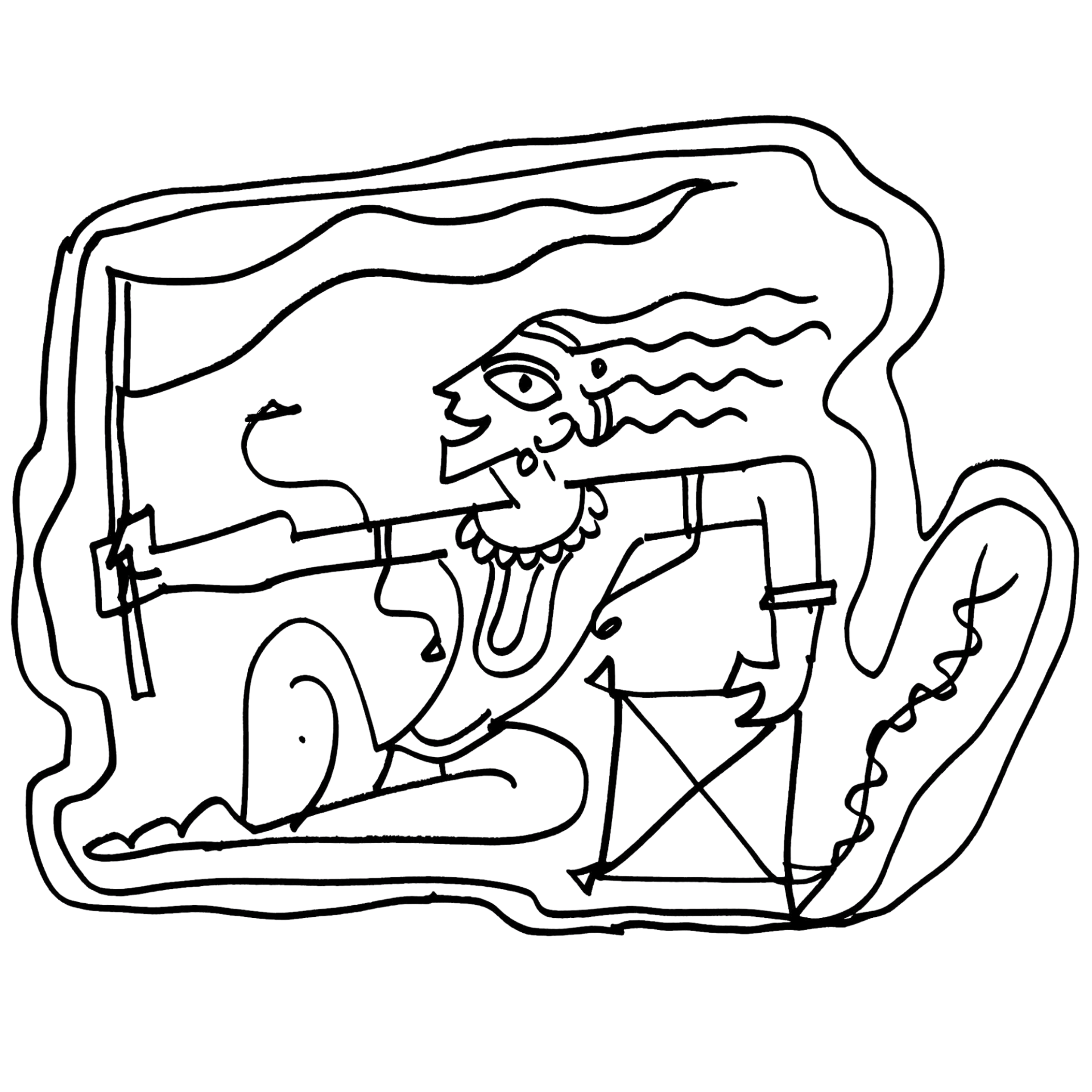
In the Ramayana, Ravan abducts Ram’s wife, Sita, only because Ram’s brother, Lakshman, cuts the nose of his sister, Surpanakha. One can condemn Ravan but his actions can be seen as a reaction to the mutilation of his sister. Likewise, Surpanaka can condemn Ram and Lakshman but their actions are a reaction to her very own abrasive and uncontrolled sexual advances. Every victim likes to believe they are innocent. Unfortunately, every victim is the mother of his or her own tormentor.
According to the karma theory, nothing in life happens without a reason. Every thing that happens to us are actually reactions to actions we have performed in the past. Thus we are never innocent: our karma creates our fortunes and our misfortunes, everything we experience every moment. So we have no one to blame, or thank, but us. We may not remember our past actions, we may not be able to trace the source, but there is no escaping our responsibility.
Karma is often accused of making people fatalistic and not taking responsibility. But not taking responsibility is also action, which has reactions, whether good or bad, only time will tell. But the modern world order rejects karma, and prefers to take action, do something about the terrorist, an action based on the Greek model of heroism.
For many people around the world, America is the monster. So they cheered and danced when the Twin Towers were blown up. For America, the Jihadis are the monsters. So New Yorkers cheered and danced when news of Osama’s death came. Both believe in their personal righteousness. No one asks: why did the terrorist seek to terrorize?
Today the world has three types of terrorists: the economic terrorist, the environmental terrorist and the cultural terrorist. The economic terrorist fights for jobs that are created only when there is industry and development, which unfortunately comes at a cost to environment. The environmental terrorist fights to save the environment and so is opposed to any kind of industry and development. As new markets are created to sustain industry and ensure development, old habits have to be changed; this threatens cultures and identities creating the cultural terrorist who fears all change, and clings to the past tenaciously.
Thus terrorism is not created in a vacuum; it is closely linked to our growing economic needs. We are a world where everyone is cutting the nose of Surpanakha and is crying foul when Ravan abducts Sita.