Published on 12th August, 2016, in Speaking Tree.
Cow protection is an integral part of Hindu lore. Go-hatya, or killing a cow, is viewed as a terrible crime. In the Raghuvamsa of Kalidasa, Rama’s ancestor Dilipa offers to sacrifice himself in order to save a cow from a lion. In the Godavari Mahatmya, the sage Gautama accidentally kills a cow, and the only way to wash away the demerits that stain his soul is to invoke Shiva and beg him to let Ganga to flow south of the Vindhyas as Godavari.
These stories reveal the Hindu discomfort with killing of cows. There are references to killing of bulls in the Vedas but people violently argue that these are to be taken metaphorically, not literally. In the Bhagavata Purana, Krishna does destroy a bull-demon, Arishta, and the calf-demon, Vasta. Again, we are told that the bull and calf are to be seen as metaphors, demons incarnate, not literally.
Thus, the cow of Hindu lore needs to be seen both literally and metaphorically. Seen literally, it is confusing whether gau-raksha, or cow-protection, refers only to the female of the species or to both genders.
If cow protection extends to bulls also, why have we for thousands of years allowed bulls to be castrated, and turned into oxen, to pull carts and plough fields? Surely castration is cruel. Further, it is not clear if the cow being referred to is just the Indian breed, or also foreign breeds like Jersey and Holster, popular in dairy farming. Does cow protection also mean buffalo protection? Then why do we worship Durga who kills the buffalo-demon? Is that buffalo real or metaphorical? Romantic notions of cow protection are often seen in urban people who are clueless about the supply chain economics of dairy farming and agriculture. They don’t realise that poor farmers who are unable to feed old cattle and prohibited to cull cattle, simply let them wander the streets, where they starve and so eat plastic. Chanakya of Mauryan times had no such romantic notions, nor did Vivekananda in the early 20th century. Seen metaphorically, the cow becomes a symbol of livelihood. In the Puranas, a rishi asks a king for a cow as the cow’s milk and dung provided him food and fuel and ensured his economic autonomy and enabled him to pursue other intellectual pursuits.
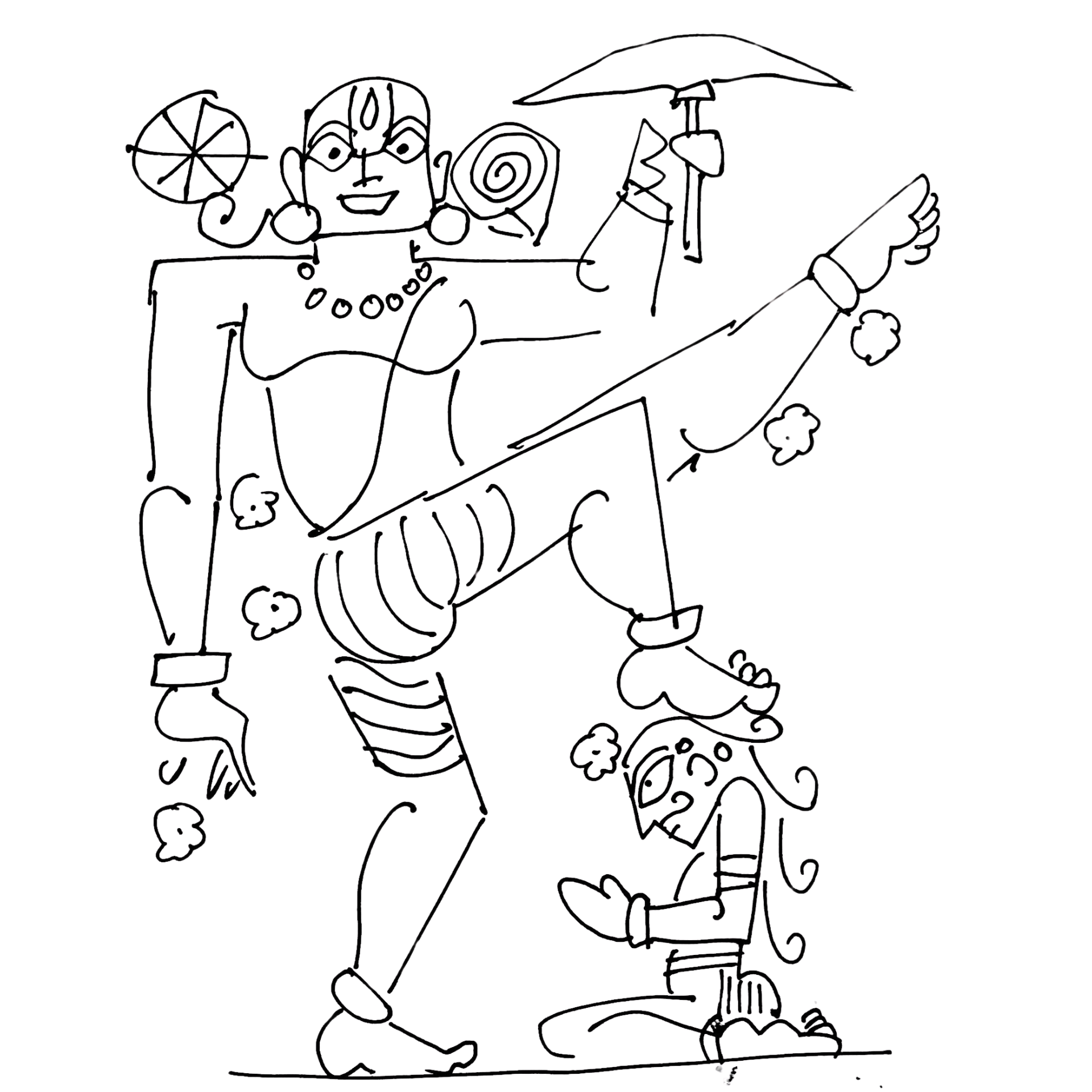
Naturally, to kill this metaphorical cow – the source of human livelihood – was the greatest of crimes. A king was encouraged to distribute cows; in other words, he was asked to create more livelihoods. The first king of earth was Prithu, who was Vishnu incarnate. The earth appeared before him as Go-mata, and Prithu promised to protect her as her Go-pala or cowherd. Thus, earth-protection was Go-raksha. When humans abused the earth with their greed, Gomata reminded Vishnu of his promise and he descended as Parashurama, Rama and Krishna to kill those kings on earth who plundered the earth’s resources and, thereby, reduce the burden of earth. Thus, she who nourished all living creatures was drenched with the blood of her tormentors. We have the option to choose a narrow literal meaning of cow-protection, or we can choose a broader metaphorical meaning of cow-protection. The former enables vigilantes. The latter supports development.