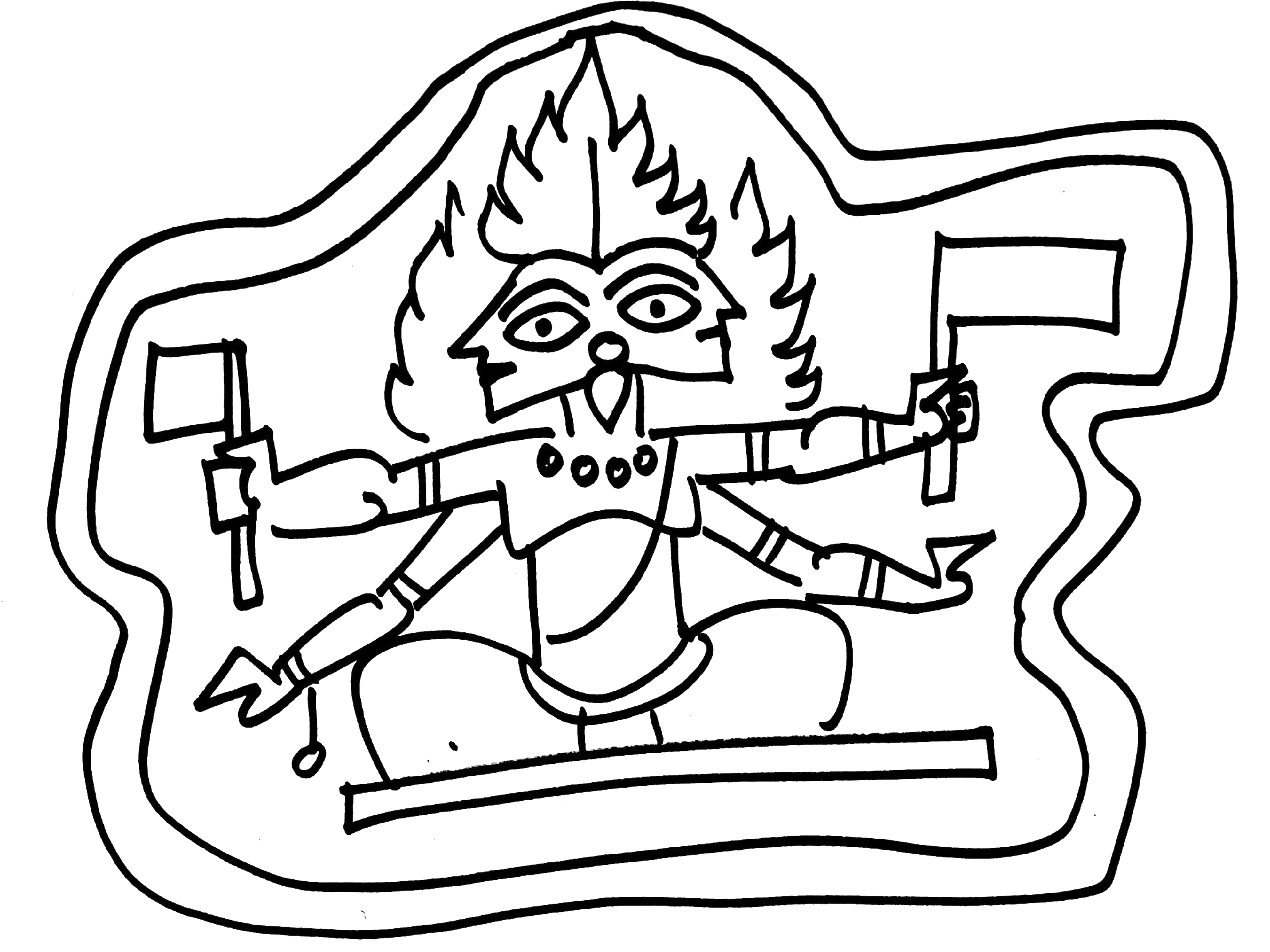
One of the most important deities in Vedic times was Agni or the fire god. There are nearly 200 hymns to Agni in the Rig Veda. He is the messenger of the gods. It is through him that all the gifts offered to the celestial realms reach the divine beings. But the human relationship with Agni was complicated.
The wildfire which burned in the forest was different from the fire that was kept in the house, produced by kindling sticks. Separate fires were kept for cooking, household purposes. Separate fire was kept for making offerings to the gods, placed on the eastern side. Another fire was placed on the southern side, to keep ancestors and ghosts at bay. Keeping three fires was the role of the Vedic householder. One of the greatest fears of the Vedic householder was a loss of fire. Either because he did not provide the right fuel, or the fuel was damp, or maybe the offering was not combustible. Maybe it was because the offering consisted of milk and curds rather than ghee.
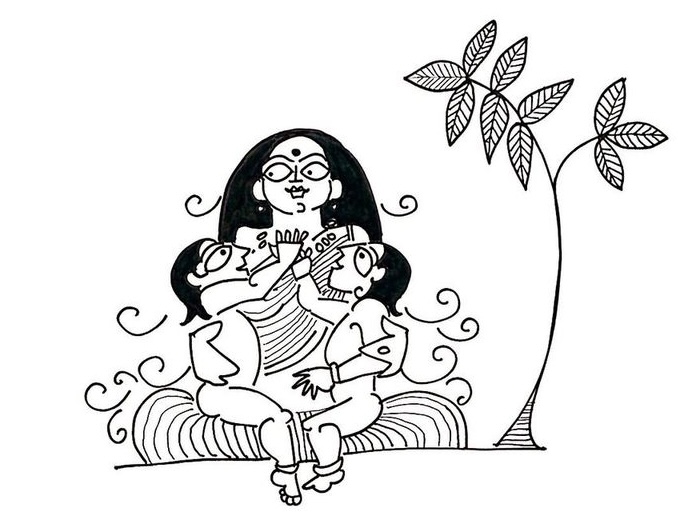
So, we find a great number of hymns where there is anxiety about loss of fire. Poets describe the dwindling of fire as disabled children in the arms of mothers, being cared for in the hope that they will survive the sickness or disability. There are many stories where fire runs away. The hungry gods chase him and beg him to return and do his sacrificial duties.
The reason why the fire withdrew is manifold. Sometimes, it is because he’s not given respect. Sometimes, he’s not offered a share of the sacrifice. Sometimes, he is made to consume all kinds of impure things, including rubbish and dead bodies. Therefore, he refuses, and runs away, hiding in trees, or waters. The gods scour the universe in search of fire. When fire finally returns to the sacrificial altar, he’s praised, and the gods show how dependent they are on him. He is given a key share of the sacrifice, the ghee! In the Brāhmaṇa literature or the ritual text of the Vedic period, we find stories about the disappearing of fire.
One day a priest and his king were riding a chariot when a little child rushed off the street and was trampled under the wheels. The king blamed the priest for the mishap because the reins of the chariot were in the priest’s hand. The priest then chants a Vedic mantra from the fifth mandala and revives the child. But he’s so angry with the king that he leaves the king. When the Brahmin leaves, the fire loses its fury. When the fire loses fury, it is unable to provide light and heat or cook food. The king becomes desperate, and he begs the priest to come back. The priest comes back, but the fury of the fire is still missing. After much deliberation it is found, hidden by the queen who is actually a witch. The fury of the fire is brought back by the priest when the witch or the ghoul-like queen is burnt alive. Was she the original Holika? We can only speculate.