Elon Musk imagines a world where cars have no drivers; but he cannot imagine a world without employees in offices as he vociferously argues against work-from-home culture. Judith Butler imagines a world without Zionism, a world where ‘they’ pronoun is normalised, but not a world where Islam embraces same-sex marriages.
Both these people are changing the world in their own way – subverting conventional technology and discourse. These follow the saviour myths of monotheistic mythologies. Understandable when one traces their roots, via South Africa and East Europe.
Their imagination makes no room for Jainism, the faith from South Asia of some of the world’s most successful mercantile and banking communities, who worked with Buddhist kings, Jain kings, Hindu kings, Muslim kings, British imperialists and even patriotic and nationalistic governments, without ever incurring the wrath of a mob.
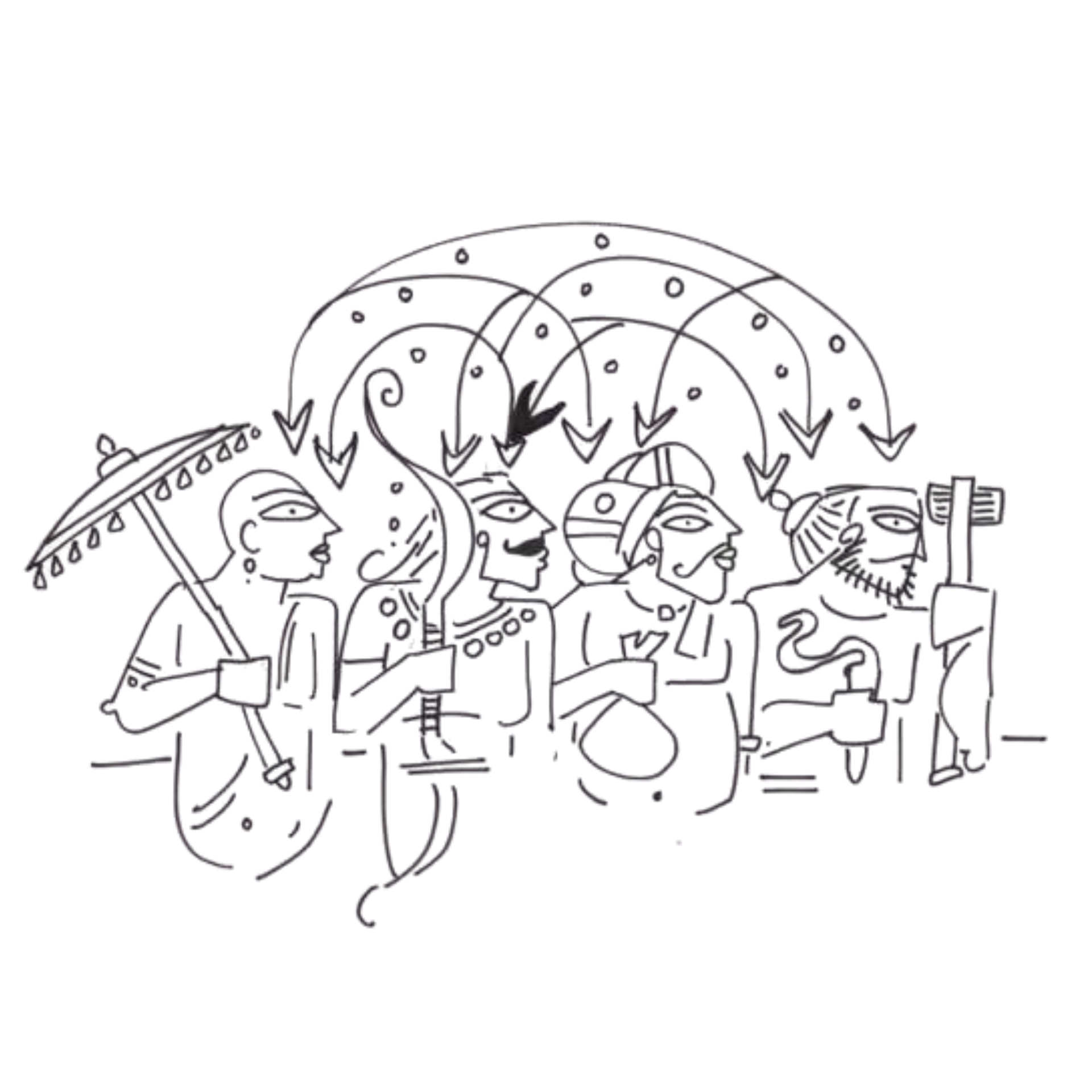
In Jain mythology, which started being documented after 500 AD, we find 63 great beings who appear in every era. Nine of these are the Vasudevas, or violent individualistic heroes who are much loved by their pacifist brothers, the Baladevas, as the march against unjust Prati-Vasudevas. Vasudeva is very much like a Greek hero, who challenges authority.
The nine Vasudeva-Baladeva-Prativasudeva triad make up the list of 63 great men. Note: the villain is included in this list, and not rejected as in western myth, as they too are products of actions in previous lives. Then come the twelve Chakravartis, the leader who establishes the law in the land under his control. The word ‘chakra’ in his title refers to the metaphorical wheel, his kingdom, the borders represented by the rim of the wheel, the highways represented by the spokes of the wheel. Chakravarti’s world is two-dimensional against the one-dimensional linear worlds of Vasudeva. Chakravarti is not interested in winning. He is interested in order, stability. This means laws to enforce order. This means curtailing the freedom of the individual for the good of the many. Both Elon Musk and Judith Butler refuse to see themselves as authority figures shaping violence and hegemony, but that’s what people have made them, the nave of the wheel. Officially though, that’s the space occupied by political leaders, who lead people, fans and followers, like Biden, Trump, Modi, Xi.
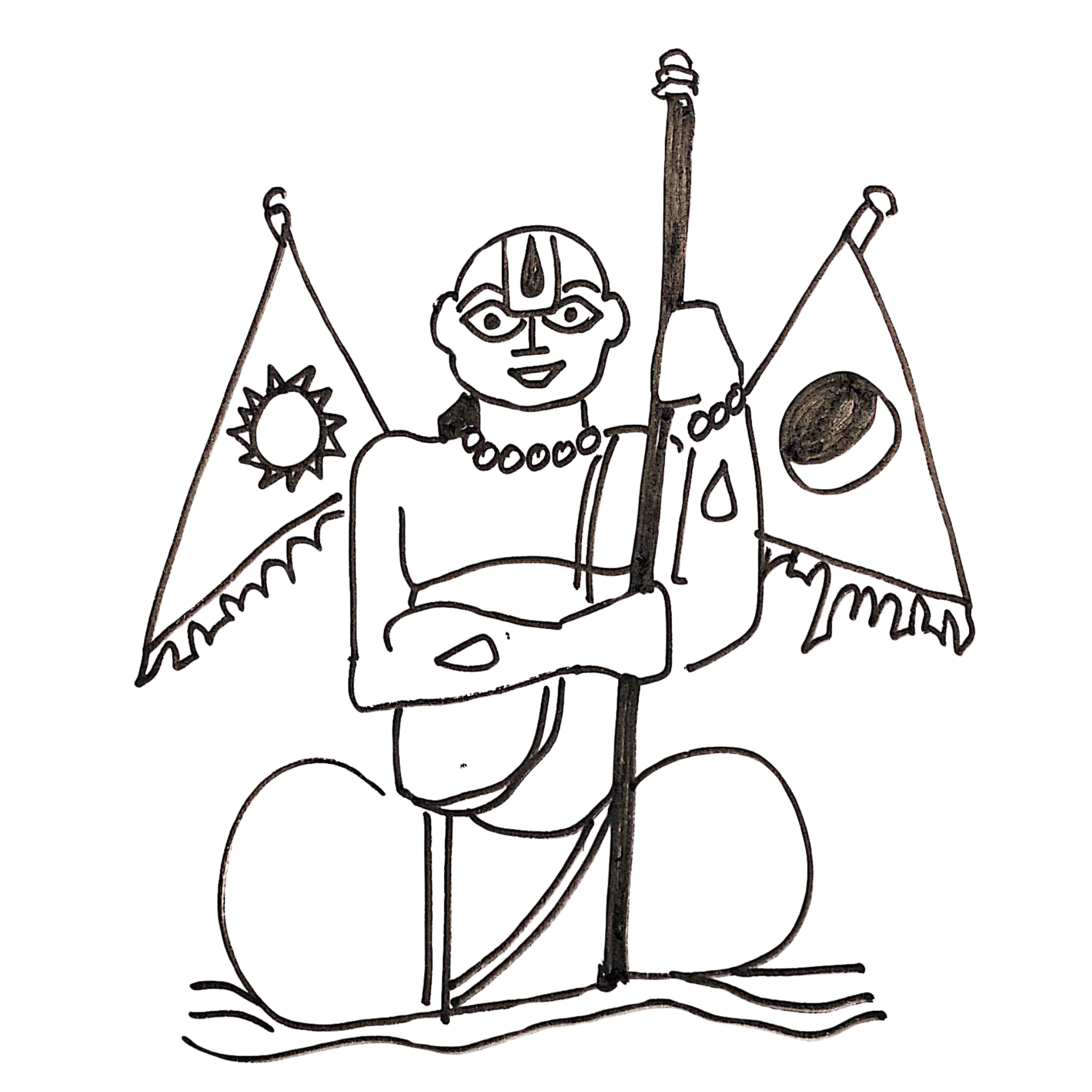
Then come the 24 Tirthankaras. The highest state in Jainism, teachers of teachers, who have conquered their hunger, fear, ego, and are able to see everyone and everything, including their past lives, their inner drives and motivations. They have access to the third dimension of the human society: the imagination that shapes human temperament.
These sages do not change the world. They simply exist in contentment through non-violence (ahimsa), and share the workings of the world with all, descriptive never prescriptive. All creatures are violent in order to consume food, they say. When you outgrow the need to consume, you outgrow the need for violence. Jainism is thus not about following a particular diet, it is about exploring the possibility of giving up food entirely. It is not about compelling others to eat what you wish them to eat, for that itself is psychological violence.
While the Vasudeva will try to address the issue of climate change and social inequality by changing technology or discourse, the Chakravarti will address the issue by forcing everyone to align with his vision and his rules. The Tirthankar will simply watch the many ways in which hunger and fear manifest, often in conflict with each other. Wisdom prevails only when we listen to each other, find ways to accommodate each other, which is why the Jain community survived despite great hostility in its long history. If you stick around with compassion and gentleness, and invest in the other, those who break your temples eventually fund your temples.
But we live in a world of Vasudevas and Chakravartis where such ideas are dismissed. Everyone wants to regulate the production and distribution of food, but has no desire to regulate their own hunger. The rich want the world to change without giving up hoarded wealth. The poor want to change the world without giving up their aspirations for wealth. This is how the world has always been – everyone fearing the threat posed by others, and not recognising they threaten others.