Increasingly, we find laws that protect forests being cut down, giving way for industries. This brings tribal communities into conflict with the state. The state declares tribal communities that oppose them as Naxalites, or even foreigners who need to be driven out. This is done using the force and might of the state. This tension between the forest, which is wild, uncultivated, inhabited by tribes aligned to the natural rhythms, and the field which is domesticated earth controlled by the state is an ancient one.
The earliest reference to this tension is a 4,000-year-old seal found in Harappan civilisation where we find a man seated atop a tree looking down at a tiger. The tiger is not hostile or in attack or defence mode. It simply turns back to look at the man who has now moved out of the forest, and created culture, a space where tigers are not welcome.
The second reference is in the 3,000-year old Sama Veda. In this work, the mantras are attached to melodies. The melodies are classified into songs that must be sung in the forest, and songs that must be sung in the settlement. Forests are wild places, where nobody comes to your rescue, and you have to help yourself. Fields are a place of rules and regulations. Here is an assumption that people will come to your rescue, and people are expected to help each other. But in the forest, you have complete freedom. In the field, you get privileges and benefits provided you are willing to sacrifice your freedom.
In later 2,600-year-old Vedic literature, we find rituals that were performed in the settlement. These were the Brahmana rituals. But there were certain rituals that were performed at the edge of the village, at the frontiers, near the forest. These were called the Aryanaka rituals. They were basically an acknowledgment of the tension between culture and nature.
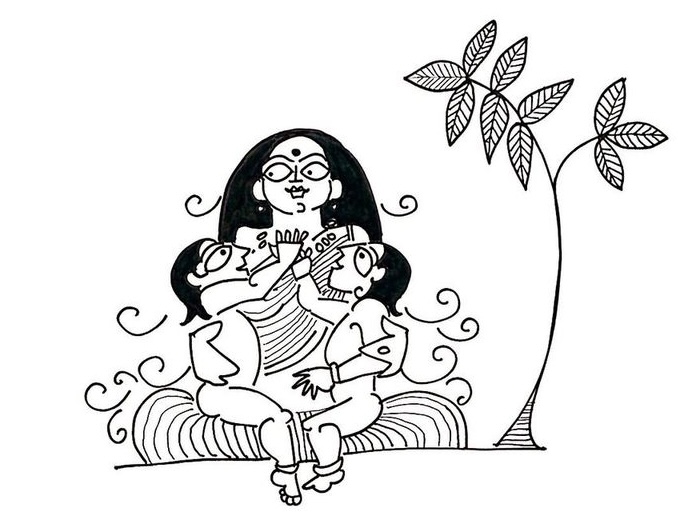
This tension between forest and field is a recurring theme in Hindu mythology. In the Bhagavata Purana, we hear the story of Vena, the king who plunders the earth and is killed by the rishis. They churn his corpse and from there, create two beings. One is Nishad, the one who chooses to live in the forest and align himself with the natural rhythms. And then there is Prithu, the ideal king who domesticates the earth, flattens it, creates fields, canals and extracts wealth from the earth in a balanced way. Prithu represents the settled communities while the Nishada represents the tribal communities. The Brahmanical order prefers Prithu, because he provides for the Brahmanical rituals. However, the Nishad is despised because he does not support the Brahmanical rituals and prefers living in the forest.
Traditionally, the forest dwellers have been called either adivasis or vanvasis. The word vanvasis suggests that they choose to live in the forest and do not wish to be part of culture. They do not wish to cultivate the land, they wish to work with nature in its primal form. The word adi manav suggests that they are the original inhabitants of the land, that they are primitive people who need to be civilised or they are the original inhabitants of land, who have been driven away by settled communities. This makes these terminologies highly political and highly contentious, subject of unending debates.