Published in Corporate Dossier ET on September 24, 2010.
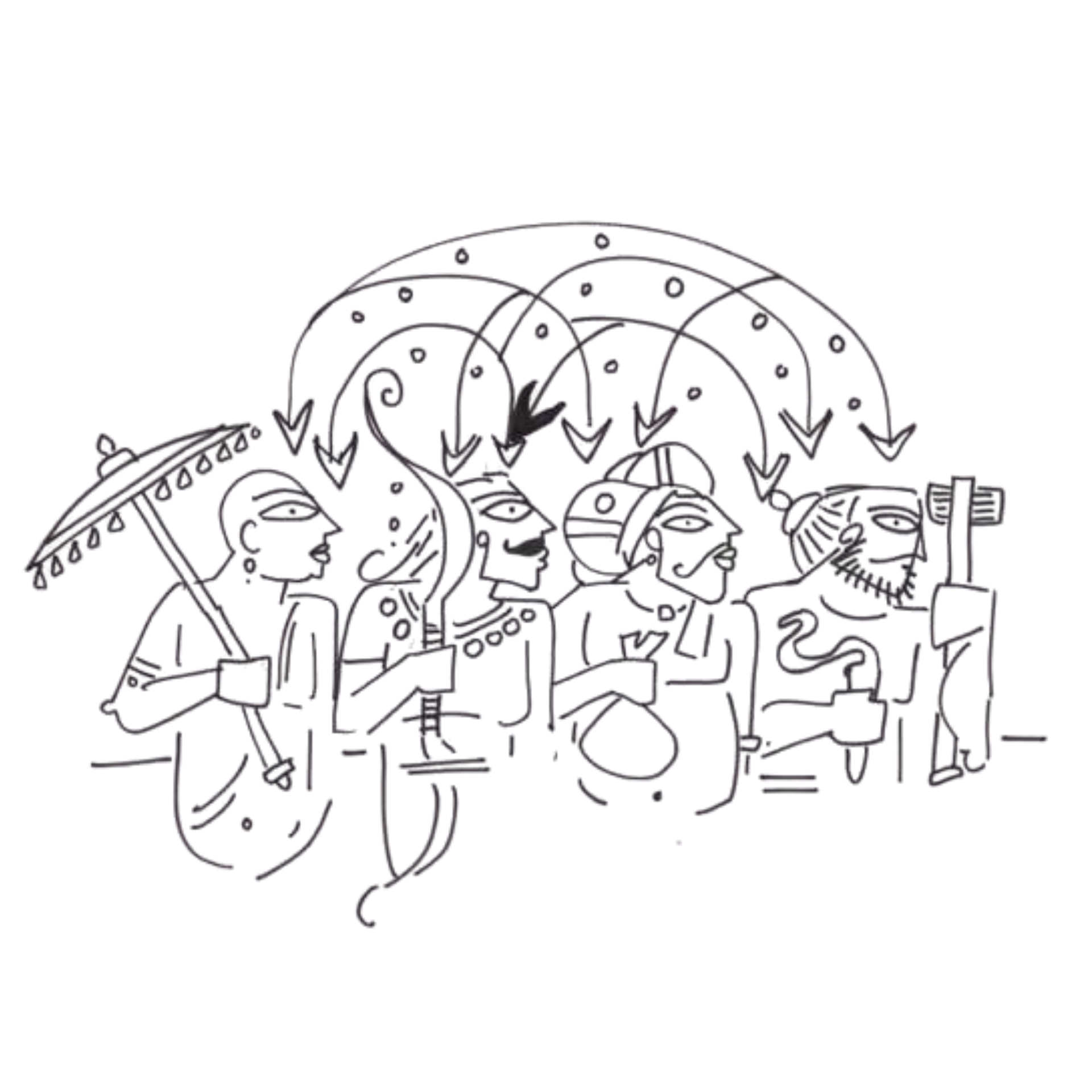
British mythology is famous for one character: Arthur, the famous king who united a fragmented land, and got all warlords to sit as knights around his famous round table. The round table was chosen strategically. Everyone who sat around this table was regarded as an equal. And Arthur was the first amongst equals.
What made Arthur first amongst equals? It was not birth. He was a product of rape. His father had used magic to dupe and sleep with the wife of a rival. It was not talent. There were other knights, like Lancelot, who were better warriors. It was not virtue. There were other knights, like Perceval, who was more virtuous, worthy of holding the Holy Grail. What made Arthur special was that he was chosen by God himself.
Before Arthur, as the warlords fought amongst each other for overlordship of the isle, there appeared before them a sword stuck to a stone. On the stones were the words: “He who pulls out this sword is the true king.” Every year a fair was held where the warlords gathered and tried to pull the sword out. Everyone tried. Everyone failed. Until one year, many years later, a young boy accompanying his uncle pulled out the sword with ease. This was Arthur. And this one act, made him the true king. And all knights were bound to bow before him, for his authority came from God. And why did God choose him? No one knows for mysterious are the ways of God..
In modern management, the head of a business house, whether MD or CEO, is considered the first amongst equals. Or at least he is expected to be. He is supposed to consider members of his leadership team to be his equal, even though they report to him. He is not supposed to consider himself superior. That reeks of feudalism. The ‘team’ of the modern management is supposed to function like the knights around the round table.
But there is one big problem. There is no God in the corporate world. So where does the leader get his authority from? Modern management has found the answer. It is the Board! The principle is that the Board functions logically and impartially without bias and so its judgments are for the good of the organization as God’s judgments are good for the world.
But even Arthur’s knights had a problem with Arthur, divine blessings notwithstanding. They often disagreed and fought. In the modern corporation, this disagreement with the CEO often manifests in corporate warfare — manifesting in silos and a general reluctance to function as a team. One finds inter-departmental warfare manifesting as outright defiance or minimum cooperation after much coercion.
When Rajesh took over as the Head of Corporate Communications, and member of the leadership team, he was horrified to find that the CEO has no real powers. He had to use force to get anything done. His word was not law. Everything he said was argued vehemently making it very difficult for him for him to function smoothly. He later learnt that four members of the seven member leadership team were in contention for the post of CEO and when the Board selected Mr.Seth, the rest accepted the decision grudgingly. They were bound to the decision of the Board, but only in letter, not in spirit. And they made sure the CEO did not succeed so that they could tell the Board, “Look, we told you so!”
The modern corporation attemps to create a world order that is objective and transparent and free of bias. In the mythic realm, this manifests through the word of God. Modern management struggles to replicate this through rules and processes but fails miserably.. This is because every aspiring leader believes he has the divine right to be the leader, no matter what the Board says, and so he refuses to bow before another.