
Published in Corporate Dossier on December 03, 2010.
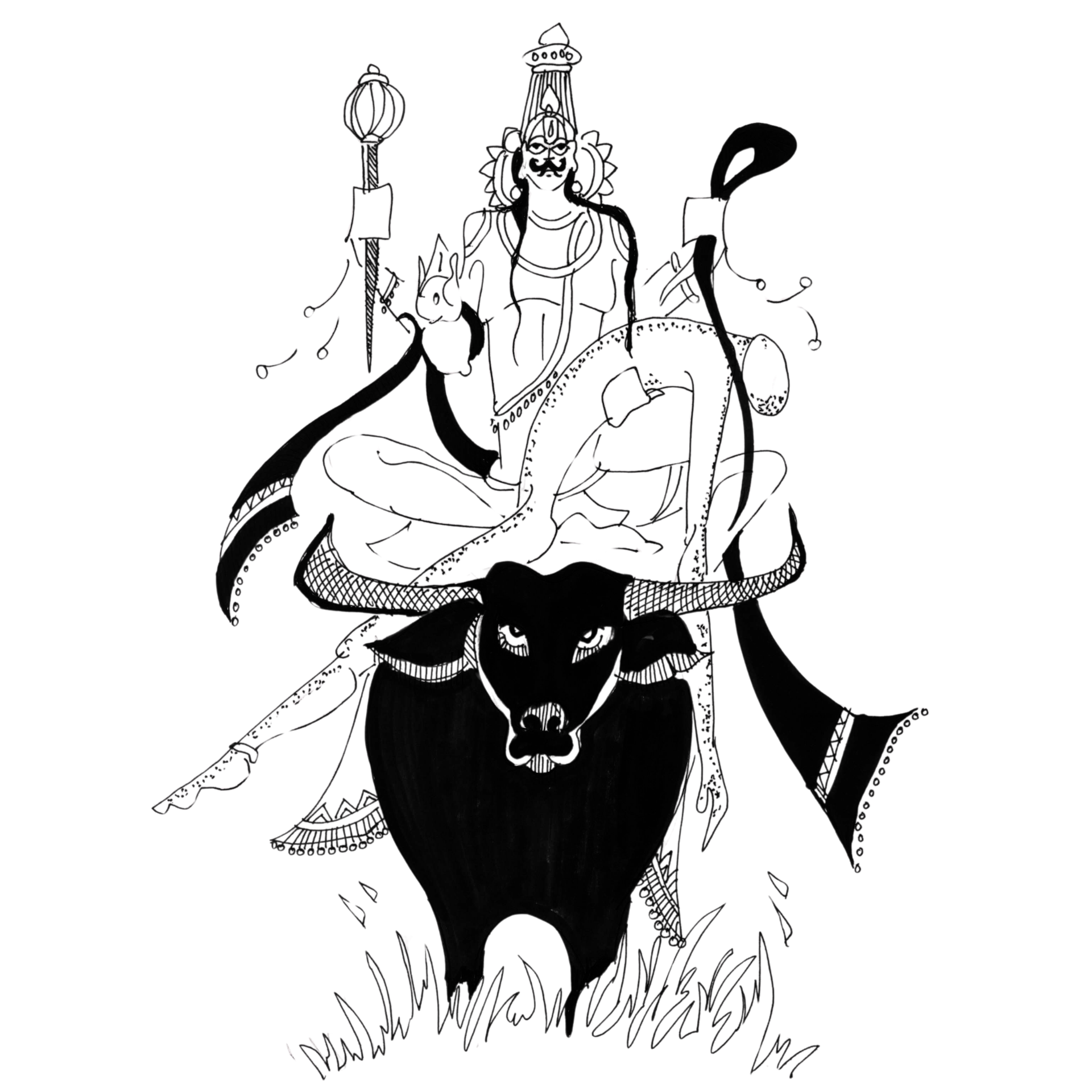
One day Balarama wanted to take a bath in the river Yamuna. He was standing some distance from the banks and did not want to walk all the way to the river. So he asked the river-goddess to come to him. “I cannot change my course,” she said. Balarama did not like this answer. He raised his plough, hooked the goddess with it and dragged her towards him. She struggled and screamed but Balarama had his way. The riverbank broke, and a wedge of water came closer to Balarama so that he could bathe in pleasure.
This rather violent story from the Bhagavata alludes to the practice of canal irrigation practiced by farmers, Balarama, also known as Halayudha, or bearer of the plough, being their patron deity. There are no canals in nature. In nature, water does not come to us; we have to go to the water. In culture, however, we have made water come to us through canals, pipes, and pots. The transformation from nature to culture is a violent one, one that is rarely acknowledged. It is from this violence that organizations are created.
An organization has people aligning to a structure and to a set of processes, systems and rules. The structure, the process, the system and the rule basically domesticate the human being, just as Balarama’s plough domesticated Yamuna. They demand that the human mind align itself to a particular path. A simple act of coming to office at 9 AM, or working from Monday to Friday, is essentially domestication of the human mind. In nature, there is no 9 AM or Monday. These are constructions that attempt to organize the human mind in a manner that it is more controllable.
Those who create the rules (the domesticator) are naturally more comfortable with it than the one who has to follow the rules (the domesticated). The domesticator feels powerful while the domesticated feels helpless and victimized. Those who follow the rules are celebrated; those who don’t are decried. In between are the pretenders, struggling to align in action but refusing, or unable, to align the spirit. Yamuna cannot protest. And Balarama has his way. But humans are not rivers; they can protest and this can be open opposition or covert subversion.
When Makarand took over as General Manager accounts, he felt that the systems that were being followed by his team were rather outdated. So he decided to introduce a new system. He spent hours telling everyone about the benefit of the new system. The management agreed and allowed him to roll it out. But his team resisted. Makarand tried to explain the value of the new system to the organization. The logic appealed to all but change was not happening. Nice requests were slowly turned into aggressive demands. Finally the shift was linked to the team’s appraisal system. The subtle message was: If you do not change from the old to the new system, you will not get a positive appraisal and hence no bonus. This was the old carrot and stick approach meant to domesticate the team into submission. Some aligned willingly. Some aligned but felt like victims. And almost everyone treated Makarand with hostility.
Makarand has not realized that he is Balarama forcing Yamuna to change its course. His team resists because no one likes domestication. Makarand says, “Its good for the organization,” but the team feels, “It is not good for me,” because it involves change in habits, a change in the way the river runs. Until Makarand realizes and understands the principle of domestication, he will never understand why his action is causing such resentment. And when he realizes this principle, and recognizes the power shifts therein, he will attempt to make the process less forceful and more voluntary.