Nowadays, we take iron and steel for granted, but it is worth pausing to ask when iron first appeared around the world. Everyone has heard of the Bronze Age. The Harappan cities of northwest India were Bronze Age cities, built on a foundation of copper and bronze. But it is quite possible that the global Iron Age started in India.
Many historians have believed that the knowledge of iron smelting came from Anatolia (modern-day Turkey/Türkiye), north of Mesopotamia, and spread eastward. But this assumption may not be correct. There is growing evidence that iron was smelted in India independently. In fact, sites in Tamil Nadu suggest that people may have been smelting iron as early as 3000 BC.
Until recently, everyone assumed that the Iron Age began in India in the Vedic period. The Rig Veda does not mention iron. It only refers to “ayas”, which probably meant copper or bronze. But by the time of the Atharva Veda, we encounter the phrase “krishna ayas”, or black metal, suggesting that iron was known by about 1000 BC.
Why bronze came before iron
To appreciate its significance, we need to understand the difference between bronze and iron. After the Stone Age came the Metal Age. Copper is relatively rare but melts easily. Bronze is an alloy of copper and tin. Tin is also rare. Iron is abundant but very difficult to melt. That is why the Copper Age and the Bronze Age appear first in human history, and only later the Iron Age.
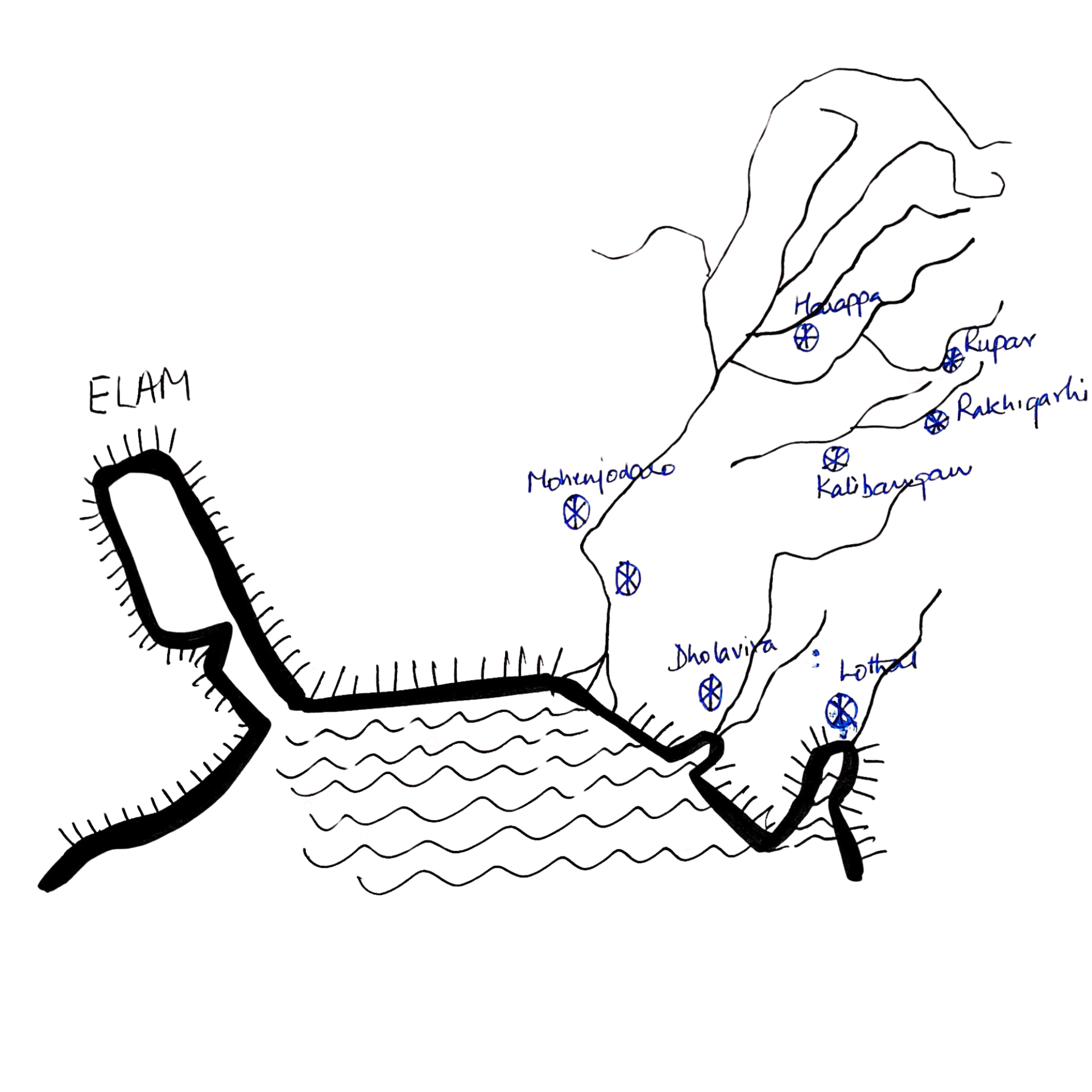
Copper and tin were both available in Central Asia, and when combined, they produced bronze. The Harappans had access to this bronze technology and perhaps even monopolised it. They carried bronze and copper goods to the Persian Gulf in small boats, and from there these goods reached Mesopotamian temples, where bronze was treated as a sacred and valuable commodity. From Mesopotamia, bronze made its way to Egypt.
We may take bronze for granted today, but back then it was rare and almost magical. It was first used for ritual and crafts, not everyday tools. Even in Harappa, stone tools continued to be used alongside bronze, showing that bronze was a luxury item. There is no clear evidence of iron in Harappan cities.
While Harappa declined, iron was smelted in India
The decline of Harappan cities is closely linked to the fate of bronze. Three reasons stand out:
— First, reduced supply: traders who once brought tin from Central Asia found a shorter land route to Mesopotamia through Elam (coastal Iran), bypassing the Indus River.
— Second, reduced demand: the Akkadian Empire, which replaced the Sumerians, did not value the exotic goods of Harappa as much as the Sumerians had.
— And third, climate change altered river patterns, making it harder to sustain the Indus cities.
So the story of Harappa is not just about bricks and drains, but also about copper, tin, and bronze.
While Harappa was fading, iron was being smelted in India. Early iron sites have been found in the eastern Gangetic plains, but even more importantly, across southern India. Archaeologists have found iron in the same regions where ash mounds and megaliths are located. Ash mounds are vast deposits of burnt cattle dung, sometimes 100 metres wide and several metres high, created over generations.
We do not know why Deccan pastoralists created them, but clearly fire was central to their culture. This interest in fire may have helped them experiment with baking clay and smelting ores.
Emerging evidence about India’s early iron age
It is even possible that the Aryans, who came to India around 1500 BC, were drawn by the prospect of trading for iron. Excavations at Keeladi in Tamil Nadu reveal an urban civilisation on the banks of the Vaigai River, with evidence of iron production dated to 600 BC.
Notably, India was also the home of Wootz Steel, which was developed around 500 BC in the Deccan region. This development was likely the result of earlier knowledge of smelting, alloying, etc.
And Keeladi’s deeper layers may hold even more secrets. The finds at the site echo the Harappan world: red-and-black pottery, carnelian beads, organised streets, water and sewage management, even symbols reminiscent of Harappan signs.
These new findings are still being debated, and politics often clouds the evidence. But as more excavations and studies emerge, our understanding of India’s early iron age is bound to change. It may well turn out that India was among the first centres of iron smelting in the world, reshaping how we think about ancient history.