Colonial historians argued the ‘Aryan invasion theory’ that light-skinned chariot-riding people destroyed Harappan cities, conquered India, enslaved local dark-skinned people and created the caste system. To counter this, there was the ‘out of India’ theory popularised by many Brahmins, that Harappa was Vedic, that Aryans were originally Indians who migrated out of India, taking civilization to the world. Both were wrong. Neither explained what motivated these Aryans to move in, or out, of India.
Now it seems increasingly clear that Aryans came for (newly smelted) iron, and they offered (newly domesticated) horses in exchange. Aryans were neither invaders nor migrants: they were traders. And like many merchants and sailors, they had local wives, which accounts for the spread of their genes (R1a-Z93), language (proto-Sanskrit) and patriarchal culture in India.
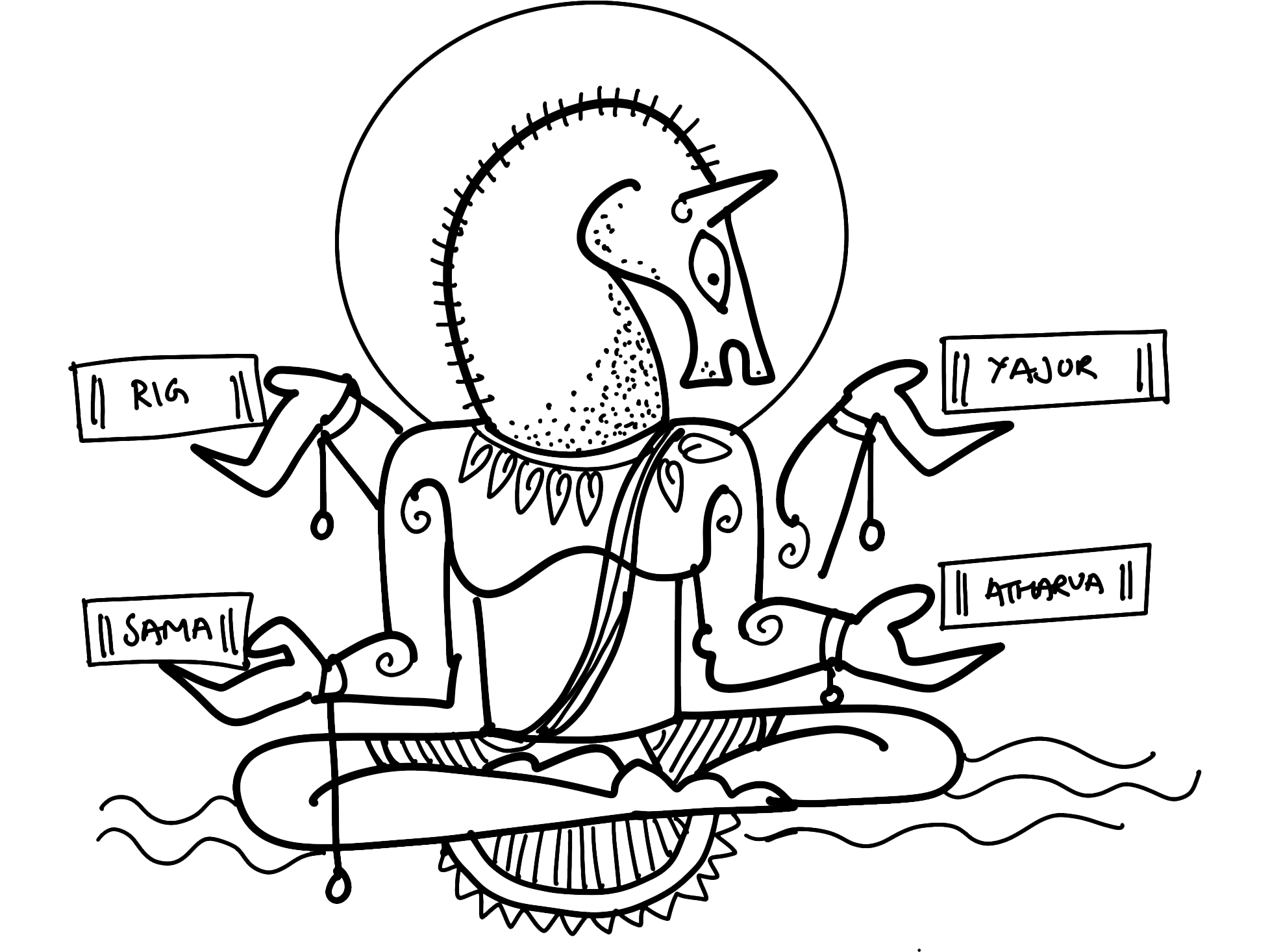
In Hindu myth, the horse-headed Vishnu rescued the Vedas and gave it to Brahma for safe-keeping. For over 3,000 years, Brahmins of India have therefore meticulously transmitted the Vedic songs containing some of the oldest descriptions of horses, chariots and composite bows in the world (Rig Veda 1.163.10 and 6.75.2). The Brahmins saw these Vedic hymns as timeless (sanatan), not of human origin (a-paurusheya). Today, thanks to ancient DNA analysis, archaeology and linguistics, we know that is not true.
Horses, originally bred for meat and milk, were fully domesticated only 4,000 years ago, around 2000 BC, in the region north of the Black and the Caucasian sea, west of the Ural mountains. The early horses were too small for adult humans to ride. This led to the invention of the earliest spoked-wheel chariots, light enough to be pulled by horses. They have been found in burial sites in Southern Russia, at Sintashta, east of the Ural mountains, also dated to 2000 BC. Composite bows (made of wood, bow and sinew) were invented around the same time, at the same place. This new military technology (horse, chariot, bow) spread to Egypt (indicated by wall art) in the east, Scandinavia (indicated by bronze statues) in the north and China (indicated in burial sites) and India (expressed in Vedic poetry) in the east by 1500 BC. With the horsebreeders, spread a new language Proto-Indo-European (PIE).
The eastern migration saw the spread of a gene variant found only in Steppe pastoral men, present in Y-chromosome, identified as R1a-Z93. It is currently seen across Central Asia, Iran and amongst all Brahmins of India. Those with this gene have another mutation that enables adults to digest milk. North Indians can digest milk easily. South Indians prefer curd.
The men who came bearing these genes referred to themselves as Arya or noble (this term was appropriated by racist Europeans causing much academic confusion). Rig Vedic verse (Mandala 4, Sukta 24) refers to bargaining a fair price. These traders would have had to repeatedly return to Central Asia to fetch more horses as horses do not breed in India. A simple fact that most people miss. The monsoon climate is not conducive to horse breeding.
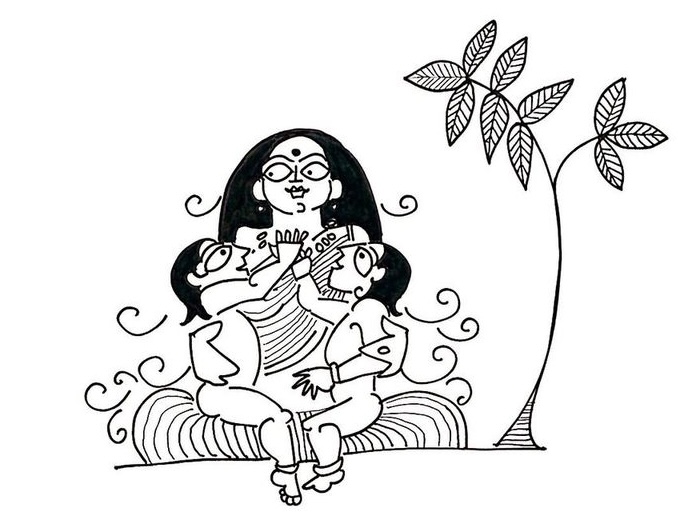
So Aryans were neither invaders, nor migrants. They were traders, probably with wives on either side of the mountain trade route. The mothers gave their children voiced aspirated consonants (gh, jh, h, dh, bh) and retroflex consonants (t, d, n, s).
The spoked-wheel chariot pulled by horses could carry two men: a driver and an archer. This image is immortalised in the Bhagavad Gita, with Krishna holding the reins of four white horses, and Arjuna holding his mighty bow, the Gandiva. Both riders blow conch-shells. The Rig Veda does not mention this conch-shell; the Atharva Veda does. They are only found off the Gujarat coast, in the Indian ocean.
Recent excavations in Keeladi, Tamil Nadu, are drawing attention to iron smelting technology that was invented in India, in regions associated with Dravidian and Munda languages. This requires very high temperatures. Sites in Deccan have ash-mounds indicating a long-standing enquiry into firetechnology. Along with Anatolia (modern Turkey) and Africa (Bantu people), India seems to be another site where iron was first extracted. This could be a good reason why Aryans came to India from the Oxus river basin through treacherous mountain passes (not flat enough for wheeled wagons).
Horse breeding in India came very late, after 1400 AD, in parts of Gujarat, Rajasthan, Punjab and Maharashtra. So for nearly 3,000 years, every year, horse breeders would bring their horses from Central Asia for local Indian kings, who would use the horse in war, to conquer new lands, and even slaughter them as part of land acquisition ceremonies (Ashwamedha). Traders had no reason to ‘invade’ or ‘migrate’ to India. They had to go back to fetch more horses from Central Asia where horse breeding was easy.