His fans and followers adore him, and will not tolerate any criticism of him. His opponents only want to criticise him. But if one rises above these two extremes, there’s much to learn from the Modi phenomenon. It reveals so much about the human condition, and nature of society, and specifically India.
To appreciate this we must acknowledge that the nation-state is a cultural construct, a mythic idea, not a timeless one. There’s nothing rational or reasonable about it. It’s simply a powerful historical idea that emerged from tribes of Europe and West Asia that took the world by storm. This began about 300 years ago, when America broke free from Europe as a republic, anchored on a single document, the Declaration of Independence.
Before that the world was controlled by kings, and kings ruled tribes, who united themselves through a common idea, a document. In Arabia, in Persia, in Israel, this document was the unchallengeable commandment of God, communicated through a divine messenger. But amongst European tribes, the transcendental idea of God and his document was replaced by the idea of senate, or parliament: a collection of men. Such a group controlled Greek city-states, and even Rome, though Caesar after Caesar tried to break this system.
Later the emperor was controlled by the church. There were many rival ‘bodies’ – in Alexandria, in Byzantium, and even today, we find them in Russia, in Greece, in America, in England, in Sweden and Denmark, split as per nation-states. The secular state has its roots in this tribal system. This is where the Magna Carta curtailed the divine right of kings. There’s nothing innovative about secular nation-states.
China had its emperors to unite and isolate its people behind Great Walls, and now firewalls. But India functioned very differently. Different communities had different rules. Rules changed over time. There was no need for homogeneity. Communities collaborated to create a network that created settlement clusters like villages and towns. Buddhist Nikayas, which are over 2,000 years old, clarify that a king (raja) was created only to prevent anarchy (arajakta) as rivals fought over territory. In the Keralolpathi, finally compiled 500 years ago, the same idea prevails to explain the existence of Chera kings. Parashuram realised the Brahmins he had given land to would never collaborate and so he decreed they should be supervised by an outsider, one who would treat Kerala as a responsibility and never benefit from it.
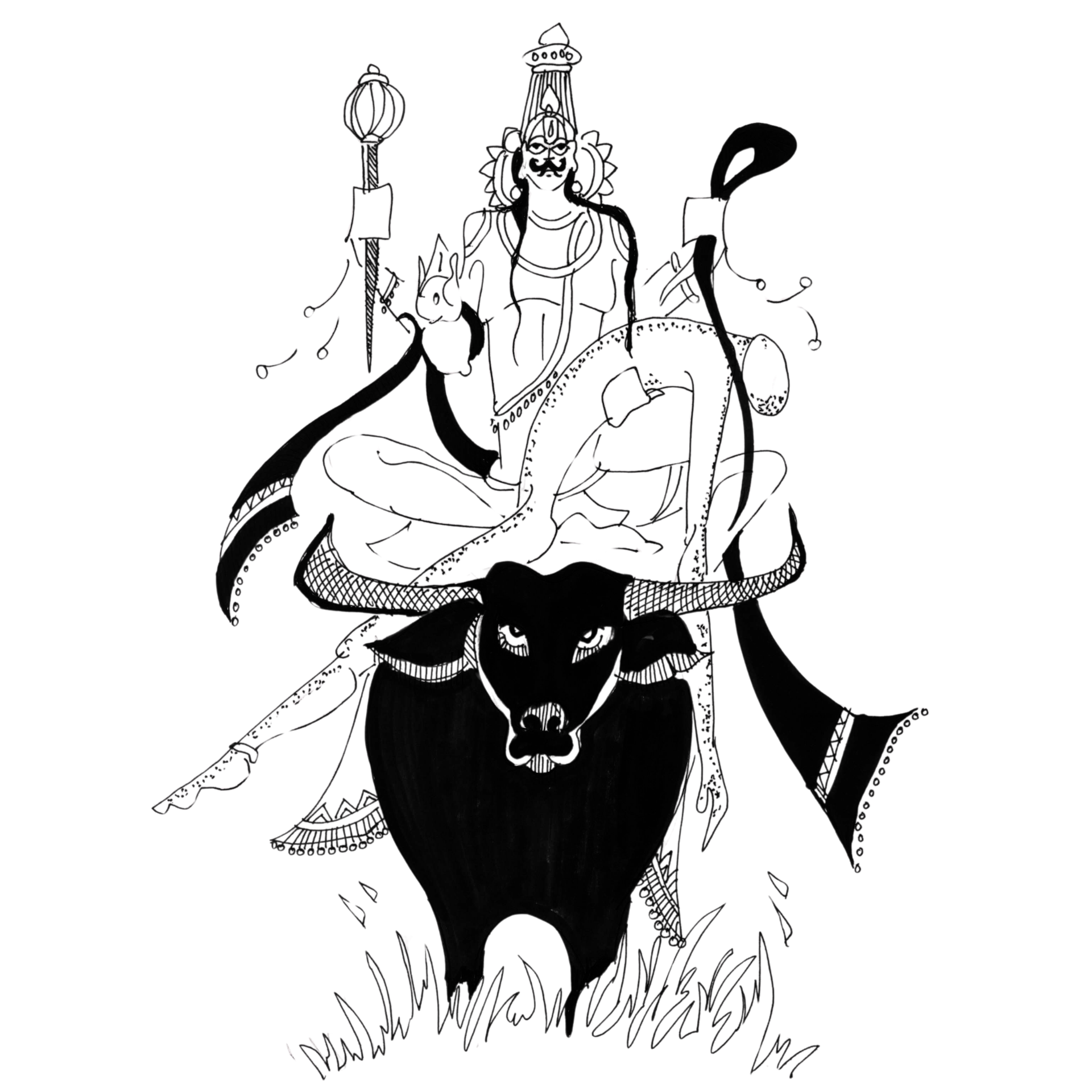
This king was a charismatic and powerful man. This is what Chanakya saw in Chandragupta. Such a man could gather around him, by force of his personality, all kinds of otherwise warring vassals and tributary states. Thus he would create a raja-mandala, a circle of kings, with rajas paying tribute to maharajas paying tribute to maharajadhiraja paying tribute to the chakravarti.
Such a man, who bowed to no one, but bound everyone, established the sam-rajya. He was always at odds with autonomous rulers, who wanted to establish sva-rajya. This tension of sam-rajya and sva-rajya can be traced to the Gods Varuna and Indra of Vedas, and to the Jain story of Bharat and Bahubali. Here there’s no concept of any document shaping society. It has everything to do with the personality of a king. In our case, it’s Modi, whose charisma manifests through democratic process, and its loopholes.
The focus on a person rather than policy is the hallmark of Indian thought. The West hates this idea. Hence, the need for God/state, an entity higher than a particular individual that guarantees all individuals have liberty. The assumption is that a superman alpha will enslave other humans by establishing a pecking order. For that is animal nature. And yet, all policies of the modern world have only done that. A single country can veto global outrage at genocide.
The idea that institutions are better than individuals, that destroying all things traditional is progress, is Western. It keeps promising a happily ever after, which is always elusive. By contrast, Hindu mythology speaks of change – the constant throbbing ebb and flow of wealth and power through the expanding and contracting of Raja-mandalas. Currently Modi is establishing a Sam-rajya, a Raja-mandala, based on the sheer weight of his personality. We can use all the democratic jargon we want to explain his rise. But seen through a different civilisational lens, it makes a lot of sense.
Modi has defied all manner of obstacles, personal and institutional. He has overcome challenges of lawyers, judges, regulatory bodies, even religious leaders who have argued what constitutes sacredness for temples and rituals. He has done this all alone, rising from within the ranks of an organisation that is now beholden to the powerful force he has become.
We can argue Gandhi had a similar mysterious power, singlehandedly uniting a divided people to rise against the world’s most powerful empire. This power is known as ‘kshatra’ or ‘shri’ in Vedas, that makes a person fortune’s favourite. To accept the existence of this power in a person in changing the shape of society remains a matter of faith, no different from faith in a document to create equality and justice.