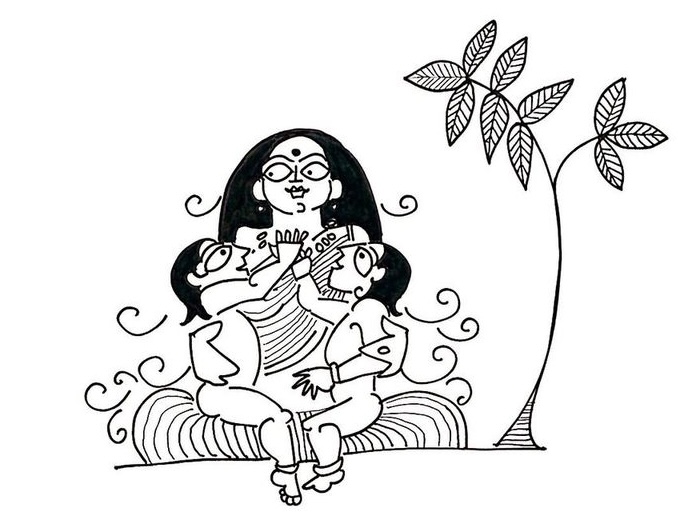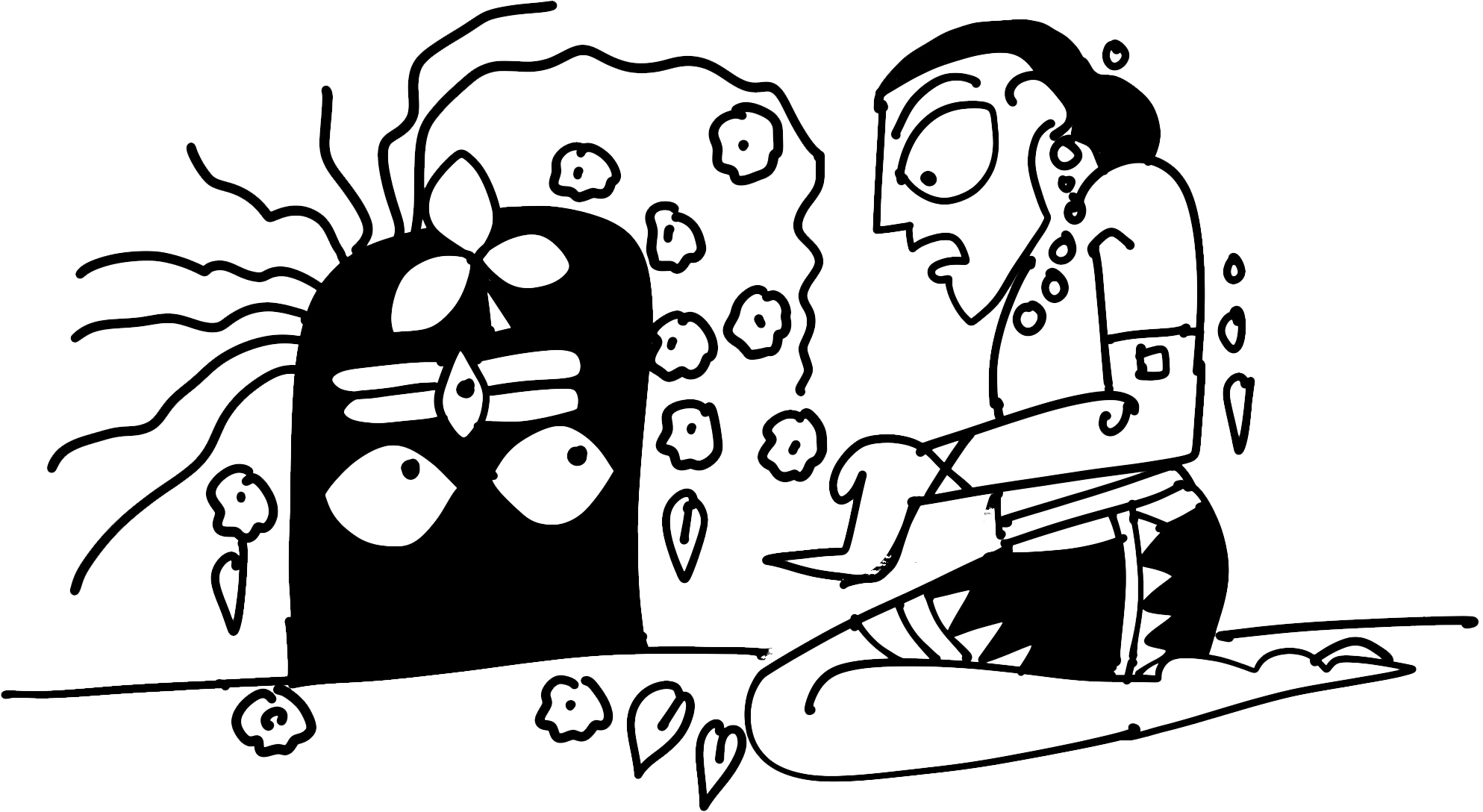
A king would visit the temple every morning to receive flowers offered to the deity at dawn, when the temple doors opened. But one day, the priest was so busy enjoying the company of the temple dancer that he forgot to perform the morning rituals. When the king arrived, he hurriedly gave the king flowers that adorned the dancer’s hair. The king accepted them, but then noticed a single strand of hair on them.
On questioning, the frightened priest lied. He said that sometimes, the deity sprouts hair at night. The king did not believe the priest and realised that the rumours were true, that the priest was having an affair with the temple dancer. And instead of performing the rituals for which he had been employed, was spending more of his time with the dancer.
So, the king told the priest that he would like to see the deity sprouting hair, and so would visit the temple at night. That night, the priest knew that he would be killed by the king. And he spent the whole day weeping in front of the Lord, performing the rituals the one last time. At night, the king arrived and stayed to mount an all-night vigil along with the priests, and no one else was allowed into the temple. And lo and behold, just before daybreak, the deity sprouted hair!
The king thought this was some trick and therefore plucked one of the hairs, but noticed blood on its roots indicating that this was really the deity’s hair. The priest was telling the truth. The priest fainted as he realised the compassionate deity had come to his rescue despite him being a liar. The fame of the temple spread far and wide, because of the deity who helps even unworthy devotees.
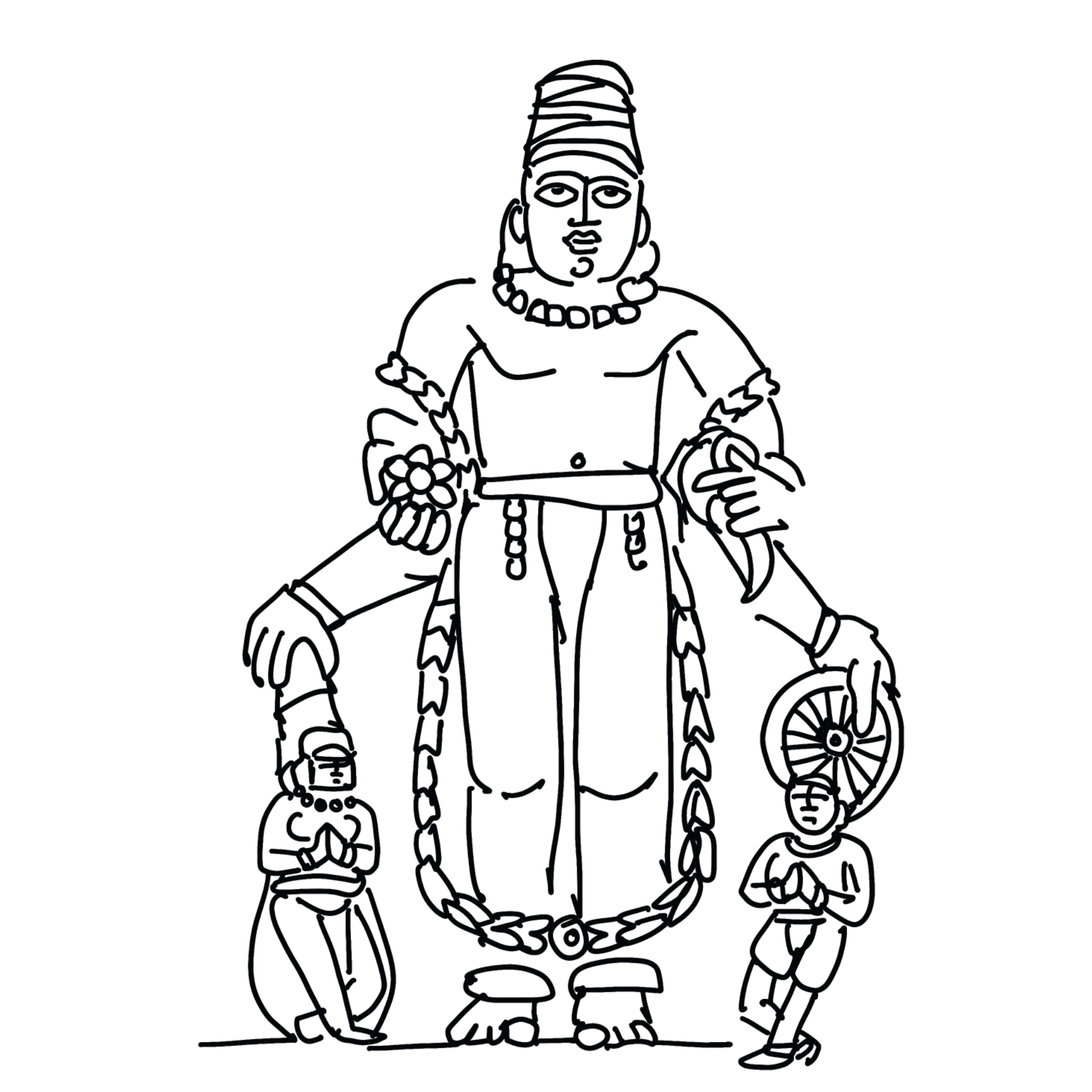
This story is stored in different parts of India. It is linked to temples found in Tamil Nadu, Andhra Pradesh, Karnataka, and Odisha. The deity at the temple is sometimes Shiva and sometimes Vishnu. The image is either a Shiva-linga or the four-armed Vishnu. These stories are part of the bhakti traditions that became widespread after the 15th century across India.
The story draws attention to the concept of contamination. The presence of human hair in the flowers offered to the deity is a pollutant. As temple culture rose in India, there also rose simultaneously ideas of purity, impurity and contamination. The temple precinct had to be pure and those who entered the holiest of the holies, ie the Brahmins, had to be pure too.
Offerings made to god could not be touched by humans other than the priest or the temple servants. You weren’t allowed to smell the flowers, you weren’t allowed to wear the flowers, smell or taste the food offerings. Temple servants like priests lived in isolation, constantly purifying themselves with baths, chants and rituals, shunning the impure. This is how the idea of untouchability emerged.
For the opposite of the pure priest who adorned and fed the gods was the impure villager who kept the village clean—removing garbage, excrement and corpses of animals and humans. He lived outside the village. He was the Chandala, who consumed all things impure and so was deemed impure, polluted, unworthy of touch.