
March 22, 2017

First published March 21, 2017

The Fragility of the Ego

When I wrote an article pointing to the misogynist rules of Vinaya Pitaka, the discipline for Buddhist monks, many Buddhists got upset. They accused me of being Right Wing fascist and a Hindu fanatic. Some people love Buddha so much nowadays that we cannot take any criticism of him.

The very same people get upset when lovers of Modi hate it when someone criticises Modi.
When we adore an icon, we cannot bear to see them being criticised. We want them to be perfect.
When feminists spoke ill about Ram, Hindu supremacists got upset.
When I wrote an article questioning Krishna’s role as a father, some other Hindus got upset.
This reveals a discomfort with critical thinking.

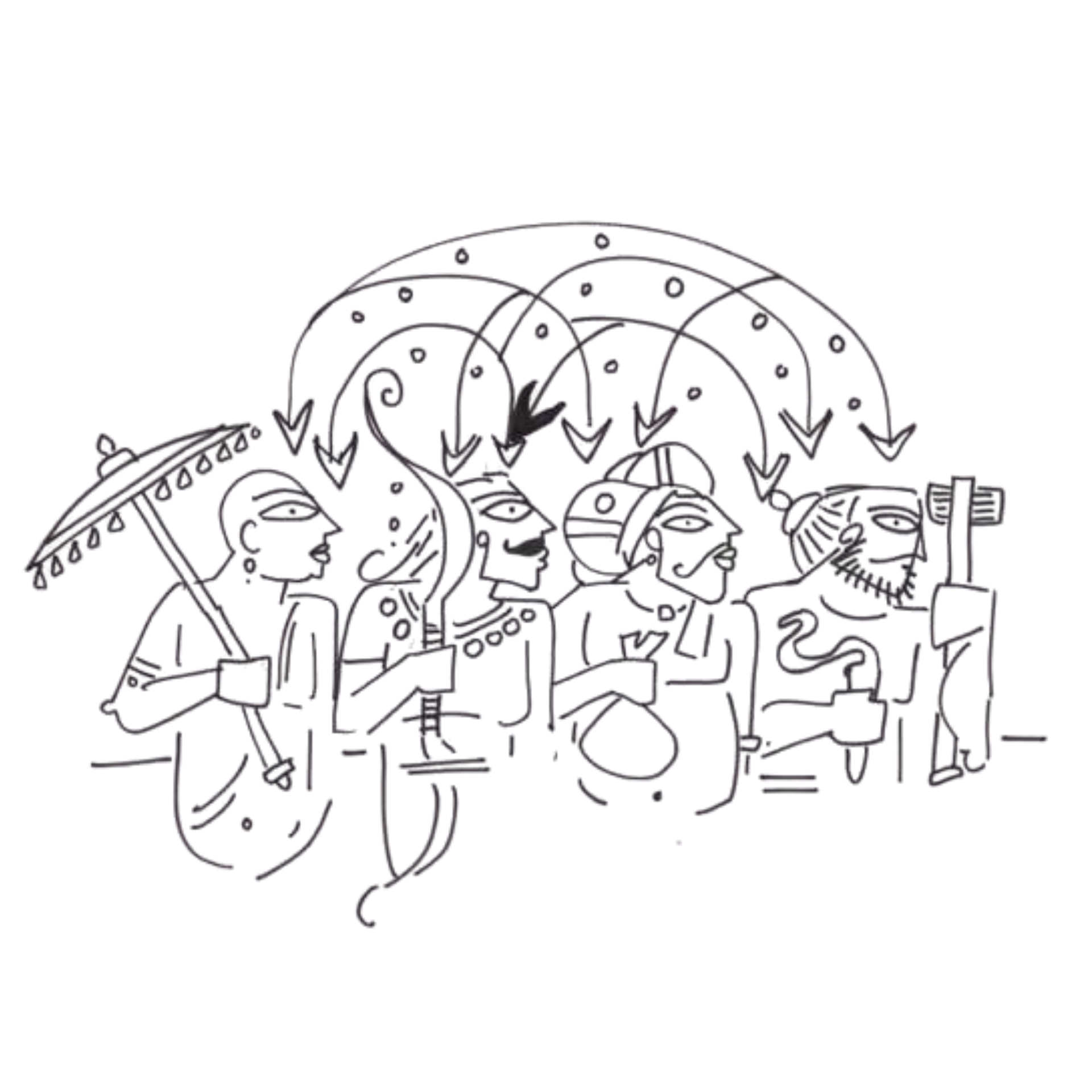
We want to be objective when it comes to things on which we have no stake. We are overly protective of our icons – Buddha, Modi, Ram, Krishna, Ambedkar. It says how fragile our ego is. And we mask it as adoration and love and bhakti.


Recent Books

  • flowers of india book

    Flower of India: Ways of Seeing the Lotus

    In Flower of India, bestselling author and renowned mythologist Devdutt Pattanaik examines the lotus as one of the most pervasive and resonant symbols of the Indian subcontinent. Through its many avatars—as plant, resource, metaphor, design, and sacred form—he traces how the lotus has shaped India’s cultural imagination across history, religion, art, and everyday life. Concise…

  • astra shastra

    Astra Shastra: Weapons of the Hindu Gods

    Well-known mythologist Devdutt Pattanaik introduces young readers to the wonderful weapons of Hindu gods with his unique art and easy-to-read text…

  • Escape the Bakasura Trap : Let Contentment Fuel Your Growth

    This book re-discovers this path, first revealed by Hanuman in the Mahabharata. Insightful and inspiring, Escape the Bakasura Trap is another classic from one of our great mythologists and thinkers…

  • लंकेश: रावण संग एक रोमांचक यात्रा

    यह पुस्तक भारत के सबसे विख्यात महाकाव्य रामायण और इस कारण भारत के सबसे बड़े खलनायक, रावण, को विस्तार से जानने की राह खोलती है।…

Recent Posts

  • Imagining Hinduism Without Caste

    Imagining Hinduism Without Caste

    For centuries, what we now call Hinduism was never a single religion. It was a civilisation organised through caste. Each caste had its own gods, rituals, food rules, taboos, and ideas of the sacred. Diversity was not accidental; it was structural. To imagine a caste-free Hinduism is therefore to imagine uniformity. Who defines it then?…

  • Did Missionaries Construct the Buddha We Know?

    Did Missionaries Construct the Buddha We Know?

    The Buddha had drifted through European writing for centuries before scholarship took hold of him, and the early portraits were wildly varied…

  • Beyond Karma: Subaltern Tales of Caste Origin

    Beyond Karma: Subaltern Tales of Caste Origin

    When the missionaries came to India, they argued that Hindus accept social hierarchy because they believe their birth is the result of past actions. Karma promoted fatalism. This interpretation led many anti-caste reformers to reject karma itself. The Jataka tales describe the many previous births of the Buddha, showing how good deeds over lifetimes led…