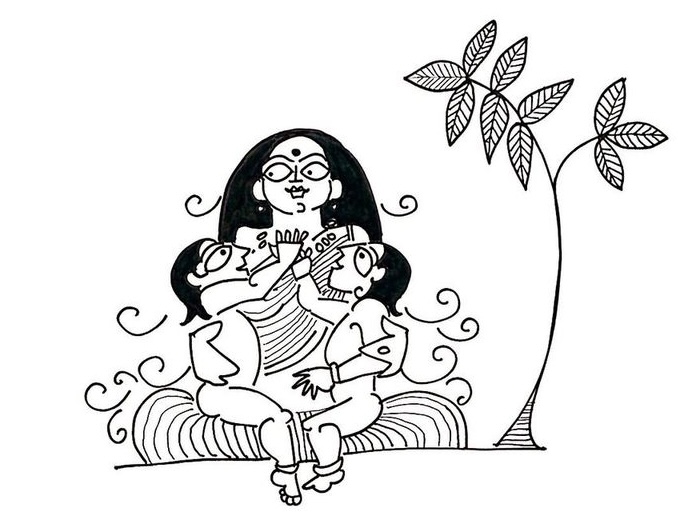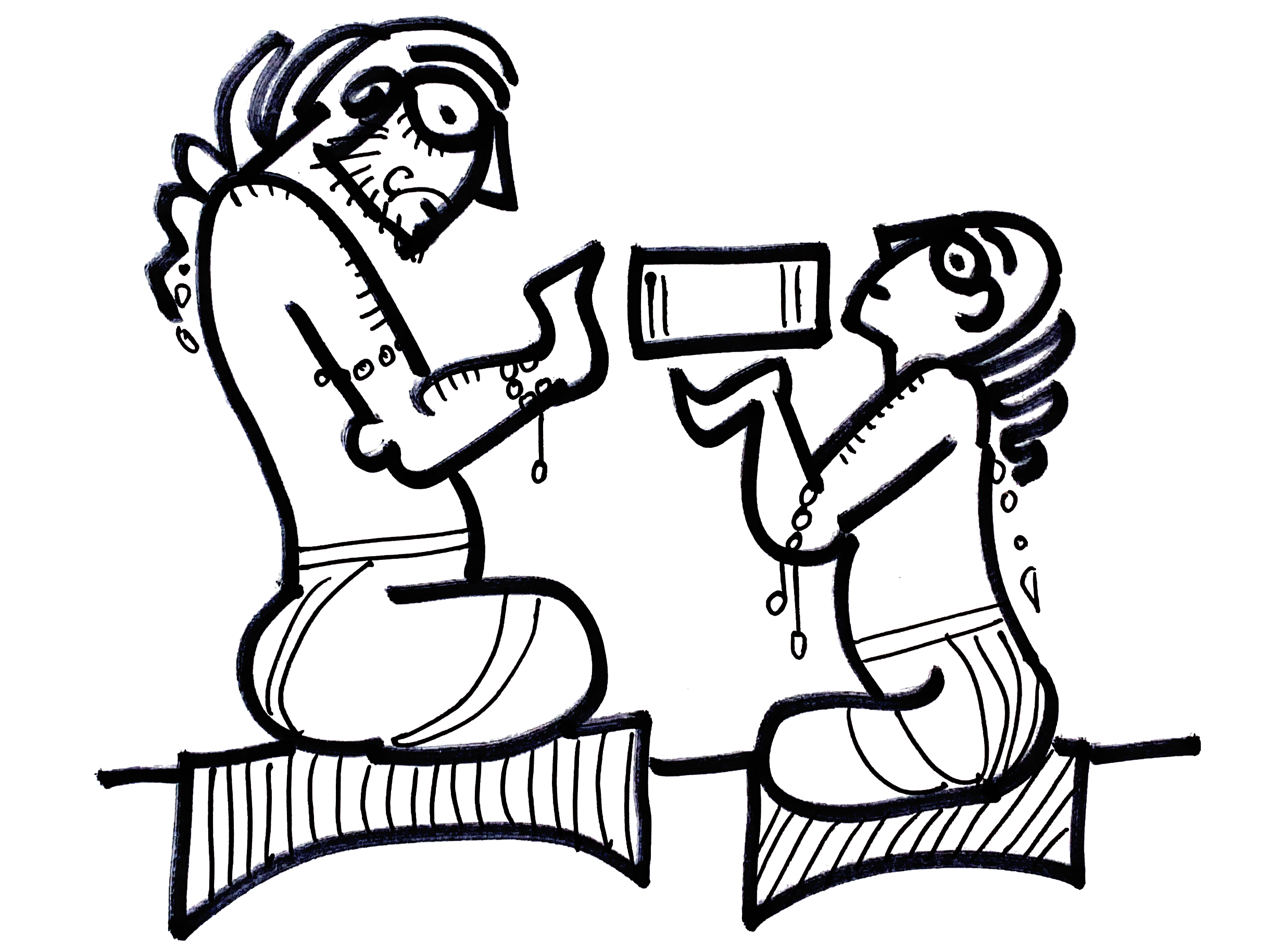
Faith is neither true nor false. History seeks the truth. Myth is about faith. So when people ask if myths are real, they are missing the point. Myths use metaphors to explain the faith of a people. Metaphors are fantastic. They are to be decoded not taken literally. When people read myths literally (gods with four hands, prophets riding flying horses, virgin births) they miss the point of the narrative.
The concepts of mythology and history, as we understand them today, are relatively recent developments. Less than 200 years ago, these words did not exist in their current form. They emerged during the Age of Enlightenment, following the scientific revolution, as scholars sought to examine the past through an objective lens. This shift in perspective gave birth to the discipline of history, which relies on evidence and scepticism to construct an accurate account of events. However, before this transformation, societies across the world had vastly different ways of understanding and preserving their past.
For thousands of years, communities passed down their histories through oral traditions, using songs, stories, and shared memories. These narratives were not merely records of events but were deeply intertwined with culture, identity, and belief systems. Unlike modern historical accounts, these stories often contained fantastical elements—tales of kings who travelled to the heavens, gods with multiple arms, humans who lived for a thousand years, and oceans parting at divine command. These myths did not attempt to be objective; rather, they were designed to convey moral, spiritual, or philosophical truths.
With the rise of scientific thought, a fundamental question arose: what should be done with these traditional stories? Could they still be considered history, or should they be dismissed altogether? In response, scholars in the 18th and 19th centuries sought to categorise these narratives, and thus the concept of mythology was born.
The term mythology was coined by European scholars who saw themselves as intellectual heirs of ancient Greek traditions. The Greeks, particularly Socrates, Plato, and Aristotle, had introduced a distinction between mythos and logos.
Mythos represented storytelling, imagination, and faith—a world where truths were conveyed through metaphor and legend. Logos, on the other hand, was rooted in rationality, scepticism, and inquiry, rejecting blind acceptance of tradition or authority. This binary opposition resurfaced in 19th-century Europe, reinforcing the idea that myths belonged to the realm of fantasy while history was grounded in facts and evidence. As a result, mythology was increasingly seen as separate from history, a category for narratives that lacked empirical proof.
With the rise of rationalism, history began to establish itself as an academic discipline based on scepticism and evidence. Unlike mythology, which relied on communal memory and belief, history demanded verifiable sources, archaeological findings, and written records. The past was no longer seen as something to be preserved through stories but as something to be investigated and reconstructed through rigorous analysis.
However, this shift led to a major cultural and philosophical debate. If history is the objective study of the past, does that mean myths have no value? Can ancient traditions, which shaped the identities of civilisations for centuries, simply be dismissed as fiction?
Despite the modern emphasis on evidence-based history, mythology continues to hold immense cultural significance. Myths are not merely falsehoods; they offer profound insights into the collective psyche of societies. They provide answers to existential questions, create shared identities, and offer moral frameworks.
Moreover, history itself is not always as objective as it claims to be. The selection of which events to document, the interpretation of sources, and the biases of historians all influence the historical narrative. In this sense, history and mythology are not entirely separate; rather, they exist on a continuum of human storytelling.
The evolution of mythology and history reflects a deeper shift in how humanity understands the past. While history seeks to uncover verifiable facts, mythology continues to shape cultural consciousness. The challenge is not to dismiss one in favour of the other but to recognise their distinct roles in preserving the past.
Both mythology and history serve as mirrors of human experience, helping us navigate our place in the world—one through fact, and the other through imagination.