
Mythologist | Author | Speaker | Illustrator

-

-

-

Malayalam : Ramayana Versus Mahabharata
Translation of Ramayana Versus Mahabharata: My Playful Comparison…
-

-
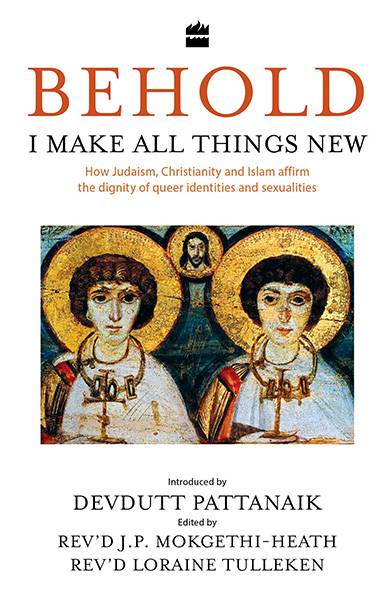
Behold, I Make All Things New : How Judaism, Christianity and Islam affirm the dignity of queer identities and sexualities
In 2015, a historic panel discussion took place at the global Festival of Theology held in Sweden. Its objective was to examine what the sacred texts of the Abrahamic faiths — Judaism, Christianity and Islam — had to say about human sexuality. Behold, I Make All Things New is the outcome of the effort. This…
-

Hindu Trinity: 21 Life-enhancing Secrets Revealed Through Stories and Art
In the living tradition that is Hinduism, divinity manifests as the Goddess, who embodies the world, as Shiva, who seeks to withdraw from it, and Vishnu, who engages with it.This omnibus, comprising the bestselling titles 7 Secrets of Shiva, 7 Secrets of the Goddess, 7 Secrets of Vishnu, explores the art, rituals and stories of…
-

Aranyaka: Book of the Forest
In the wilderness of humanity, In the forests of the mind, Who eats whom? Who sees whom? Aranyaka is about the great forests within us, and without. It is about food, feeding and love. Braiding the stories of three spirited rishikas—Katyayani the Large, Maitreyi the Fig and Gargi the Weaver—it explores the fears and hungers…
-

Hindi : How to Become Rich
Translation of How to Become Rich: 12 Lessons I Learnt from Vedic and Puranic Stories…
-

How to Become Rich: 12 Lessons I Learnt from Vedic and Puranic Stories
Lakshmi is worshipped as the goddess of wealth. Her arrival is considered auspicious, while her departure is bad and inauspicious. In temples, gods are bedecked with jewels; during festivals, our houses are decorated with flowers, lamps and lakshmi’s footprints. Clearly, she is a much-desired goddess. Yet, some friends and relatives, even gurus, tell us not…
-

Two-Epics-in-One (The Ramayana for Children and The Mahabharata for Children) The Girl Who Chose and The Boys Who Fought, a Flip Book.
The Girl Who Chose A BOOK ABOUT CONSENT AND CHOOSING RESPONSIBLY The Ramayana, the ancient tale of Ram and Ravana, is one that has been reinterpreted in myriad ways exalting the virtues of the princes. Few notice, however, that the story is actually led by the girl who chose, Sita. The Boys Who Fought A…
-
-

Marathi : Myth = Mithya
Translation of Myth = Mithya: A Handbook of Hindu Mythology Hindus have one God. They also have 330 million gods: male gods, female gods, personal gods, family gods, household gods, village gods, gods of space and time, gods for specific castes and particular professions, gods who reside in trees, in animals, in minerals, in…
-

-

-
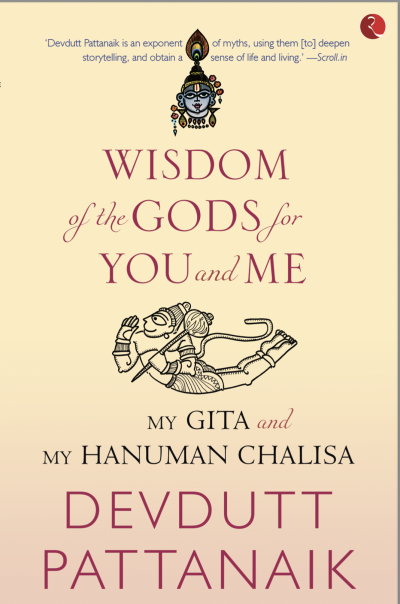
Wisdom of the Gods for You and Me: My Gita and My Hanuman Chalisa
Hindu mythology is vast and voluminous. There is so much we don’t know or has not been presented in a simplified way, making sense to contemporary times. This special omnibus edition brings together two bestselling books, My Gita and My Hanuman Chalisa are part of a series where Devdutt does ‘darshan’ of the scriptures, not…
-

Yoga Mythology: 64 Asanas and Their Stories
The popular names of many yogic asanas – from Virbhadra-asana and Hanuman-asana to Matsyendra-asana, Kurma-asana and Ananta-asana – are based on characters and personages from Indian mythology. Who were these mythological characters, what were their stories, and how are they connected to yogic postures? Devdutt Pattanaik’s newest book Yoga Mythology (co-written with international yoga practitioner…