Published on 22nd December, 2019, in Mid-day
Hindu mythology is full of symbols associated with water which link all the gods to water. The oldest symbol of these are serpents. During the rainy season, water fills the holes where the serpents reside, forcing them to leave their abode. This makes them visible during the rainy season. Therefore, the snake has been associated with rain for a very long time in India. It is told that a long time ago, a king of Nepal told all the serpents to leave his kingdom, as a result of which there was a drought in his kingdom. He had to beg the snakes to come back. When the snakes returned, so did the rains. The friendship of snakes and rain is referred to in the Mahabharata. When the forests are burnt by the Pandavas to create the city of Indraprastha, the snakes start to lament. Their lamentation moves Indra and so, Indra brings rain to save the serpents.
Shiva has a snake around his neck. Vishnu sleeps on a coiled snake. In Shiva Purana, Shiva sits on a mountain covered with snow, snow being solidified water. From his matted locks, sprouts the Ganga, whose fall, from the heavens, he controlled so that she did not destroy the very foundation of the earth. Shiva is associated with Ganga and the Himalayas, which are the source of all water. In Vishnu Purana, Ram is associated with the river Sarayu, which in turn, is associated with the ocean. Krishna is associated with the river Yamuna, and also the ocean because the city of Dwarka is located in the middle of the sea.
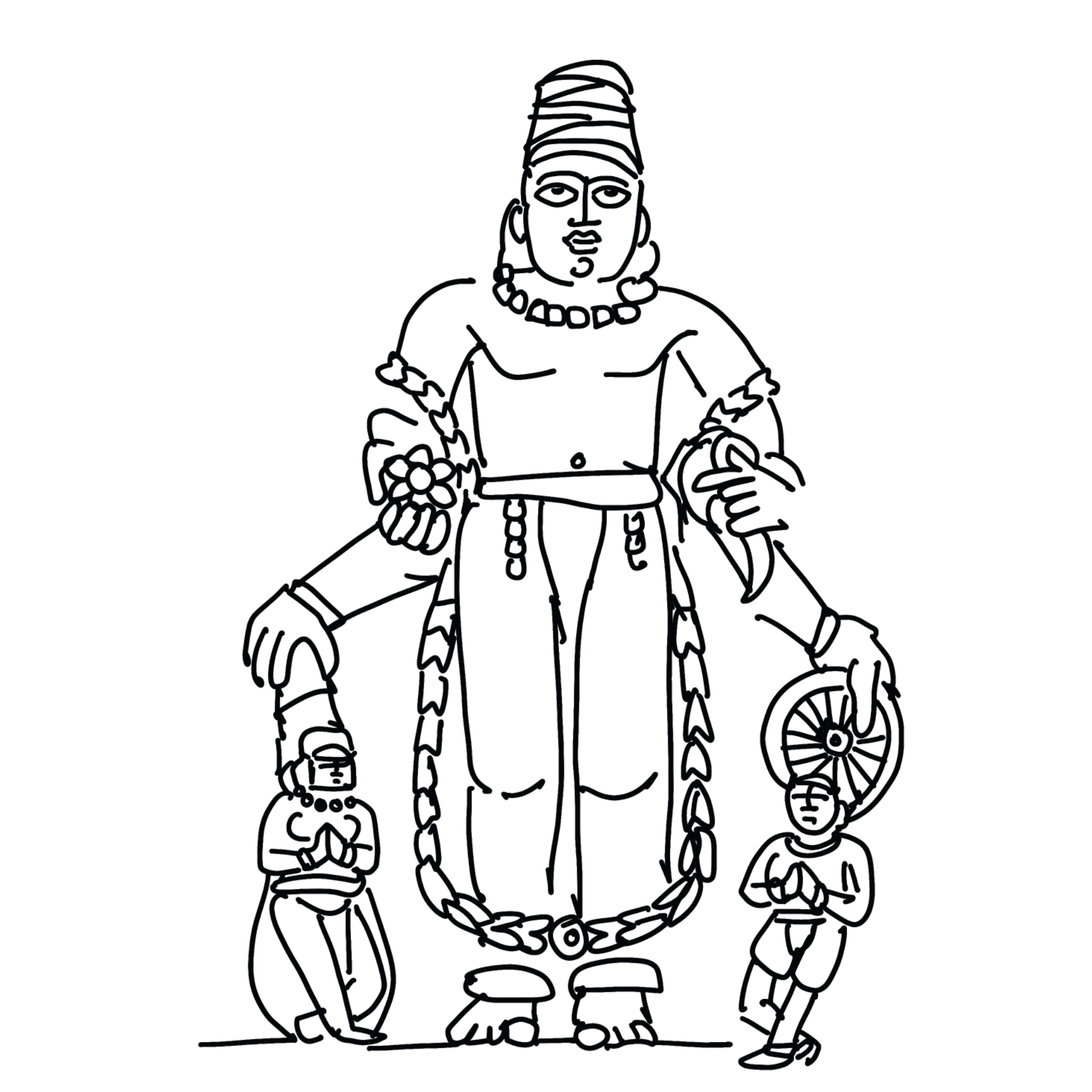
There are plant symbols, animal symbols and mineral symbols associated with water. Plant symbols include flowers, like the lotus which represents a connection with water. The lotus is associated with all the gods, especially Lakshmi and Vishnu. Lush green forests are associated with life. Green forests are associated with elephants and the elephant is associated with Lakshmi, goddess of wealth.
Animals symbols besides snake and elephant associated with water include the fish. A pair of fish is always considered auspicious in Buddhism, as well as Jainism. The Makara or the dolphin is associated with the god of love, Kama, as well as Ganga. Amphibians, like the turtle, are associated with the Yamuna. Vishnu is associated with a conch shell, and the conch shell is connected to mollusks. Saraswati is also associated with water because her vehicle is the hansa, or swan or goose, who can separate milk from water, thus becoming a symbol of a discriminating mind. Brahma is associated with water, through the swan, upon which he rides.
Certain objects are also associated with water. The kumbha is associated with water and therefore, we see the pots associated with the rivers, Ganga, Yamuna, the apsaras, as well as, Lakshmi. Lakshmi is associated with water. Where there is water, there is life. Where is no water, there is no life. Deserts, therefore, in Hindu mythology, are called Maru-sthala, the Land of the Dead.