
Mythologist | Author | Speaker | Illustrator

-
Articles

Purva Paksha and the Art of Winning Arguments
Published on 23rd July, 2022, in Economic Times. The New Testament was finalised about 1500 years ago. About the time when Puranas started being composed in India. But what was new about it? The Church said that the old testament was the Jewish Bible. All that was prophesied there had been fulfilled in the body…
-
Articles
Your Skills Matter. But Do You?
Published on 9th July, 2022, in Economic Times. The sun has no value on its own. Its value comes from plants who seek sunlight to produce food. Its value comes from animals, but only those who thrive in the day and in summer. The bats do not care. In other words, the value of the…
-
Articles

Economics Of Brahma, Vishnu and Shiva That Businessmen Across the World Need to Know
Published on 25th June, 2022, in Economic Times. The Puranas were composed 1500 years ago, between 5th and 10th century AD. What differentiates the Puranas from the Vedas is the value placed on temple worship, pilgrimages and stories to express a philosophy. The chief protagonists are the trinity of Brahma, Vishnu and Shiva and their…
-
Articles

Is Celibacy Unnatural or Supernatural?
Published on 18th December, 2021, in Times of India. Celibacy is an unnatural act in nature. All living organisms are meant to reproduce. The sexual act is critical for the survival of the species. Thus, nature does not endorse celibacy. But human culture has endorsed it. Culture has not only endorsed celibacy, but sees it…
-
Articles

What Creates Culture Also Creates Cult
Published on 5th November, 2021, in The Hindu. Cult refers to religious groups, or brainwashed communities, who believe in the occult, the mystical, the spiritual, the paranormal or the supernatural. Culture refers to a community’s aesthetic expression: food, fashion, customs, literature, and art. Both words, ‘cult’ and ‘culture’ have the same etymology – from words…
-
Articles

View: How Rigveda Speaks of Aspiration and Collaboration
Published on 19th March, 2021, in the Economic Times. The Veda is not a single book. It is a corpus of knowledge, layers over layers of thought, expressed in hymn, melody, ritual and ideas, produced over forty generations, as the Aryas kept moving facing east (pranamukha) and turning clockwise (pradakshina), for a thousand years, from…
-
Articles

The myth of giving
Published on 10th May, 2020, in Mumbai Mirror Once upon a time, there was an asura called Bali, also known as Mahabali, who conquered the three worlds, and was famous for his generosity. Nobody remembered Indra, king of the celestial regions, who had been driven out of his kingdom by Bali. So, Indra begged Vishnu…
-
Articles
How the migratory patterns of the Brahmins, the weavers shaped Indian culture.
Published on 2nd May, 2020, in The Economic Times Whenever we speak of migrations, we think of the Aryan migration into India 3,500 years ago. The British colonialists insisted, for their politic reasons, that this was an invasion. But, scientific investigation, based on linguistics, archaeology and genetics, has proven conclusively that it was a migration…
-
Articles
Is Shiva the corporate destroyer or Kalki?
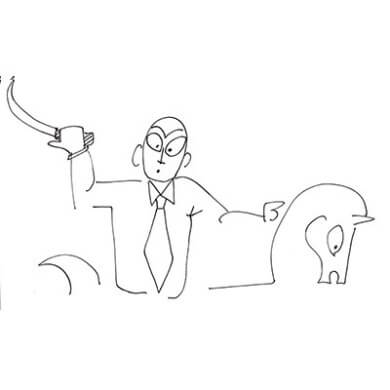
Published on 15th June, 2019, in Economic Times. Kalki, the tenth avatar of Vishnu, is very popular amongst young people, who visualise him as an Avenger, part of a cosmic end game. He is visualised as riding a white horse, brandishing a fiery sword, cutting down people. The story about Kalki is not very wellknown;…
-
Articles

War-room culture celebrates violence where competition is seen as the enemy
Published on 31st May, 2019 in Economic Times. Many corporate houses love to have a ‘War Room’ in their office. It is a glamorous and much publicised thing whether you are planning a new strategy or have a special project that needs to be done quickly, often a turnkey project, a market intervention, even an…
-
Articles

Who is a Hindu? The Curious Case of Brahmins
Published on 17th February, 2019 in Mumbai Mirror. In Hindu scriptures, killing a Brahmin is deemed the worst of sins. It is called Brahma-hatyapaap. And he who kills a Brahmin is considered the greatest sinner…
-
Articles

Herding Indian cats in a non-compliant culture
Published on 9th February, 2019, in Economic Times. One of the things that you notice when you travel to countries like Australia and Singapore is the obsession with rules and regulations, and the rigorous implementation of systems…
-
Articles
Three Vedic women
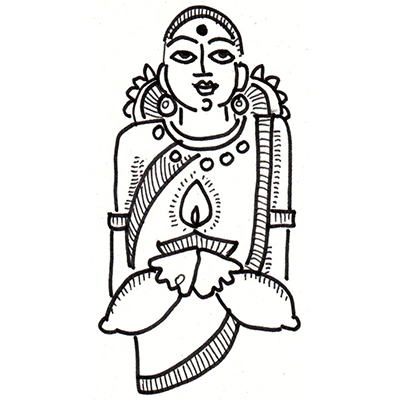
In Rig Veda, we come across three women whose stories reveal a lot about the period…
-
Articles

Validating human existence through the Indian scheme of things
In the Vedas, they say that Artha is about generating food, by creating goods and services. While Kama, is satisfying this hunger. In Dharma, we consider the hunger of others and, in Moksha, we outgrow our hunger…
-
Articles

When a man loves a woman
We have always valued a woman dying for a man, but have never valued a man who dies for a woman…
-
Articles

Radha In Space And Time
All Dharmashatras say, all traditions (riti) and laws (niti) must be subject to change depending on geography (desh), history (kala) and capability of communities (guna) involved…