Published in Corporate Dossier, ET on Oct 14, 2011.
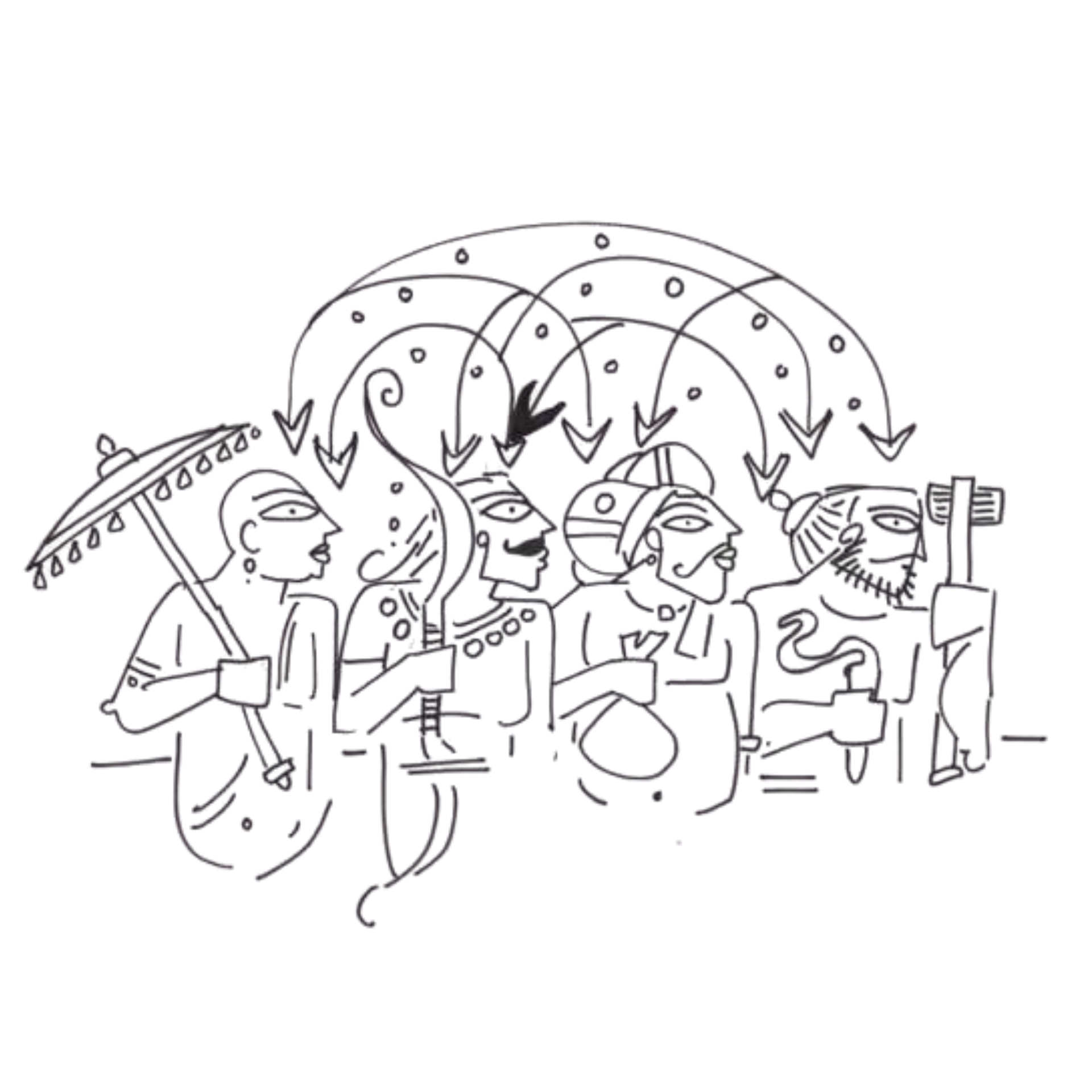
Unable to bear his poverty, a priest went to the temple and begged the deity there for a solution. That night the deity left a golden pot in the courtyard of the priest’s house. The priest found the golden pot with some water in it. He threw the water out and went to the market where he sold the pot to a merchant. With the money he received, he repaid all his debts and returned home a rich man laden with gifts for his family. Soon after, his family fought over the vast wealth, everyone from his wife to his children to his parents and his siblings demanding their share. Unable to bear the mental agony, the priest went back to the temple and complained to the deity. “You have added to my problem not solved it with the golden pot”. And the deity said, “Golden pot? What golden pot? I gave you the elixir of contentment, enough for you and your family. It happened to be contained in a golden pot. Did you not drink it?”
Every job is a golden container full of water. The pot is the salary that pays our bills and the designation that pleases our desire to feel significant. But in each job is potentially the opportunity to grow intellectually and emotionally. Each job contains the seed of learning that can germinate in our mind, if we allow it to. Unfortunately, jobs are seen more in economic terms (the pot) than in learning terms (the water).
When Jacob retired, he expected that the company would throw a farewell party. This did not happen. When Jacob retired, he expected that the company would miss him terribly and call him back. Even this did not happen. He felt unwanted and small. He did not matter, he realized. So when he went back to claim his final dues, he went with a heavy heart. As he waited outside the office, familiar faces passed him by. Some stopped and spoke to him, some smiled, some just ignored him. At that moment, Jacob had a Eureka moment. He realized he did not need his job to validate himself. That is what he was doing and that was his problem. The office like the forest outlives the resident beasts. The beasts find nourishment in the forest but eventually they die. The forest continues to be neither loving nor hating its resident beasts. Animals do not resent the forest when it is time for them to go, but humans do. Why?
Animals work for survival. Humans are the only animals who also work for meaning. Hence in Sanskrit, the same word, artha, is used to indicate economics, politics and meaning. Jobs can give us money and power (the pot) but they can also give us wisdom (the water). Do we drink the water?
As Jacob speculated, he drank the water. Suddenly wisdom dawned. He felt like Newton hit by an apple. He realized that he was expecting too much from the organization. It neither loved him nor hated him. It gave him value and he gave value to it. And now it was time to part ways, without rage or resentment. With that realization, Jacob found his final artha and quenched his thirst. He took his dues and left with a smile.