Published on 15th January, 2023, in Mid-day.
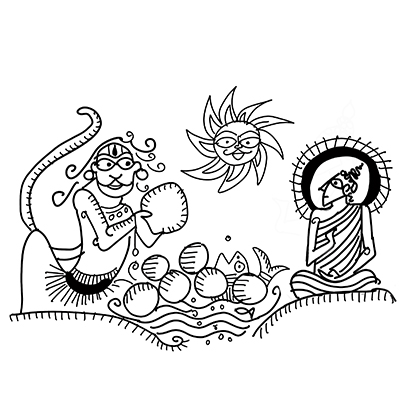
As 2022 drew to a close, the Government of India admitted in Parliament that it is difficult to conclusively prove that Ram Setu, the bridge between India and Sri Lanka (visible until 500 years ago) was manmade, as the Ramayana took place 18,000 years ago, the bridge is 56 km long, and satellite images show only limestone shoals.
This will not stop social media from talking about the floating stones of Rameshwaram—never once considering that the common “pumice stone” used by beauticians to remove dead skin also floats in water. Tourist guides in Sri Lanka will continue to take educated Indians to prehistoric spots identified as Ravana’s Palace, Ravana’s garden, Ravana’s underground bunker, Ravana’s airport, and the mountain of herbs that Hanuman brought from the Himalayas. Dronagiri village in Uttarakhand does not worship Hanuman as they are upset that he took away their mountain of herbs.
If Indians bothered to ask Sri Lankans about the history of their island, they would learn that the oldest texts in Sri Lanka such as Dipavamsa and Mahavamsa, which are about 1,500 years old, do not refer to Ramayana or Ravana. They do, however, speak of a prince called Vijaya, who came from India. He descended from lions giving the island the name of Sigha-dvipa or Sinhala, or the lion-island, which became Sahalan in Arabic, and Ceylon in Dutch. The island was also called Tamralipta, the copper land. It was also Swarnadeepa, the golden land, which became Serendip in Arabic, from which comes the English word serendipity, or something found by chance. Sri Lanka or Sri Lak, a local name, simply meant an “auspicious or fertile island”, a common noun, not a proper noun.
The old chronicles refer to a rivalry between the Mahayana Buddhists and the Theravada, the old school Pali Buddhists. Mahayana Buddhists who came from Chola land, which is Tamil land, tried to impose their way across the island, which led to violent opposition. It has been postulated that the Mahayanists composed the text Lankavatara Sutra, which talks about how Buddha arrived in the island of Sri Lanka to teach Ravana the Buddhist doctrine. This is the first Buddhist document which tries to connect Sri Lanka with Ravana. Eventually, the Mahayana influence waned and Theravada prevailed. But the tension continued between the Cholas who worshipped Shiva and the Theravada Buddhists of Sri Lanka.
Sri Lankan kings attacked Madurai while Chola, even Kalinga, kings attacked and destroyed Anuradhapura, the ancient capital of Sri Lanka, forcing kings to take refuge in hills. All this happened over a thousand years ago, and the hostility perhaps led to the propaganda that the people who lived on the island beyond Rameshwaram was originally home to demons, or Rakshasas, whose king had once tried but failed to take Shiva south. Chola kings sponsored the Tamil Ramayana, Khamban’s Iraramavataram. Lanka, a word that simply means “island”, came to refer to the island beyond Rameshwaram ruled by Buddhists who defied Chola power.
Sri Lankan kings in the 10th century saw themselves as belonging to the solar or Ikshavaku (Okkaka) dynasty of kings, to which belonged Ram of the Hindus and Siddhartha Gautama of the Buddhists. In Sri Lankan memory, many previous Buddhas visited the island, and finally Ashoka’s son Mahinda (Mahendra) arrived here with a sapling of Buddha’s famous Bodhi tree. Thus in Sri Lankan memory, it was the keeper of oldest Buddhist doctrines, and had nothing to do with Hinduism.
All this science and history, of course, does not matter to those with faith.