Published on 23rd December, 2018, in Mumbai Mirror.
The holiness of Kashi, aka Varanasi, is perhaps related to its geography. In Kashi, the river Ganga, which normally runs from the Himalayas to the sea in the south, takes a turn and moves northwards. This reverse flow of the Ganga is considered spiritually significant because it is believed that one can manifest certain tantric ideas in such places.
In tantra, all our bodily fluids move in a downward direction. We eat food which is transformed into flesh, blood and bone, and eventually, it is secreted in the form of sweat, semen and menstrual fluid, which move southwards. Our head always represents the north. However, it is the call of the sages, who perform tapasya or spiritual austerities, to retain these fluids and make them move in the reverse direction, towards the head. This grants them spiritual powers known as Siddhi, allowing them to be clairvoyant, to control space and time, walk on water and fly in the air. So perhaps the northern movement of the Ganga represents this shift, making this a geographically potent zone, which ancient sages found sacred enough to build a city on. According to local lore, gods loved the city of Kashi when they came to earth.
Once, the city suffered a drought and Brahma went around looking for someone to end it. He found Ripunjay, who said to end it. He found Ripunjay, who said to end the drought, he would perform the necessary Vedic rituals and Dharmik practices. His only condition was that all the gods should return to their specific abodes and leave him alone in Kashi to conduct his rituals. This was accepted by the gods, who left for their respective domains, and Ripunjaya performed the rituals that brought rain back to the land. He established Dharma, in Kashi, and became a great king. He performed the Ashvamedha Yagya with 10 horses, a highly unusual feat, which gave rise to the Dasashwamedh Ghat. It became a prosperous and happy kingdom. Ripunjaya was renamed King Divodas, a name that occurs in the Rigveda. In time, the gods wanted to return to Kashi as they missed the city very much, especially Shiva. It was Shiva’s favourite abode on earth. They thought of ways to get rid of Divodas. They sent yoginis to distract him, but the yoginis backed out because they loved the city the way it was. Agni and Vayu were then sent, but after finding everybody happy in the kingdom, they themselves settled in the city. The upset gods turned to Ganesha, who caused people to have terrible dreams, but even that didn’t work. Finally, Vishnu took the form of a hermit. He went and told the king that his dreams the result of his worldly desires and attachment to material things. If he renounced them, he would be truly happy. So Divodas became a monk – Buddhist in some traditions. He left Kashi and the gods returned.
It’s a mysterious story. It presupposes that Divodas was a follower of Vedic rituals before he renounced the city under the influence of hermit traditions such as Buddhism and Jainism. He left so old gods could return to the city they once inhabited. We now know these old gods as Puranic gods, especially Shiva. And Shiva was known there before he was accepted within the Vedic and later Hindu folds. Of course, these are speculations and one can never be sure.
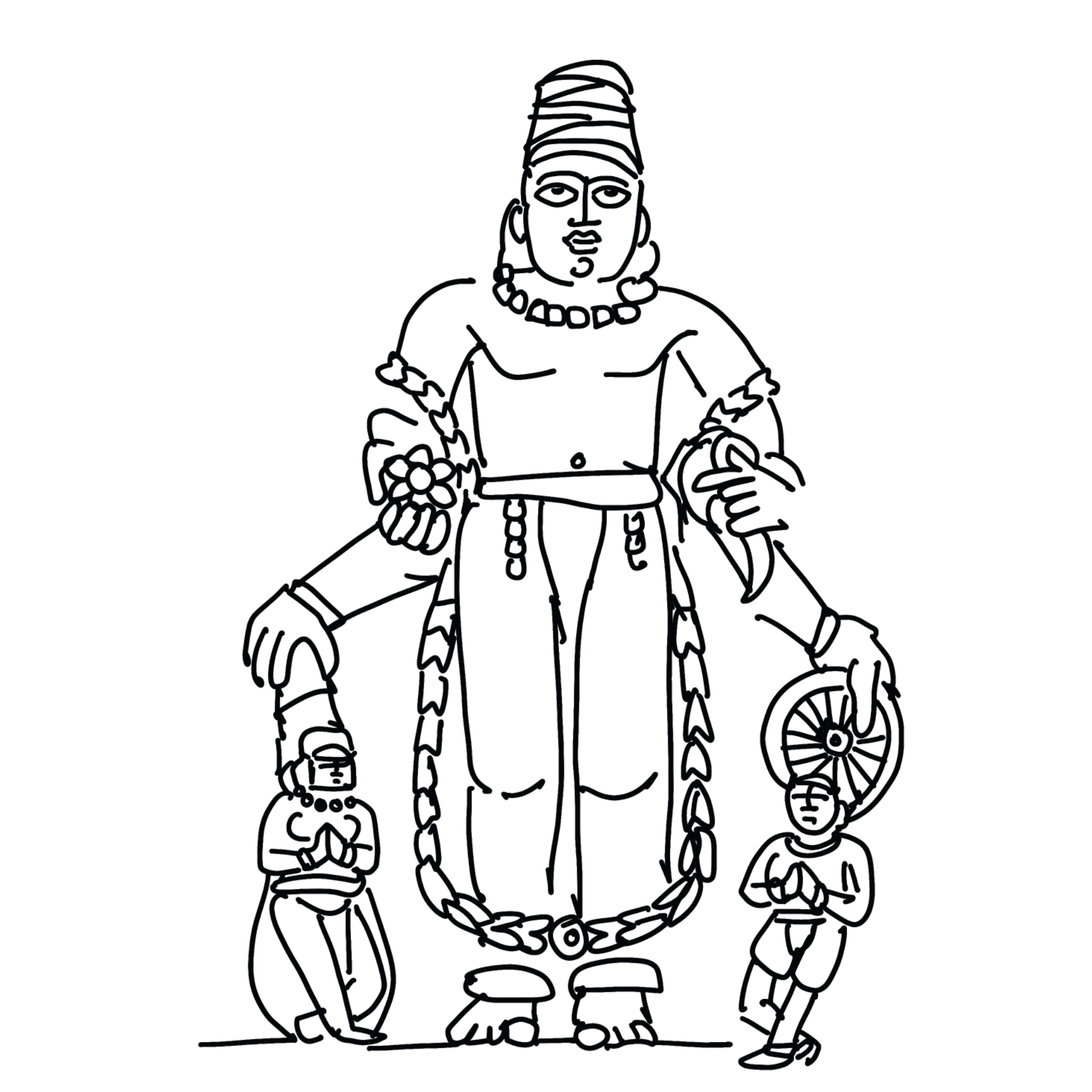
We do know Kashi is sacred to Hindus, Buddhists and Jains, and even to Muslims, especially those who follow Sufi traditions. This is the city of Kabir and Tulsidas. For Hindus, this is a sacred city, because this is where Shiva resides as Kashi Viswanathan, where Goddess Shakti resides as Annapurna, and where Vishnu resides as Bindumadhav. In earlier times, the city of Kashi was a part of the land of Kaushala. The land from where Princess Kaushalya came and married Dashrath. There is a close relation between Ayodhya and Kashi. In Krishna lore, the king of Kashi is a Shiva worshipper and is hostile towards Krishna. The king is defeated in battle.
Buddhists love this city because of its proximity to Sarnath, where Buddha gave his first sermon after attaining nirvana and started the rotation of the Wheel of Dharma. Jains find it sacred because four Tirthankaras, including Chandraprabhat and Parshvanath, were born here. These ancient themes remind us of how Kashi became the holy navel of Indic civilisation.