Broadly speaking, India has undergone five urbanisations.
Harappa and Mohenjodaro
The first urbanisation was under the mercantile Harappans (2500-1900 BCE) in the north-western part of India. This was a vast civilisation, spread over a large geography, larger than any of the other contemporaneous ones in Egypt, China, and Mesopotamia.
Harappa and Mohenjodaro, the earliest cities to be discovered in the Harappan civilisation, are in present-day Pakistan. However, post-independence, other sites were excavated in India, like Rakhigarhi in Haryana, Kalibangan in Rajasthan, Dholavira, and Lothal in Gujarat. These were regulated cities, where entry and exit were separate in order to control movement.
Besides, the cities were organised in a grid-like structure. There was standardisation across Harappan cities, be it the weights and measures used or even the use of bricks with a uniform 1:2:4 ratio. Unlike in Mesopotamia or Egypt, there is no evidence of a centralised monarchy, with a palace or temple. Neither is there any sign of wars or prison.
Mahajanapadas
The second urbanisation happened 1,500 years after Harappa. The Aryan or Indo-European people came from Southern Russia, through the Oxus, bringing with them horses. This was around 1500 BCE. These were mostly men, intermarrying with the local women, changing the makeup of the local DNA.
Over time, they moved further east, into the Gangetic Plain. Ganga plains established trade relations with the Indus plains and beyond. By 500 BCE, cities emerged.
Like Harappa, these were mercantile cities. Toll taxes became important to protect the highways. So, the big symbol of the king at this point was the spoked wheel — the concept of the Chakravartin. Monastic orders like Buddhism and Jainism rose in this period as a challenge to Vedic ritualism. The monastic movement was linked to trading. It is from Buddhist literature that we find out about this phase of urbanisation.
The first coins in India may have been minted by the Mahajanapadas of the Indo-Gangetic Plain — punch-marked coins made by merchant guilds. Around the 5th Century CE, with the fall of Rome — an important trading partner — and the invasion of the Hunas, the merchants lost their importance. Trade fell, and the Mahajanapadas began to disintegrate.
Temple urbanisation
The third urbanisation took place after a thousand years as Temple Cities across South India and Southeast Asia. Here the temple was the nerve centre of political and economic activity, surrounded by markets, courtiers, and courtesans. After the 4th-5th Century, when export-led mercantile trade fell, we saw the rise of agriculture.
Around the time Buddhism was slowly declining, Brahmadeya or donations to Brahmins/temples started emerging. The “temple corporation” rose with temples becoming the centre of both political power and wealth. These temples had Brahmin priests, Kshatriya patrons, Vaishya merchants, artists, etc. Endogamy flourished and the caste system solidified. By the 10th Century Chola period, we see full-blown temple urbanisation. These were more agricultural than mercantile.
Muslim metropolis
The fourth urbanisation is the Muslim Metropolis (12th-17th Century CE), which was primarily agricultural. While previously courtiers during the Mauryan Empire were paid in coins, now, with the feudal system they were paid by giving them a share of the village wealth.
Delhi emerged as a central city and with the spread of Sufism, Dargahs (shrines), and Pirs became important. The Jama Masjid becomes a central site in these cities — from where the king’s name is mentioned in the Friday prayer (khutbah), as masses congregate for prayer. This is when cities like Ahmedabad, Bidar and Gulbarga rose.
Postcolonial cities
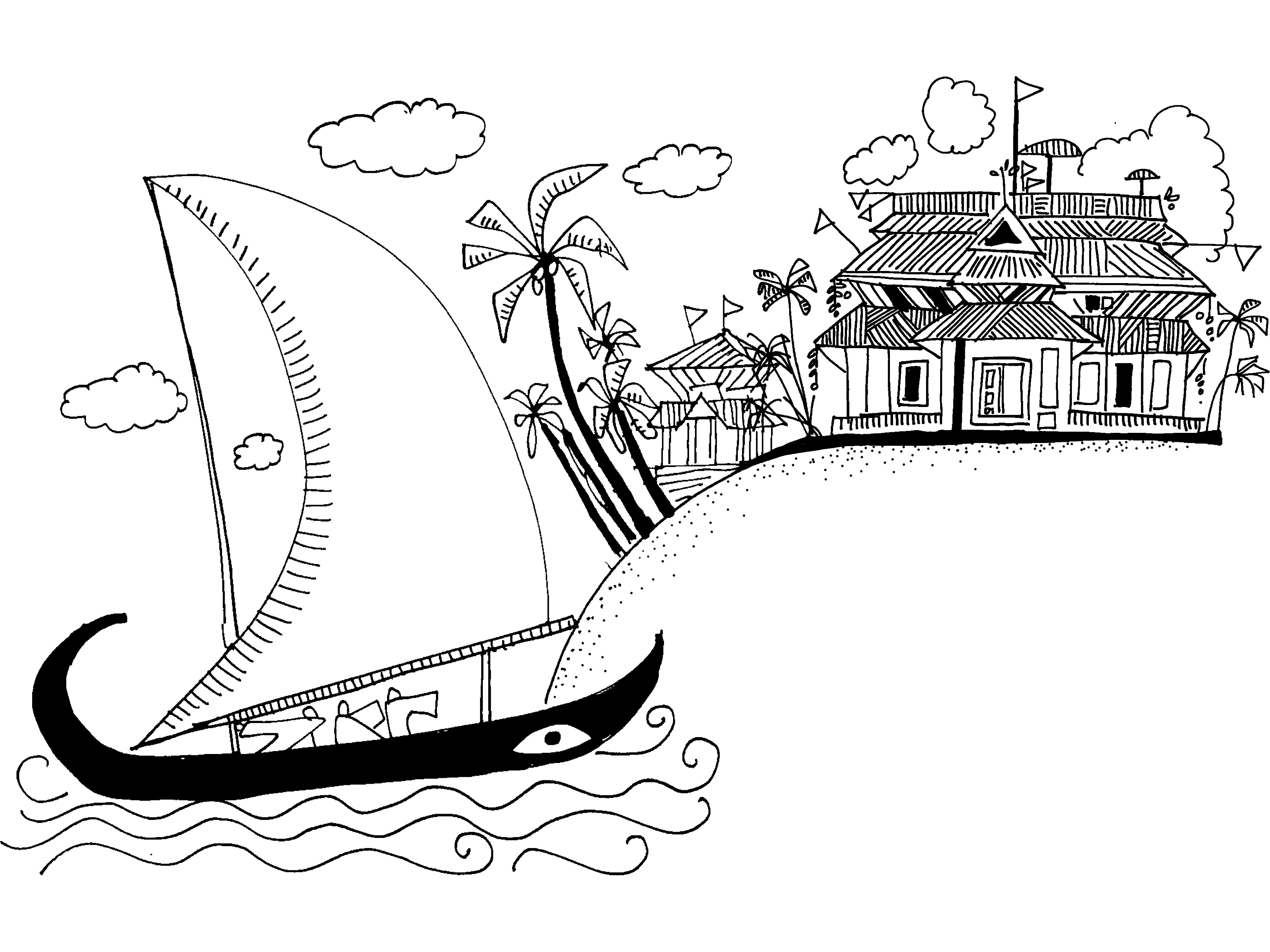
From the 17th Century onwards, the fifth urbanisation is the colonial and post-colonial cities. Portuguese colonialism, the earliest, began with Vasco da Gama’s arrival in 1498 in Kerala. They took over the coasts — from Diu and Bom Bahiya (Bombay, Mumbai) to Goa and Cochin on the West Coast, and from Masulipatnam to Mylapore (present-day Chennai) to Thoothukudi on the East Coast.
They started erecting forts — which served as military outposts and administrative centres — and building churches, cathedrals, and administrative buildings that had classic European architectural elements like domes, vaults, and arches.
The big coastal cities — Mumbai, Chennai, Calcutta, Kochi — began as fortified settlements of the colonial powers, either the Portuguese or the Dutch or the French or the British. The cities began to change visibly when railways appeared in the 19th century. There are railway stations, courthouses (to establish the legal system to control), and clock towers (to mechanise the work), creating a new urban landscape. An industrial and imperial landscape.
Post-independence we have the growth of planned cities like Chandigarh, whose master plan was prepared by Swiss-French architect Le Corbusier; Bhubaneswar was selected to be the capital of Odisha in 1948, integrating the temple town into its planning and the needs of modern administration; Gandhinagar was formed in 1960 because Gujarat needed to have a capital after its attempts to get Bombay failed.
With heavy industrialisation, part of India’s Five Year Plans, industrial cities like Bhilai, Jamshedpur, and Rourkela also cropped up. These were industrial but socialists, shunning monumental art.