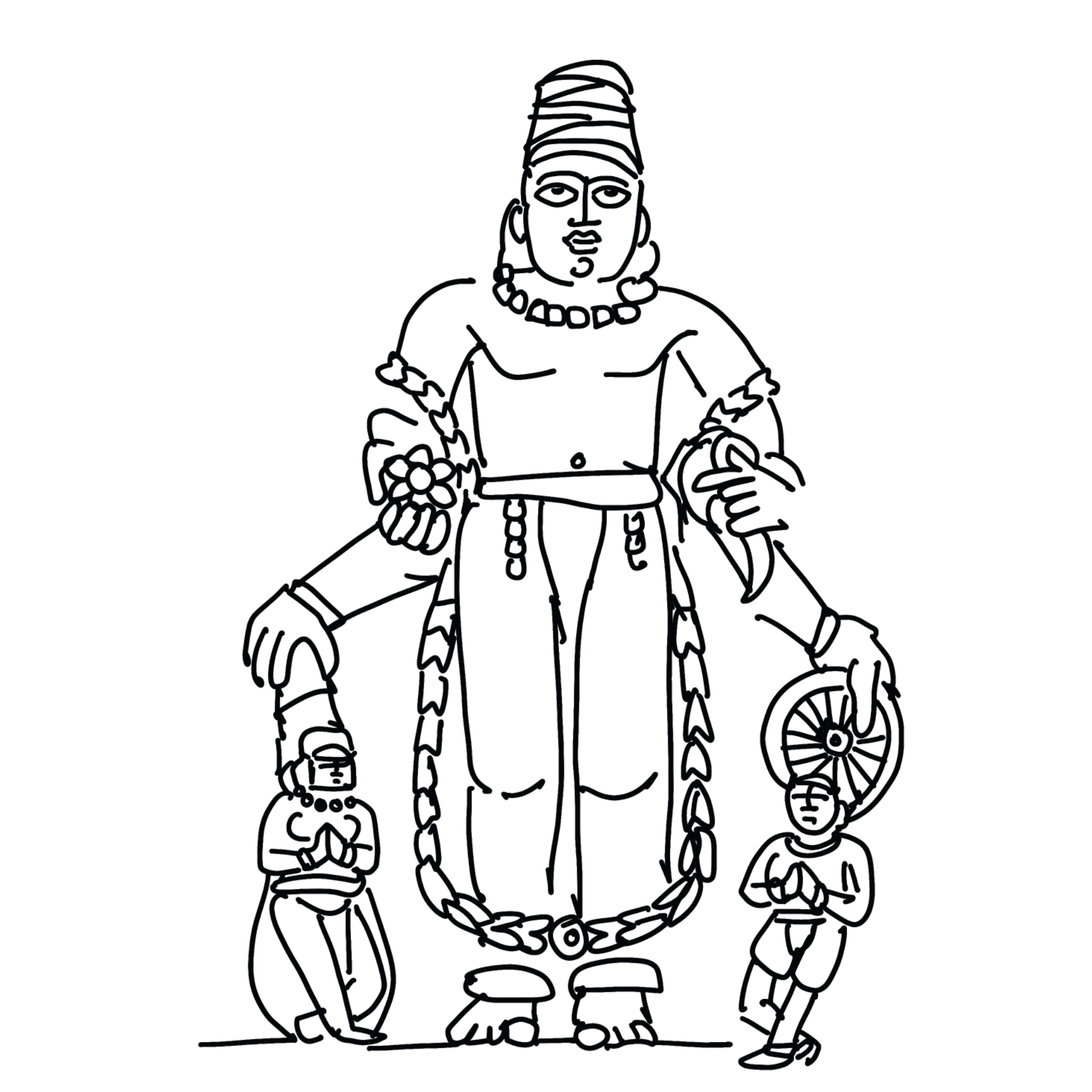

A prince named Siddhartha was told that wisdom comes by fasting. So he fasted until he fainted. Then a milkmaid called Sujata gave him some milk. He recovered and began meditating, contemplating on what transpired. He eventually understood how the world functioned, and was aware of what causes suffering. Food was the key. Hunger was the lock. This awareness played a key role in his transformation into the Buddha.
Buddha revealed: where there is life there is desire, and where there is desire, there suffering. He did not actually use the word ‘desire’. That is an English translation. He used the Prakrit word for thirst (tanha). He used a physical feeling as a metaphor to explain a psychological state. He remembered how starvation, rather than granting knowledge, had caused him to faint and how food had enabled him to meditate. He observed how the growth of plants and movement of animals was driven by their ‘thirst’ for food and security.
What separated objects from organisms was this thirst, this hunger. Where there is pursuit of food, there is hunger. Where there is hunger there is competition, collaboration, success and failure. Underlying the visible and measurable (sa-guna) parts of plants was something invisible and not-measurable (nir-guna). Plants and roots reveal cravings; they want to eat. Bark and thorns reveal fear; they do not want to be eaten. Flowers and fruit reveal the awareness of mortality; they want to outwit death, so a part of them can live through the next generation.
No plant wants its leaves and roots to be eaten, which is why it protects itself with bark and thorns. But plants do feed nectar to bees and fruits to birds, because they need the bees to pollinate and birds to disperse seeds. Plants collaborate with animals that help them and shun animals that consume them. Carnivores are allies of plants, as by eating herbivores, keeping the herbivorous population in check, they prevent overgrazing.
Every plant has a different strategy of survival, which is why different plants and different kinds of leaves. Some grow on earth, some turn into thorny bushes, some have bark on trunks, some have tall branches to keep their leaves far away from the reach of grazers. There are different kinds of flowers, and different kinds of fruits and as every plant is competing for resources, for spaces to germinate, to access sunlight, water, and nutrients. Plants have rivals and allies too.
And the same was true of the animal kingdom. Why does a tiger have claws and fangs?
It is because it is hungry, and it needs to protect itself. Why does a deer or a buffalo have horns? To protect itself. Why do herbivorous animals form herds? Because as a group, they have a greater chance of survival from the predator. They keep the young in the centre of the herd. In response, the predators form packs, and collaborate during the hunt, which increases their chances of catching prey. Thus, we realise nature is a complex manifestation of invisible hunger and fear. Where there is life, there is hunger, and where there is hunger, there is fear. Where there is hunger and fear, there is success and failure. In the case of humans, this is amplified infinitely, as we have imagination.