
Mythologist | Author | Speaker | Illustrator

-
Articles

What Creates Culture Also Creates Cult
Published on 5th November, 2021, in The Hindu. Cult refers to religious groups, or brainwashed communities, who believe in the occult, the mystical, the spiritual, the paranormal or the supernatural. Culture refers to a community’s aesthetic expression: food, fashion, customs, literature, and art. Both words, ‘cult’ and ‘culture’ have the same etymology – from words…
-
Articles
What Is God’s Pronoun?
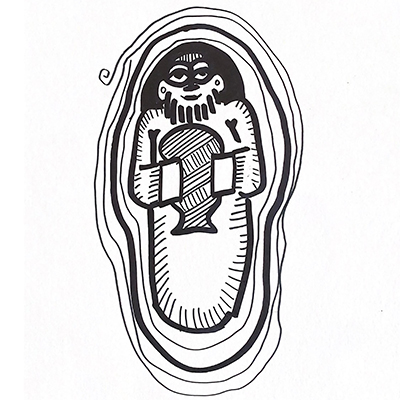
Published on 22nd October, 2021, in Times of India. Currently, across US college campuses, there is a strong movement to popularize the idea of gender fluidity. People are specifying their preferred pronoun. If you identify yourself as male, you choose he and his. If you identify yourself as a woman, you will use she and…
-
Articles

Activism, Monotheism and Intolerance
Published on 17th October, 2021, in Mid-day. Have you noticed that academicians who say Hinduism is casteist, and promotes inequality, rarely talk about intolerance of monotheistic faiths like Christianity and Islam which dominate the world? Monotheist religions endorse the worship of ‘true’ God and oppose worship of ‘false’ gods, especially idolatry. What is a false…
-
Articles

Is Hinduism Answerable to Western Gaze?
Published on 10th September, 2021, in Times of India. The word religion initially applied to only Christianity. Everyone else was either heretic or pagan. But in the 19th Century, Europeans were forced to acknowledge the validity of Japanese faith if they sought access to Japanese markets. Thus the idea of ‘many religions’ emerged. Hinduism was…
-
Articles
Privileging Political Independence
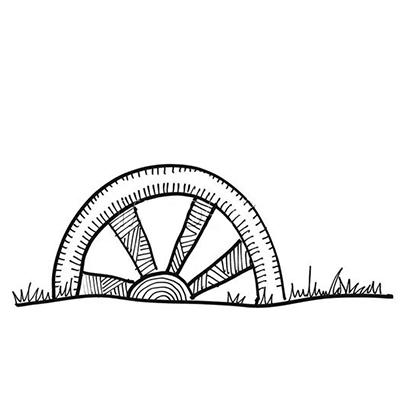
Published on 15th August, 2021, in The Hindu. The story of the eagle Garuda stealing the nectar of immortality from Indra’s paradise to liberate his mother from slavery reminds us of Greek heroes who go on quests to fight monsters to liberate damsels in distress. In Biblical tales, the role of the Greek hero is…
-
Articles

A Brahmin in Kerala
Published on 21st August, 2021, in Economic Times. The Puranas tell the story of an asura king called Mahabali who gave people whatever they desired. Mahabali had thrown out Indra, king of devas, who ruled the skies, and now controlled the three worlds: the sky, the earth and everything in between. Mahabali was a generous…
-
Articles

Tamed by Buddhism
Published on 18th April, 2021, in Mid-day. Buddha taught the sacred lore (dhamma) that would end all suffering. Many of his students renounced society and became monks (bhikku) and nuns (bhikkuni) of his sacred order (sangha). They travelled everywhere spreading Buddhist ideas. The people they encountered had their own gods—friendly or dangerous spirits who lived…
-
Articles

The Hamsa Hand
Published on 14th March, 2021, in Mid-day. The hamsa is a common symbol used across the Middle East as a good luck sign. Originating in Ancient Egypt probably, it is used to bring in prosperity and to ward off evil. The word hamsa means five and represents the five fingers of the hand. When the…
-
Articles

View: The Beginning and End of Using Religion
Published on 6th February, 2021, in The Economic Times. When the Romans went about conquering, they did not destroy local temples or reject local gods. They simply demanded that those conquered owed libations to the Roman emperor, while carrying on with their own religious practices, to show their allegiance to Rome. They even tolerated the…
-
Articles

Pagans In Christmas
Published on 20th December, 2020, in Mid-day. The word “pagan” was used derisively by colonial powers to refer to non-Christian faiths, especially polytheistic ones that celebrated divinity through nature-plants, animals, rivers, mountains, stars. Yet, paganism contributed greatly to what we call Christian rituals and festivals today. Jesus lived 2,000 years ago, but his mythology (virgin…
-
Articles

Hindu Parliament and Churning the Ocean of Milk
Published on 6th December, 2020, in Mumbai Mirror. The design of the Parliament building in Delhi was based on yogini shrines of North India that were built over 1,000 years ago. They are circular without a central roof, very different from later temples dedicated to Shiva and Vishnu, where the deity is in an inner…
-
Articles

View: Can America Be Hindu Holy Land?
Published on 28th November, 2020, in Economic Times. In the 19th-century, Joseph Smith argued that he had found gold plates buried in the Americas. These gold plates, he said, told the secret history of the Christians. That during the Babylonian exile many prophets migrated out of the Holy Land and managed to find their way…
-
Articles
The Origins of Bharat Mata
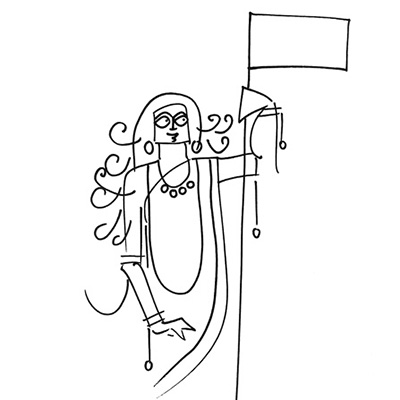
Published on 22nd November, 2020, in Mumbai Mirror. Every Indian village is personified as a grama-devi. So, we have Chandigarh associated with the goddess Chandi. Calcutta is associated with the goddess, Kali. Mumbai is associated with the goddess, Mumba Devi. The idea of Bharat-mata, the goddess of the Indian nation state, has roots in this…
-
Articles

What They Don’t Tell You About Advaita
Who is a Hindu? What they don’t tell you about Advaita Published on 30th August, 2020, in Mumbai Mirror. Advaita Vedanta is the de facto philosophy followed by Hindutva. The reason for this is not spiritual. It is political. Advaita Vedanta says the whole world is a manifestation of the one and only God (brahman)…
-
Articles

Human Sacrifice to Riots: Political Tools of Control
Published on 22nd August, 2020, in Economic Times. In Meso-America, the Aztecs sacrificed humans to their gods. This was deemed barbaric by Spanish conquistadors who arrived there in the 16th Century. It became the reason to label them savages, justify their conversion into Christianity and market the conquest of their land as a civilizing mission.…
-
Articles

The Essence of the Bhagavad Gita
The essence of the Bhagavad Gita: Understanding the significance of sattva-guna, rajo-guna and tamo-guna Published on 22nd August, 2020, in Economic Times. The Bhagavad Gita informs us that the world is made of two intertwined entities: the material (prakriti) and the spiritual (purusha). The latter is technically not an entity as it cannot be measured.…