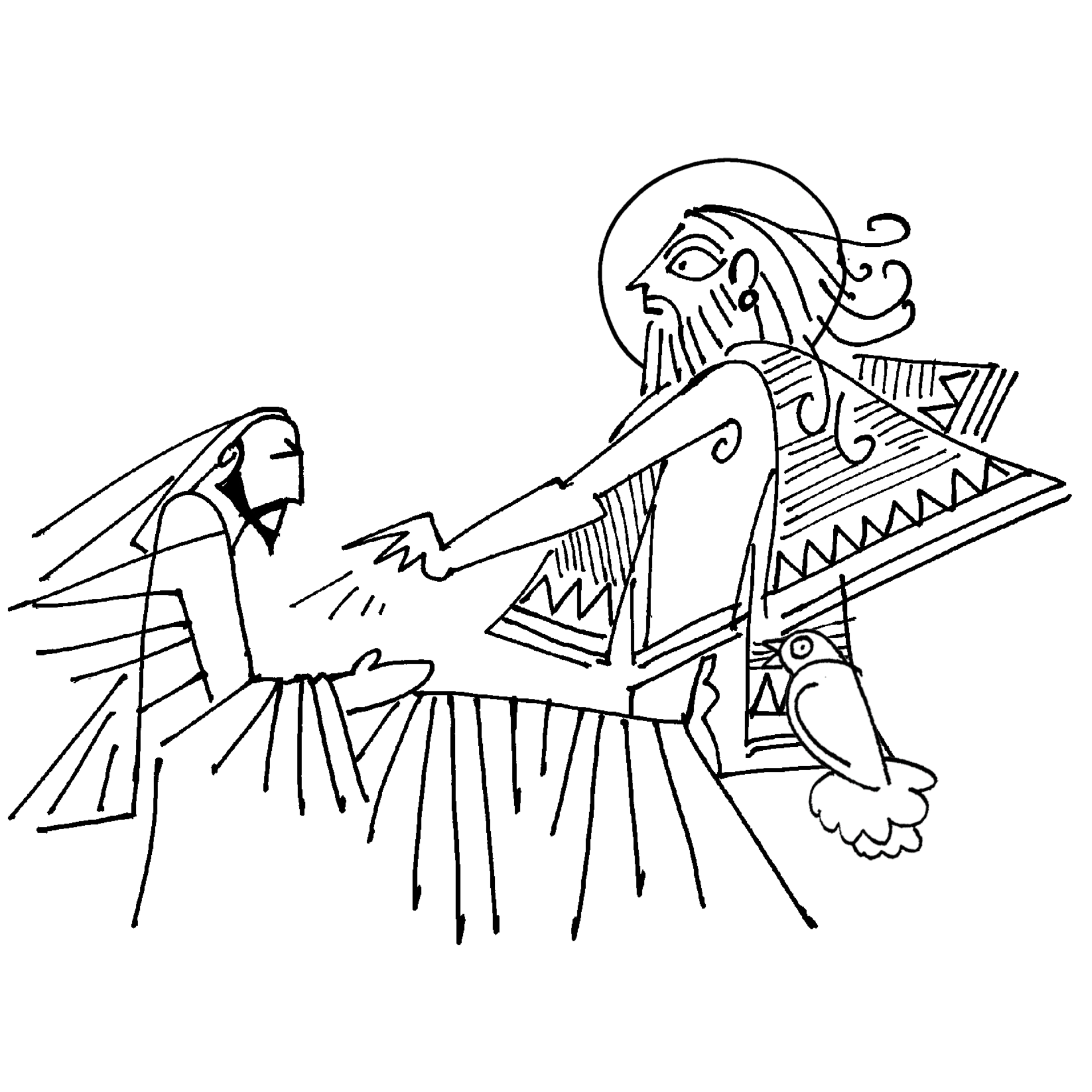
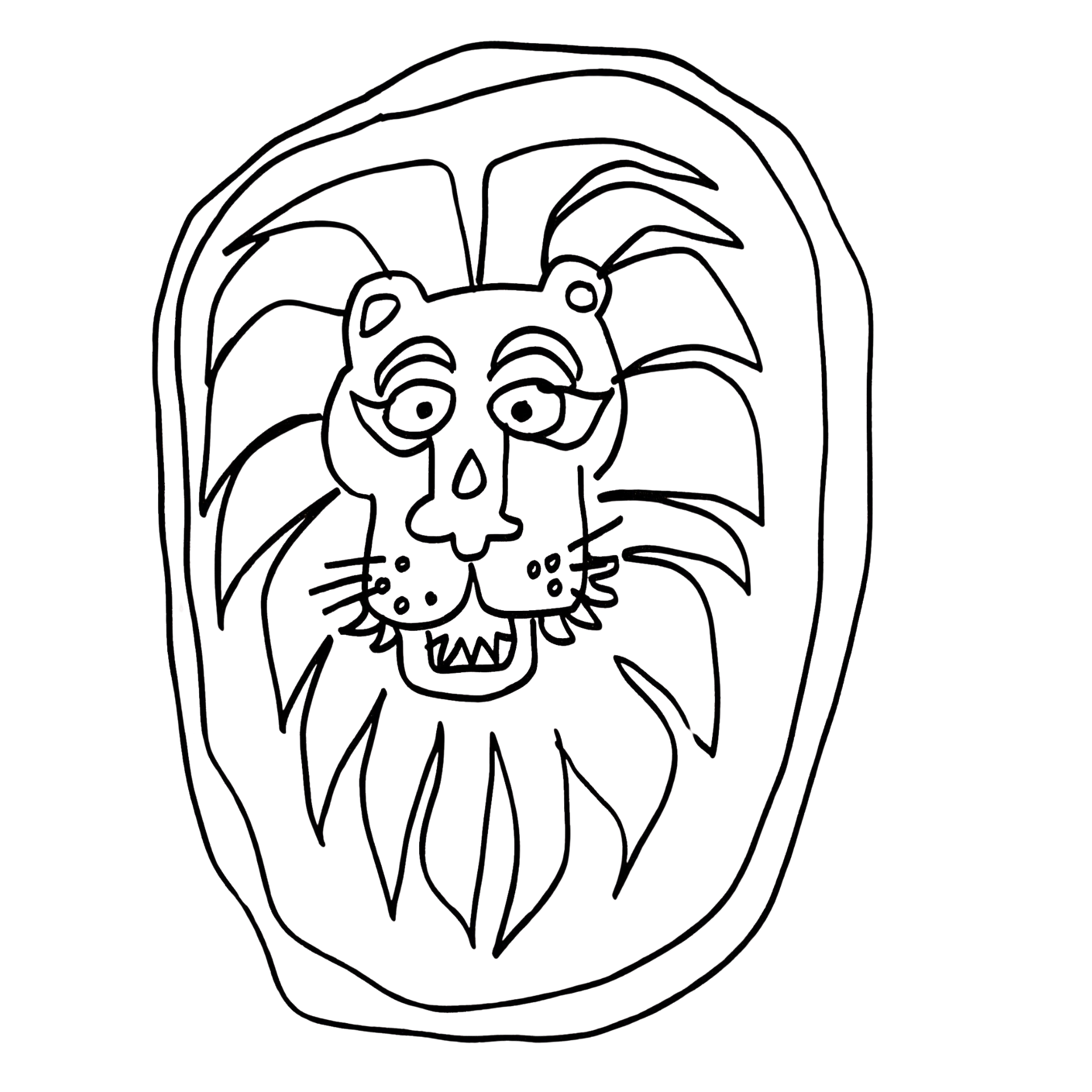
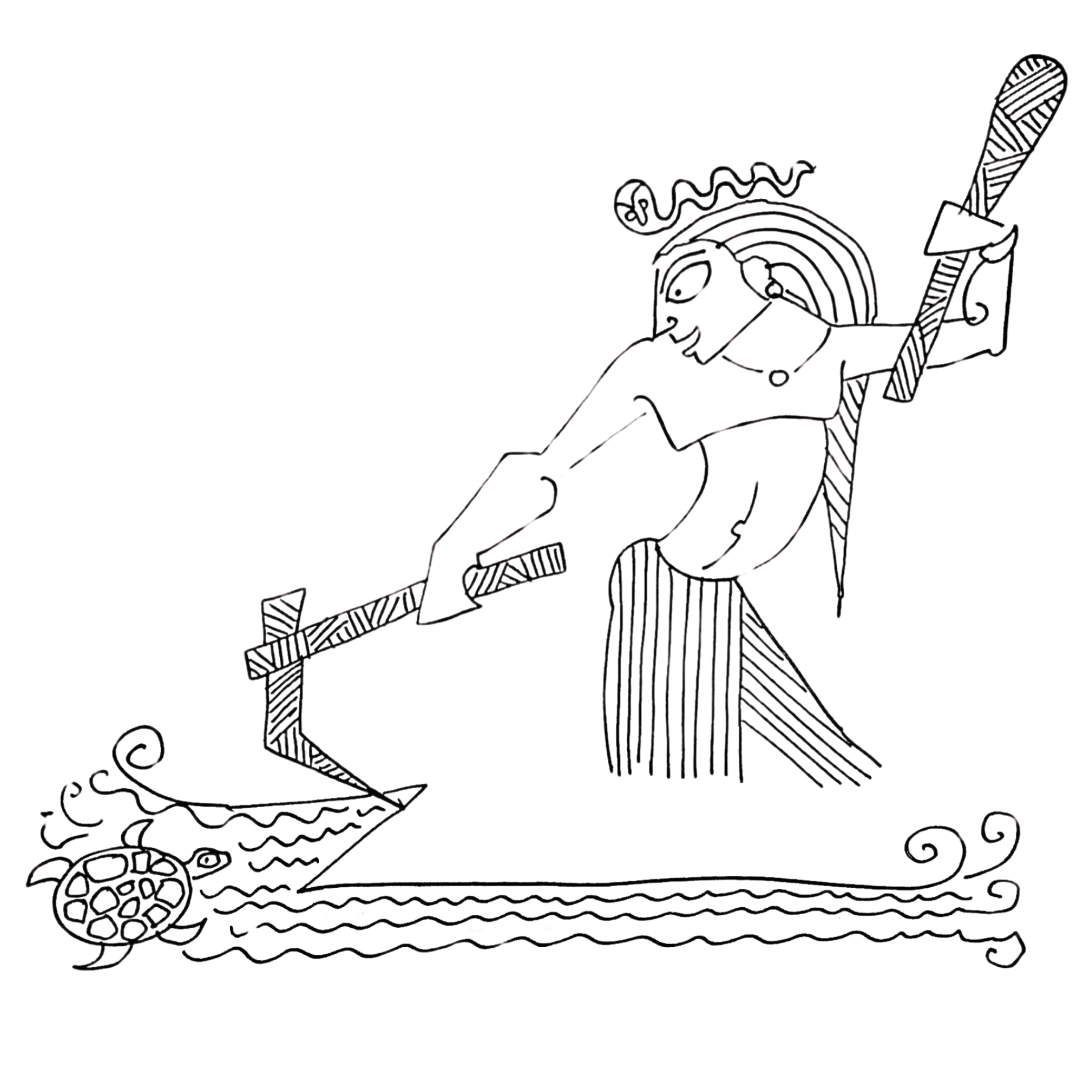
One of the oldest temples in India, at Deogarh, Uttar Pradesh, dating back to 5th century CE, has the image of Narayana and Nara. There are deer seated under the four-armed Narayana. Nara is two-armed but on his shoulder is deer skin, with the deer head resting on his left shoulder. Seated below him is a lion.
This ancient artwork on a temple reveals clearly that deer were closely linked to the hermits of India. They lived in deer parks and used deer skin to cover their bodies and as seats to sit on.
In the Ramayana, Ram and Lakshman are described as wearing clothes of mark and blackbuck deer skin as they wander through the forest as ascetics. The ascetics they meet in the forest are similarly dressed.
So is Marichi, the rakshasa, who abandons his rakshasa ways after escaping Ram’s arrows at Vishwamitra’s ashram. But Ravana convinces Marichi to use his magical powers, turn into a deer, and lure Ram and Lakshman out of their hermitage so he can abduct Sita.
The story of the golden deer comes from the Valmiki Ramayana. In the forest chapter, Ravana tells Marichi to turn into a deer and enchant Sita and draw Ram and Lakshman out of the hermitage, leaving Sita unguarded enabling Ravana to abduct Sita.
Ravana, wary of Ram’s strength, uses cunning. Valmiki is thus perhaps taking a dig at Ravana’s Brahmin origins and hence dependence on Chanakya-like strategy, rather than direct confrontation, which is how Kshatriyas are supposed to behave.
There are suggestions that this was not the original plot. Originally, Ravana himself took the form of a deer – golden with silver spots – lured the brothers away and then abducted Sita. Marichi was added later as his reluctance added more drama to the story, Through Marichi, Surpanaka’s description of Ram as a man of low integrity, is countered.
In some versions of the Ramayana, such as the Sanskrit drama, Anangaharsha Mayurraja , the hunt is initiated by Lakshman, not Ram. In Adhyatma Ramayana, Marichi wants to be killed by Ram so as to attain salvation.
Deer hunt
Deer hunt is a key theme in the epics, Ramayana and Mahabharata. That is usually a signal of adventure. During the hunt, Dashrath accidentally kills a Brahmin boy and is cursed he will suffer loss of his own son.
During the hunt, Pandu accidentally kills a sage and his wife, and is cursed he will die if he touches his own wife. Hunting deer seems to bring bad luck. When Ram goes hunting for the golden deer, he loses Sita.
There are miniature paintings based on the Ramayana from Rajasthan that show how the exiled princes extracted meat, bones and skin from hunted deer. This image would be banned today.
As vegetarianism becomes weaponised, especially in North India, the episode of the golden deer has become problematic. Why did Sita ask Ram to hunt the deer? Defensive older generations would say that warriors hunted deer and ate wild meat. Others would blame it on female cupidity – lust for the golden skin. Increasingly, people argue that Sita wanted the deer as a pet. She wanted it captured, not killed
The idea of a deer distracting the husband while a villain abducts the wife is found not just in Ramayan but also in the Mahabharata, where the fire-sticks of sages get trapped in the antlers of a deer.
The Pandava brothers chase the deer and while they are away Jayadhrata tries to abduct Draupadi. While the deer in Mahabharata is the god Dharma, in Ramayana it is Marichi, or perhaps it was Ravan in an earlier version.
Two-headed deer
The depiction of the golden deer also varies in different parts of India. While in most places it is shown as a regular deer, in Odisha it is shown as two-headed – one head can keep watch while the other head is grazing.
This makes it extremely difficult to hunt as it is always on the lookout for hunters and predators.
In the Hoysala temples, the deer appears as a half human-half deer, like a centaur running away from Ram’s arrow.
Sometimes the demon is shown falling at Ram’s feet, a reminder of the versions where Marichi looks forward to being killed by Ram who he knows is god and believes that such a death will liberate him and send him to Vaikuntha.
This makes the act of killing actually an act of rescue. Ram then is God who does not kill the deer but instead liberates the demon within.
Missing deer
In (present-day) Uttarakhand, when Ram is travelling back on the Pushpak Viman to Ayodhya he points out the various sites where various adventures of his life took place.
The spot where Jatayu died and was cremated, the hermitage of Panchavati from where Sita was abducted, the hermitage, the spot where Khar Dooshan were killed, and Agastya’s ashram.
But while pointing to these various spots and events, he does not mention the golden deer, making one wonder if the earlier versions of the Valmiki Ramayan had the golden deer story at all.
In Bhasa’s Sanskrit play, Pratima Nataka, written about 2,000 years ago, Ravana comes to Ram as an expert in funeral rituals and advises him to hunt the golden deer near the Himalayas and while he’s away he abducts Sita.
In the Jain Ramayana of Vimalasuri, there is no deer hunt. Ravana makes the sound of a lion attacking Lakshman forcing Ram to leave the hermitage to save his brother. In his absence, Ravana abducts Sita.
In the Burmese Ramayana, Rama Thagyin (18th century, songs of Ram), Surpanakha herself takes the form of the golden deer.
But in the Burmese Rama Vetthu, there is no Surpanakha or Maricha. Trigatha, the vengeful mother of Khar Dooshan takes the form of the deer to distract Ram and Lakshman enabling Ravana to abduct Sita.
Thus we see how the story of Ramayana, history to many, evolved over time. Other than the standard overarching framework, most of the details are customised.