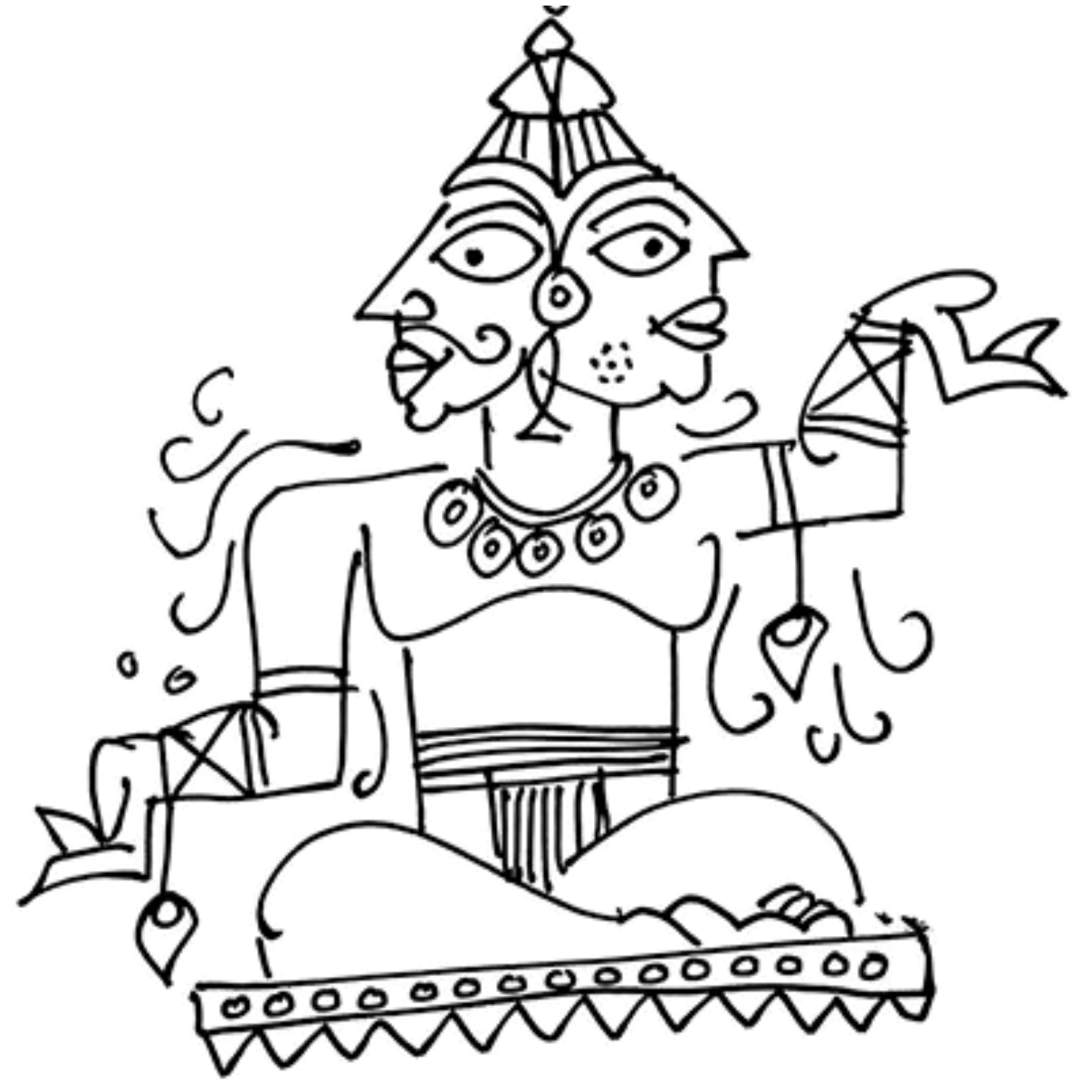
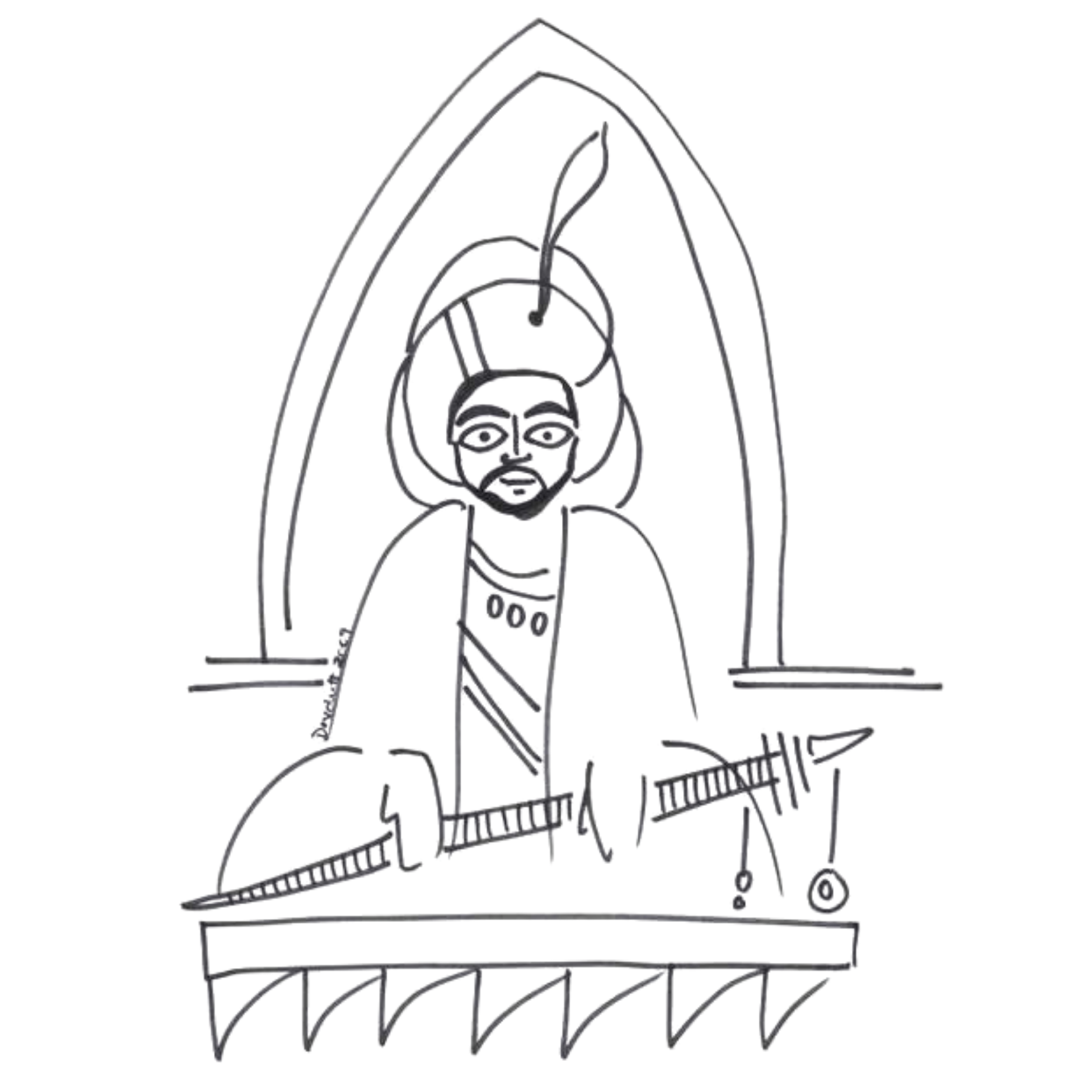
We assume that temples were always part of Hindu culture. But historians present a far more complex story. The early dharma-sutras, composed at the time of the Mauryas, do not refer to temples (devalaya). Later dharmashastras, such as Manusmriti, state that temple priests (devalaka) should not be invited to post-funeral feasts (shraadh). Artha-shastra refers to temples, but not as Brahmin institutions.
Evolution of architecture
Earlier the house of god (deva-griha) was a simple village shrine, made of mud or wood, in an orchard, worshipped by non-Brahmin folk. Things changed in the Gupta period, when the royal family patronised Brahmins who valued the fifth Veda (Puranic stories) far more than the rituals of the earlier Vedic texts.
So, around the 5th century CE, we find the earliest carvings of Hindu gods on mountain walls in Madhya Pradesh (Udaygiri) and in nearby caves. Later, porches were added to these caves, with the deity inside and the devotees gathering outside.
This inspired the classical temple structure, which looks like a mountain with its conical roof, with a porch in front. Images of Ganga and Yamuna at the door of the sanctum are another reminder the temple is imagined as ‘dev-bhumi’ or abode of gods, which is imagined as river-sprouting mountains. The earliest brick temples as in Bhitargaon attempted to recreate the mountain of the gods in the alluvial plains of the Ganga.
Large free-standing temple complexes with intricate carvings became popular across India only after the 8th century CE. This is when we find structures being raised in Kashmir, in Uttarakhand, in Odisha, in the Deccan region, and in Tamil Nadu. Earlier, temples were all carved of a single rock (as in the Kailasanatha temple of Ellora) but later they were created by locking stones together. Books were written to explain how these temples should be embellished with images of various gods to charge them with greater power.
Farmlands for temples
A study of stone inscriptions from 12th-century Maharashtra gives us an understanding of how temples emerged across the Indian countryside. In the early days, all land belonged to the community represented by a god (grama-devata). And the idea of individual ownership did not exist. Everybody worked on the land. Gradually specialised occupations emerged, such as weavers, potters, oil-pressers, tailors, metal smiths and it was decided that a share of the land would be given to them. They provided services to the community. This list also included those who took care of the village deity — the guvar, or the temple priest, who would clean the temple; the mali, or garland-maker, who would decorate the deity; and the bhavini, who was the dancer who entertained the gods. Over time, we find the appearance of the Brahmin priests. His job was to feed the god. He was but one of many people involved in a temple collaboration.
All this changed when the kings got involved. The king also started establishing new villages. The tax would be given to the Brahmins invited from faraway places to perform Vedic rituals and provide other services for the benefit of the king. These were brahmadeya villages. But these were later replaced by deva-bhoga villages, where the village tax would go to the Brahmins via the temple deity.
The Brahmins became representatives of the deity. They ensured the distribution of funds and food between others who contributed to the temple — the cleaners, the cooks, the flower-makers, the dancers, and the singers. Extra resources were used to build temples of stones and its many gateways. This is when the Agama-Tantra texts were composed explaining the consecration of temples and temple deities. Thus, the Brahmins took centre stage.
Temples depended on agricultural income. Many temples, such as Khajuraho, stopped being active when funds dried up, when trade routes shifted, and when capitals moved with new kings who rejected the temples, the gods and the Brahmins of defeated kings.
Vedic connect
The orthodox Vedic Brahmin shunned temple-based rituals for a long time. Even Shankara, in the 8th century CE, was not much in favour of temples. His god was formless (nirguna brahman). Early temples were built by Pashupata priests, followers of Lakulisha, who did not care for caste hierarchy, and who used the temples to anchor the power of Shiva in the king and the kingdom. This idea spread even to Southeast Asia: to Vietnam, Java, and Cambodia.
By the 11th and 12th centuries, we find Ramanuja and Madhva, linked to rich agricultural zones around Kaveri, and South Karnataka, speaking of bhakti yoga and placing great value on the worship of temple deities enshrined in temple complexes. This is when Vedic Brahmins who shunned temples were gradually made part of temple culture. In many temples, we find the Brahmins co-existing with tribal priests reminding us of the old collaborative past.
The Temple Brahmins were not just priests, but also landlords, and experts in dharma-shastra, who spoke of the ideal society based on a four-fold model, the chatur-varna. The hierarchy was reinforced by deciding who could enter the innermost parts of the temple (garbha griha), who could enter the porch (mandapa), and who could see the deity only when the deity left the temple for a chariot or boat ride. The less fortunate could only see the moving images of the deities (utsava murti), not the stone deity, rising from the earth, over which the dome (vimana) was built. New realities mean the boundaries of temples are now not based on caste, or gender, but on religion.