Published on 8th September, 2014, in The Speaking Tree.
In nature, all female forms are valuable as each one creates new life. Only the strongest or smartest male gets the chance to impregnate females. The female may either pair with one male all her life, or she may just present herself to him during mating season. But the male, mostly has to compete with other males for her attention by exposing himself to risk and injury when he fights rival males or when he displays his colours or plumage, in full view of predators.
However, among humans, the effort has been to overturn this law of nature and this is discernible in the different forms of marriage found in the puranas.
1. Prajapati-vivah, where the boy approaches the girl’s father for her hand in marriage.
2. Brahma-vivah, where the girl’s father approaches the boy for his hand in marriage and even offers dowry.
3. Deva-vivah, where the daughter is given to the man as fee for services rendered to the father.
4. Rishi-vivah, where the daughter is given to a sage along with a bullock (beast of burden) and a cow (source of food) in order to enable the sage perform yagna.
5. Gandharva-vivah, or marriage based on love of man for woman, that does not care for social sanction.
6. Asura-vivah, where the girl is purchased.
7. Rakshasa-vivah where the girl is abducted.
8. Pisacha-vivah, where the girl is raped while she is asleep.
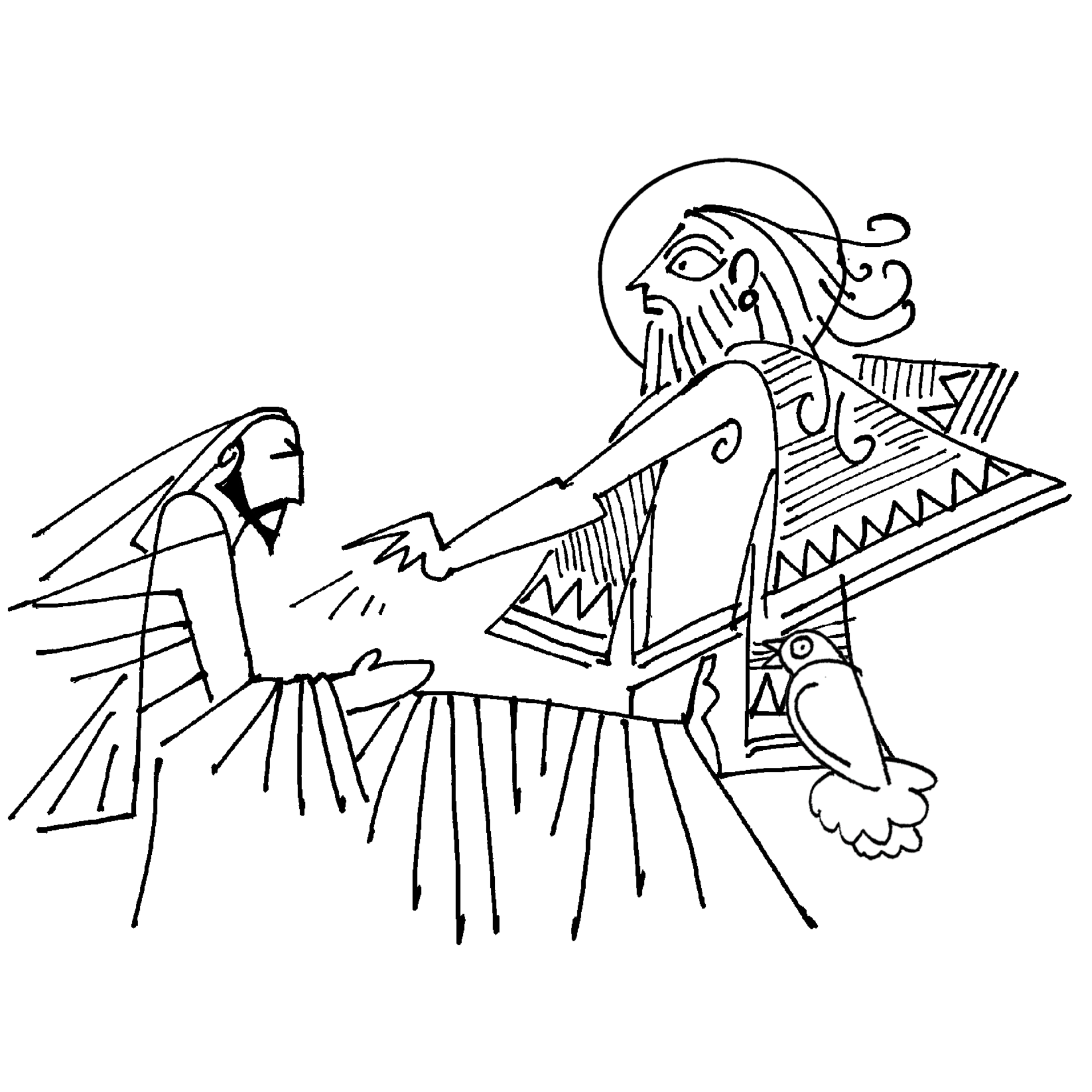
In the Mahabharata, Shantanu cannot get wives he loves until he gives them what they want. His first wife Ganga demands complete freedom, which includes killing their newborns. The second wife Satyavati demands that her children, not Ganga’s, are declared heirs. Satyavati gets daughters-in-law very differently: she orders her stepson, Devavrata, to simply kidnap them. Kunti selects her husband while Madri is purchased. Gandhari’s father is approached for her hand in marriage, but she is not told her husband is blind. Kunti’s daughter-in-law, Draupadi is a trophy of an archery contest and ends up being shared by the five Pandava brothers. Thus we see a clear shift in the status of women from one generation to another.
Mahabharata informs us that there was a time when women and men were free to go to whoever they pleased. Apsaras make love to rishis and simply walk away, often leaving them to take care of their young. Urvashi curses Arjuna that his genitals will fall off because he does not satisfy her. The Bhagavata tells the story of Usha, a princess, who kidnaps Krishna’s grandson, Aniruddha, because he is so handsome.
Also in the Mahabharata is the story of the origin of marriage. Shvetaketu discovers his mother in the arms of another man but the father, Uddalaka, is not upset. Shvetaketu wonders how he can be sure that he is his father’s son. So he institutes the law of marriage that requires the wife to be faithful to her husband. But he can ask her to go to another man if he is unable to make her pregnant himself.
In a society that wanted all men to have wives, women’s freedom had to be curtailed. Laws had to be created so that she did not leave her husband for a better or more desirable man. Chastity of women served to allay male anxiety over their incompetence and inadequacy. With a wife at home obliged to be faithful to him, the man had nothing to fear. His fidelity was not a matter of law but a matter of choice. When he was faithful, he became worthy of adoration, like Rama, the only divinity in Hindu mythology to have the title of ekam-patni-vrata, faithful to one wife.
In the Adbhut Ramayana Sita is described as slaying a demon with hundred heads, suggesting she is capable of easily slaying Ravana who has only ten, but chooses to downplay her power to establish Rama as God. But modern storytellers — even on television — prefer versions that portray her as demure, weakly breaking down when Rama abandons her. They refuse to highlight the Sita who comfortably raises her children alone in the forest, just like Shakuntala, Hidimbi and Kunti. Guess, men still want women to be victims, needing rescue, dependent creatures unlike the female in nature, who is very much capable of taking care of herself and her family.