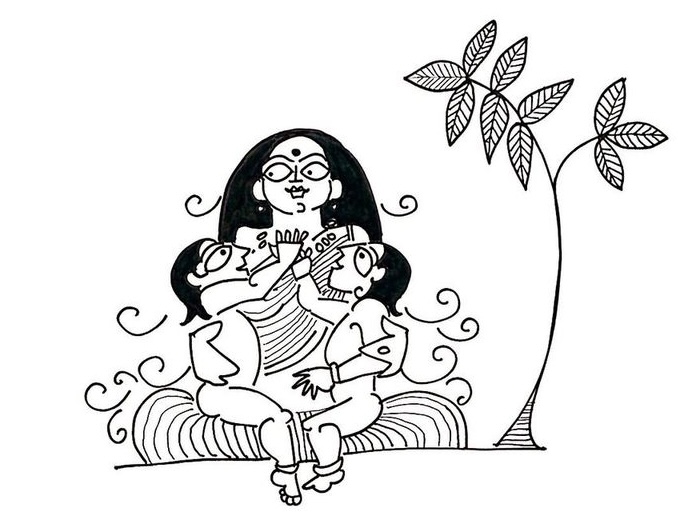
In mythological tales, gods and heroes do play games and sports. Vedic gods do chariot racing in order to decide who gets the bigger share of the Soma juice. Shiva and Parvati are shown playing board games. Sita plays solitaire to cope with loneliness. Bhagavata describes a game played by Krishna and Balaram where losers carry winners on their shoulders. Then there are martial games like wrestling and archery, where the trophy was often a princess! Ram wins a wife by stringing a bow, Arjun wins a wife by striking the eye of a fish, and Krishna wins a wife by yoking seven wild bulls.
Games and sports were invented by human beings for various reasons. The game of snakes and ladders was invented by monks to teach us about fortune and misfortune, which are not in human hands. Dice was used to teach people about luck. Card was a game that taught you about fate (cards you were dealt with) and free will (how you played the cards). Chess was invented for kings to encourage strategic thinking. Hide-and-seek prepared people to be alert in strange neighbourhoods, and protect themselves during village raids.
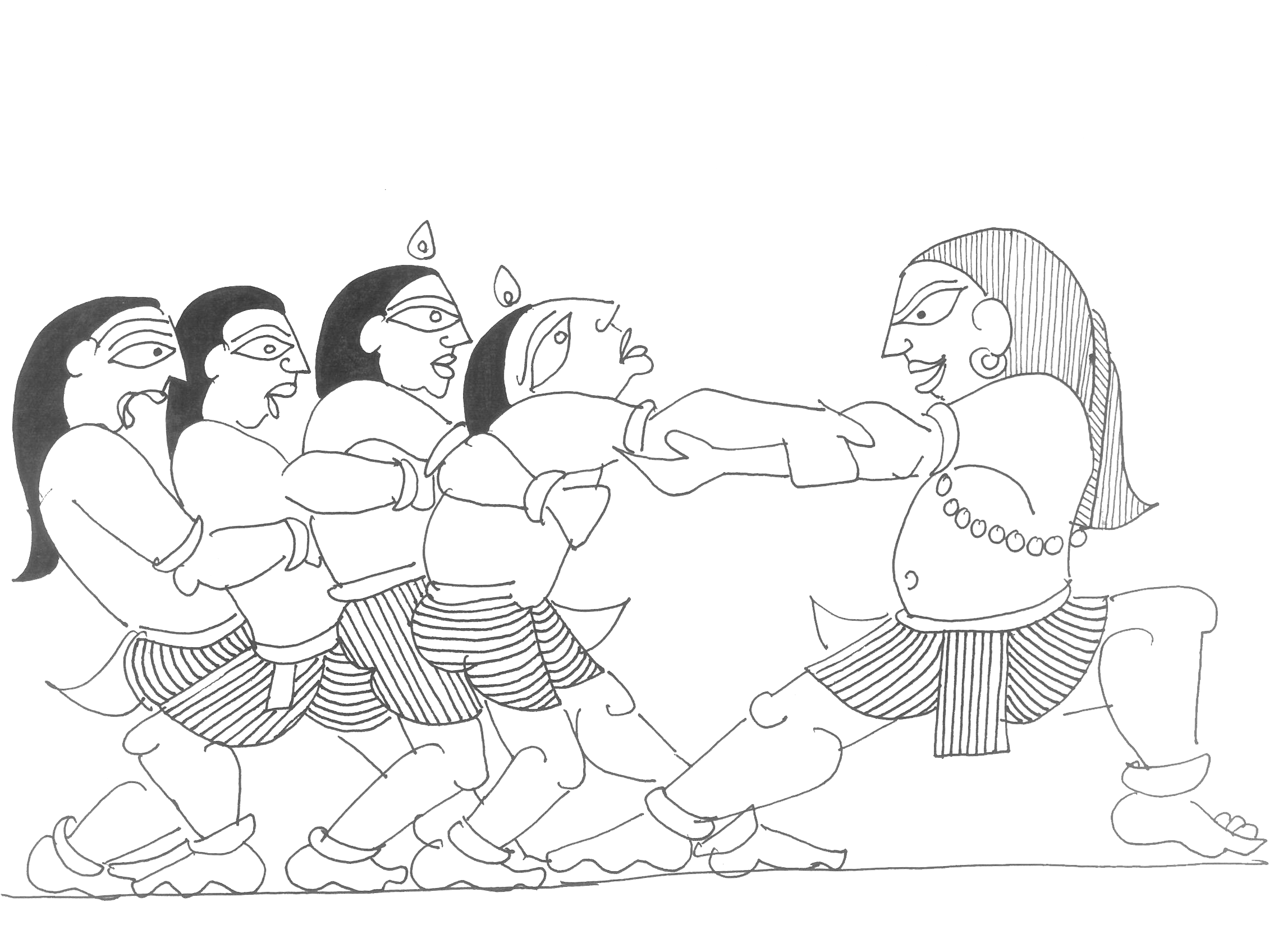
Games allowed humans to take risks, but in a safe controlled environment. Games such as forming human pyramids is a game of collaboration, while sports like tug-of-war, kabaddi and football focus on teamwork, confidence building, risk taking, working against packs and being part of a herd. Games and sports thus simulate real life opportunities and threats, and teach us about rivals and allies, about teams, thus preparing us for real life.
Children play games involving blindfolds. There are games where they cannot use their hands and must pick up items with their mouths, where they hop on one leg, or where they are carried by a friend. In games like dumb charades, they are not allowed to speak. These games were perhaps designed to help us empathise with people with disabilities—those who cannot see, those who cannot walk, or those who do not have hands. In the old days, in times of war, raids, animal attacks, disease and poor healthcare, every family had a person with a disability. Games helped children empathise with people who were blind, deaf dumb, without an arm or leg, with limited abilities. It is about accepting that the world is full of all kinds of people. And they all experience the world differently.
Today, games and sports are increasingly becoming contests with high commercial stakes. Video Games encourage killing aliens and zombies, and the designers strive to make them more addictive. We hear about player auctions and who gets paid the most. Games are about changing room politics, conflicts with coaches, and fierce rivalry, with political interference. Sports are creating hierarchies, separating the mediocre from the meritorious. Sportspersons are becoming glamorous celebrities and brand ambassadors.
We need to step back and reflect on why games and sports exist. Not everything needs to be gamified and monetised. Some things can just be fun. Some things can be about skill development. And a few need to make us think about life.