Contentment is a bad word in schools and businesses today. Makes us complacent, say the rich. Tricks us into exploitation, say the poor. Prevents growth, say all. On the other hand, hunger is the good word — marketed as ambition. Makes us competitive, say the rich. Makes us ambitious, says the poor. Promotes growth, says all.
Modern culture rewards the eternally ravenous, the always competitive, who yearn for more and more resources, power, attention, glamour and victory, like the demon Baka-asura of Indian myth, for whom everything and everyone is an opportunity to be consumed. So war-rooms are being established in schools and enterprises, in homes even, to survive in the dog-eat-dog world, the rat-race, the shark tank.
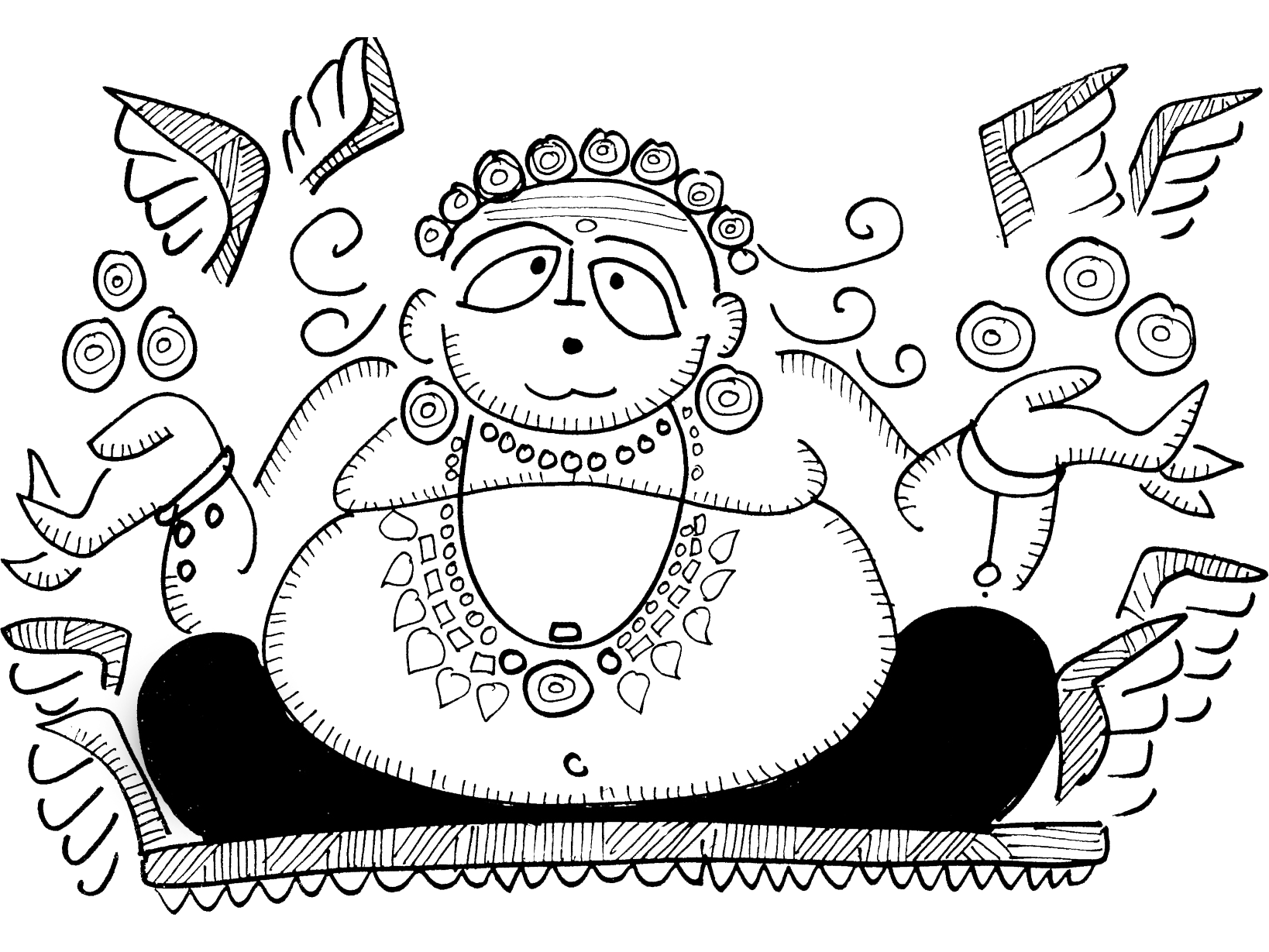
Across Hindu, Buddhist and Jain shrines one finds images of corpulent bejeweled beings, symbols of prosperity. Popular amongst them are Ganesha, with his rat, and Kubera, with his mongoose. Kubera is the treasurer of the gods. Ganesha is the remover of obstacles. But while Kubera is just a Gana, a follower of Shiva. Ganesha is venerated as lord of all Ganas, son of Shiva. This story explains why:
Once, feeling sorry for the food-loving Ganesha, Kubera said, “Your father lives on a snow-clad mountain where nothing grows. He clearly cannot feed you. So come to my house and let me feed you till your belly is full”. Ganesha accepted Kubera’s invitation, went to Kubera’s house, and ate all the food that was offered. “I am still hungry,” he said after consuming many dishes. He kept eating and eating till there was no more food in Kubera’s kitchen. Ganesha kept asking for more, forcing Kubera to give away his treasures in the market to fetch more food. But Ganesha was still hungry. Finally Kubera begged Ganesha to stop eating. “I have nothing more to give,” he cried. “But you promised to feed me till my belly is full and my belly is far from full,” said Ganesha, with a smile. Kubera realised there was a lesson here. Said Ganesha to Kubera, “Food will never satisfy hunger. If anything, it will amplify hunger. You seek Shiva not to get food but to figure out how to experience contentment.”
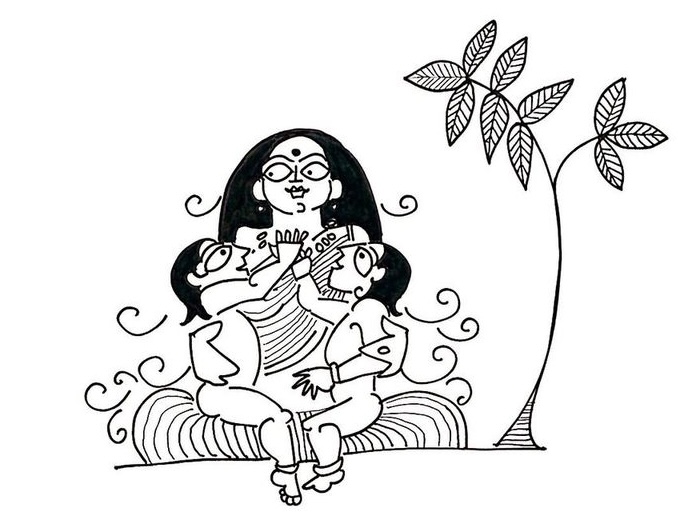
Hindu kings, Buddhist merchants and Jain bankers told stories of a god called Indra, also known as Sakra. Leader of devas, master of paradise, and lord of all treasures and trophies, Indra is described as eternally insecure, seated on a throne that wobbles constantly. He fears being toppled any moment, and losing everything he has. Though god, his status is not guaranteed. For him everything and everyone is a threat to be destroyed.
While plants and animals seek nourishment and security, humans seek more. Our hunger and fear is amplified infinitely by imagination. But food does not take away imagined hunger. If anything, it amplifies imagined hunger. We seek more resources, more power, more knowledge about resources and power. What we really seek is knowledge about hunger, what are we really craving for. What will make us feel meaningful, valid, fulfilled.
Given these stories, how can we think of less violent, less anxious, ways of enjoying life, where we pursue not the hunger that Kubera tries to douse, that Indra experiences, but the contentment that Shiva satiates, that Ganesha experiences. While hunger is our default programming, contentment is a design we choose.