Migration shapes memory. As humans moved from valley to coast, from forest to mountain, they carried stories and symbols. The sky was the only constant companion. Yet even the sky was not constant. Over generations, people realised that constellations did not rise at the same place during the same season. Spring was once marked by one set of stars, but later by another. This shifting sky puzzled ancient observers until they learned to read it as history written across millennia.
Archaeologists once found a rock carving in Kashmir. It shows hunters, animals, and above them, two suns. The world today has only one. But around 4300 BCE a supernova erupted. For a short time, the sky displayed two bright daytime objects. During that period, the dawn spring sky resembled an archer shooting a bull. The archer was Orion. The bull was Taurus. This suggests that the rock art may be over 6,000 years old. At that time, the spring equinox aligned with the stars of Gemini and then drifted into Taurus. The sky captured time without calendars.
Harappans, living before 2000 BCE, experienced the same cosmic transition. The spring equinox remained in Taurus. But the Harappans did not divide the sky into Zodiac signs. Their interest lay in a smaller star cluster within Taurus known as the Pleiades. These six or seven stars rose at dawn in spring. Farmers used them as seasonal alarms. Later, Vedic texts like Shatapatha Brahmana recorded their significance. Today, 4,000 years later, the same stars rise in the east during autumn, signalling winter crop planting. Nature keeps time patiently.
When the Aryans entered India around 1500 BCE, the spring equinox was shifting from Taurus into Aries. Greeks and Kushans, who later controlled mountain trade routes, saw the same sky. After 300 CE, when the Puranas were composed, the spring equinox had moved into Pisces. This was the sky familiar to the Mughals and the British. Now, slowly but steadily, it is moving into Aquarius. The sky changes so gradually that only cultures with long memories notice.
Constellations are not natural. Stars are. Humans connect stars into patterns and give them names. When two distant cultures refer to the same star cluster with similar stories, it means there was contact, migration, trade, or intermarriage. Pleiades is the best example. It is easy to locate, and rich in meanings. Around 10,000 BCE, people could clearly see seven stars with the naked eye. By 2000 BCE, only six were visible as one star drifted closer to another. Many mythologies refer to a missing seventh sister, marking an ancient astronomical memory.
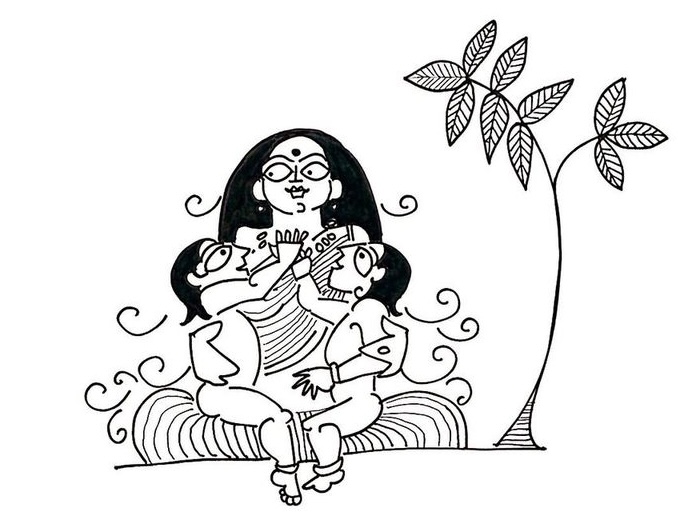
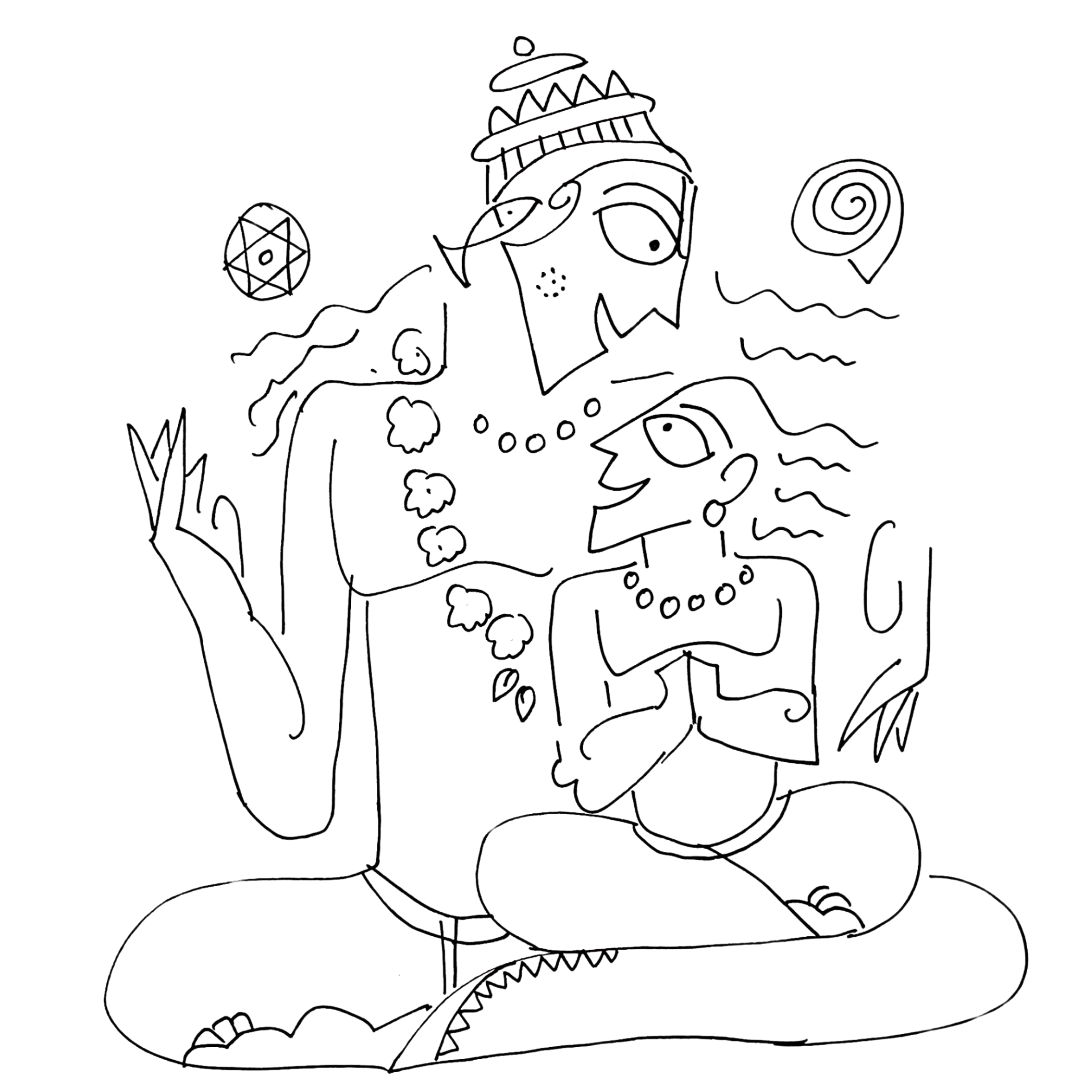
Late Vedic myths tell of seven sisters married to seven sages, the Sapta Rishi of the Big Dipper. Six sisters are accused of infidelity and banished. They now live separately as the Krittika stars. Only the loyal Arundhati remains with her husband Vasistha near the Pole Star. This story preserves the memory of six visible stars.
Tribal communities, however, saw the cluster differently. Banjaras likened it to gems. Kolams saw birds. Nicobarese imagined ancestors. Korku envisioned minced meat. Gond communities saw stones thrown at birds or agricultural tools guarding crops. Santhals told of brothers dying to save their sister from a tiger. Bhils imagined sisters running from a pursuer, one pausing in fear. The six stars preserve her hesitation.
Sky stories reveal cultural imagination. They show how communities interpret the same reality differently. The Ramayana and the Mahabharata refer to nakshatras, not Zodiac constellations. That indicates an older sky science. The Rig Veda mentions a few stars like Kritika and Rohini. The Yajur and Atharva Vedas mention more. A complete list of 27 nakshatras appears in Brahmana texts around 800 BCE. Months were named after the nakshatra under which the full moon appeared. But today the full moon does not align with those same stars. Astronomy reveals that such an alignment happened only around 3000 BCE. This predates Harappan cities and Egyptian pyramids.
Ancient Indians were skilled astronomers. They mapped stars, tracked seasons, measured months, and aligned rituals to the heavens. But they did not know about the precession of the equinoxes. The equinox slowly changes its Zodiac companion every 2,000 years. This explains why ritual calendars today lag nearly three weeks behind natural observation. Makara Sanskranti, Mesha Sankranti, Karka Sankranti, and Tula Sankranti were once, around 1,500 years ago, when the Hindu calendar was composed, synced to the winter solstice, spring equinox, summer solstice, and autumn equinox. Not anymore. There is now a gap of three weeks. Tradition remembers a sky that no longer exists.
Human beings forget. The sky does not. It carries memories beyond scripture, empire, migration, and myth. Reading the heavens is reading the autobiography of humanity.