In popular Hindu imagination, Adi Shankaracharya reclaimed the supremacy of Vedas by defeating Buddhism, 1,200 years ago. It is believed he foresaw the Islamic threat to Hinduism and established spiritual and military gymnasiums, the gyan-akharas and the karmaakharas, in the four corners of India. His monistic philosophy, Advaita, was used by the 19th Century Hindu reformers, to defend Hindu thought against colonial accusations that it was polytheistic and idolatrous, and hence pagan.
Comic books and popular mainstream films have created the impression that we know a lot about Adi Shankaracharya. But we know very little.
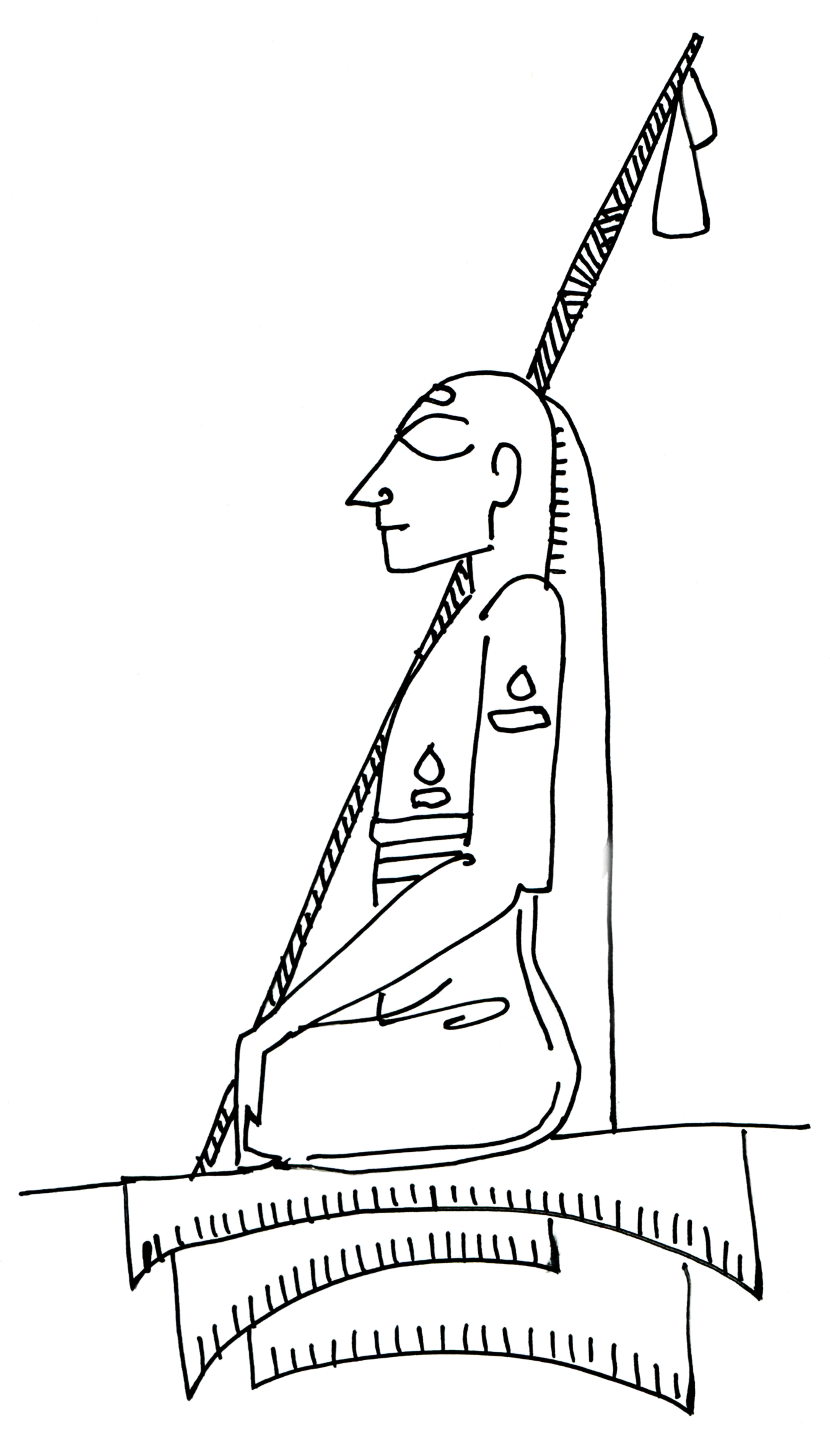
From Adi Shankaracharyaʼs own writings, we know that he chose the ascetic path, and his guru was Govinda. From the works of Adi Shankaracharyaʼs student, Sureshwara, we know that Adi Shankaracharya hailed from ‘dravidaʼ i.e., south, the first time such a word is clearly used in Indian literature in all probability; and that he walked around with a bamboo staff. All other information comes from legends.
Most stories we know about Adi Shankaracharya were composed 500 years after his time, when Vijayanagar kings of the Deccan were pushing back against Delhi Sultans, defending what they called ‘Hindu Dharmaʼ from ‘Turuku Dharmaʼ. These later biographies, or rather hagiographies, raised him from obscurity, and transformed him into a Hindu superhero, one who would save Hinduism from Buddhist, Islamic, and Christian onslaught.
In some, he is opposed by Hindus who did not agree with his brand of Vedic philosophy, which valued the formless divine (nirguna brahman) and the intellectual path (gyan yoga). Temple-based Vedic teachers argued he was a Buddhist-in-disguise. There are even unflattering legends about his origin, some of which are even found in the 17th Century Keralolpathi, the legendary history of Kerala. Most scholars who talk about Adi Shankaracharya avoid talking about these sources.
Those who believe Indian civilisation began with the end of the Ice Age 12,000 years ago, that Ramayana took place 7,000 years ago, Mahabharata 5,000 years ago, believe that Adi Shankaracharya lived 2,500 years ago, even before the Buddha, during the time of the Upanishads. This is, of course, ideological propaganda. For those who value evidence, we know his contemporaries were Kumarila, Mandanamishra, Dharmakirti, Bhartrihari, Gaudapada, and Bhaskara, and so he most probably lived around 700 CE.
In legend, Adi Shankaracharya is described in lines similar to that of a great king such as Vikramaditya: a chosen one with a divine spark, who faced challenges as a child, impressed teachers with his brilliance, conquered the four directions (dig-vijaya) and finally ascended the highest throne. Only Adi Shankaracharyaʼs conquest was spiritual, not material. He bound India with a pilgrimage, not with an army. He united divided philosophies with a common idea. Later politicians would describe this spiritually bound India as punya-bhoomi, the holy land of Hindu rashtra.
When people tell the story of Adi Shankaracharya, they focus on his legend. They do not bother with the times he lived in. Who were the kings who ruled India then? What was the political and economic situation? Did he grow up hearing the songs of the Alvars and the Nayanars? Did he hear the story of Kannagi or the Buddhist Jatakas? Did he meet Chinese pilgrims? Did he speak Malayalam?
When we retrace the life of this legend, we rediscover an India between the fall of Buddhism and the rise of Islam. It is full of forces and counterforces: monastic and worldly, vedic and tantric, ritual and devotional, polytheistic and monotheistic, philosophical and occult, masculine and feminine, and orthodox and subversive. Adi Shankaracharya clearly sought some form of integration. Hence, the famous maxim attributed to him: ‘brahma satyam, jagat mithya,ʼ which means ‘only the divine is limitless and eternal, the world is made of fragmented temporary realities.ʼ
Would a man who saw unity in diversity, be a triumphalist? Would such a man make his opponent, upon defeat, give up his wife and become a monk? Why would someone who saw the divine spark (brahman) in all living beings (jiva) also insist on a hierarchical social order (chatur-varna)? Why would someone who valued Vedas go against the grain and choose to be a celibate monk, like a Buddhist, and then be associated with a collection of erotic poetry, the Amarushataka? Why do women, and chandalas, considered sources of pollution in orthodox circles, play such an important role in his story? Why do storytellers insist that his father was Shaivite, and his mother was Vaishnavite?
Adi Shankaracharya is a mysterious figure. Did he even exist? Or was he a creation of later times, just like Padmasambhava of Tibetan Buddhism, as historians claim? Historians fear to ask these questions as their scholarship may go against the populist narrative.